Cuba Alleges Washington Building ‘Fraudulent Case’ for Military Action
Cuba’s foreign minister has formally accused Washington of constructing a pretext for eventual military intervention — a charge that lands as bilateral channels remain effectively frozen and a prediction-market gauge assigns only a 51 percent chance of any formal meeting within six weeks.
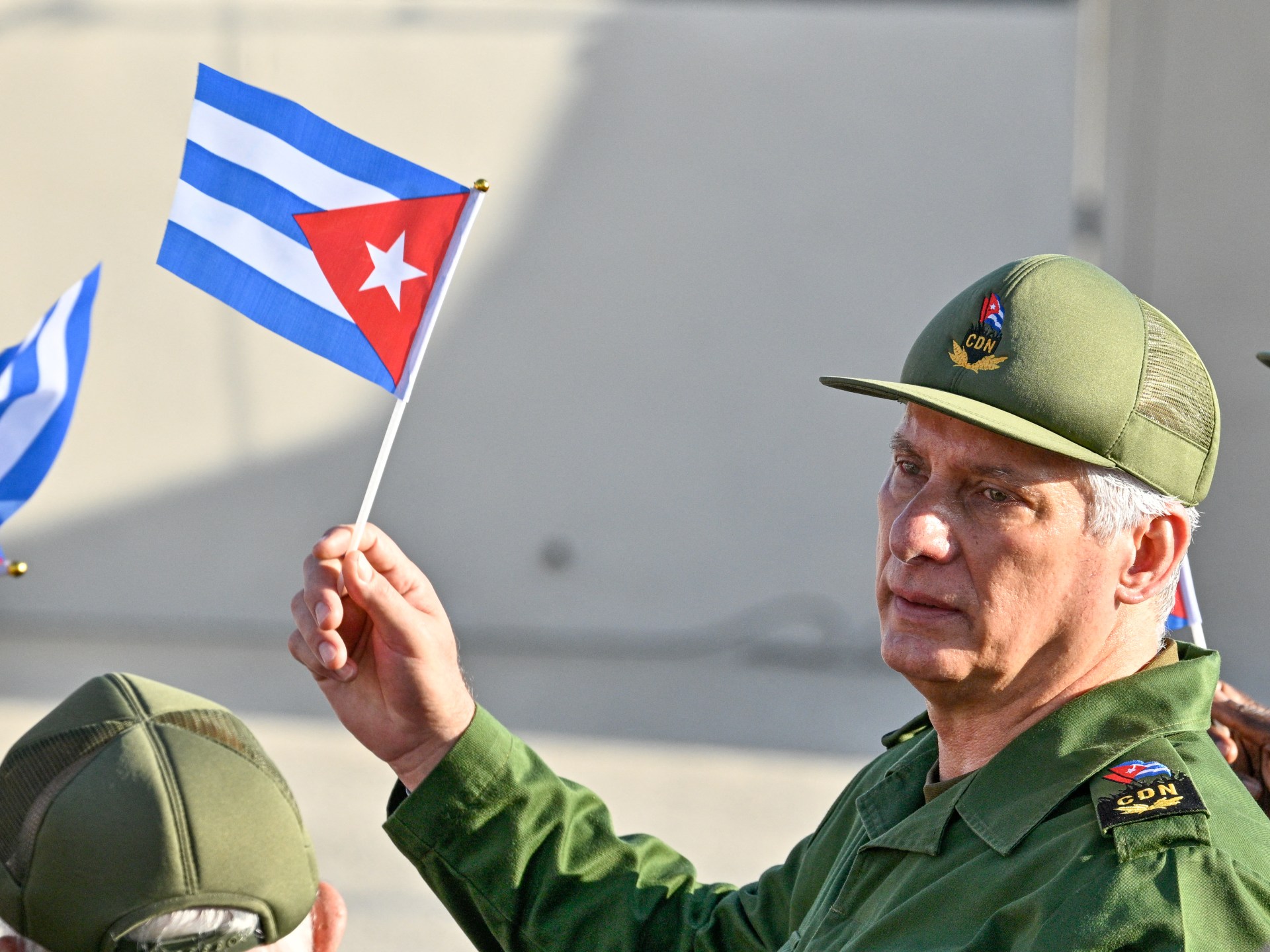
Cuba’s foreign minister formally accused Washington on 18 May 2026 of building a “fraudulent case” to justify eventual military aggression against the island — a charge that lands amid frozen bilateral channels, an ongoing U.S. policy review, and a prediction-market gauge assigning only even odds to any formal diplomatic contact within the next six weeks.
Bruno Rodríguez, who has served as Cuba’s foreign minister since 2020, delivered the accusation publicly in Havana that morning, according to a wire report carried via Polymarket’s news feed. He did not specify which U.S. institution or official body he believed was orchestrating the alleged pretext, nor did the source item detail what evidence — intelligence, diplomatic correspondence, or public statements — underpins the claim. The framing, however, was unambiguous: Cuba contends that Washington is manufacturing justification for an eventual use of force, an allegation it has levelled at various U.S. administrations dating back to the early Cold War period. A State Department spokesperson had not publicly responded at time of writing, and the sources reviewed for this article do not include any U.S. official comment on the charge.
The timing is notable. Cuba’s accusation arrives as the Trump administration continues a review of Havana policy that critics in Congress and among exile advocacy groups argue has produced insufficient action against Cuban intelligence activities they say target dissidents, journalists, and opposition figures on the island. That review, broadly, has created a window in which neither side has moved to formal engagement — and in which accusations flow more readily than dialogue. What Cuba characterises as a fabricated pretext, Washington is likely to frame as a legitimate response to a documented intelligence threat. Both framings cannot be simultaneously true; the evidence the two sides marshal for their respective positions, and the weight international observers assign to each, will determine how the episode settles.
The probability signal
Polymarket, which aggregates real-money positions on geopolitical outcomes, was showing a 51 percent implied probability — essentially a coin flip — that a formal U.S.–Cuba meeting would occur before the end of June 2026, as of the afternoon of 17 May. That figure reflects the collective judgment of participants who have wagered real capital on the outcome, not the analytical assessment of any government or think tank. The figure does not describe what the meeting would be about, who would attend, or what prerequisites either side might set. It records, rather, that the market assigns no particular momentum to renewed bilateral contact.
The 51 percent reading is not a neutral data point in diplomatic terms. Prediction markets tend to move toward certainty when institutional momentum is visible — when summits are scheduled, when envoys are dispatched, when public statements signal preparation. A flat reading at or near 50 percent after a foreign minister’s public accusation of pretext-building suggests participants do not expect the charge to trigger a breakthrough, a formal rebuttal, or a de-escalation signal from Washington in the near term. Whether that reflects market scepticism about U.S. willingness to engage, Cuban willingness to de-escalate, or simply a lack of positional information is not recoverable from the data. What is clear is that neither side appears, in the market’s current read, to be moving toward the table.
The precedent problem
Accusations that Washington is constructing a pretext for military action are not new to Cuban foreign-policy rhetoric. Across multiple administrations, Havana has characterised U.S. travel restrictions, aid conditionality, telecommunications sanctions, and designation of Cuba as a state sponsor of terrorism as stages in a longer campaign whose logical terminus, in Cuba’s framing, is armed intervention. No such intervention has materialised. The repetition of the charge — without materialisation — has, over decades, accumulated a credibility problem for Cuban officials making it.
The counter-problem is equally real. U.S. administrations have, across administrations, presented Cuba as a national security threat requiring sustained pressure, sometimes in terms that exceeded what the intelligence record supported. The Bay of Pigs framing — that Cuba represented an imminent beachhead for Soviet expansionism — required significant massaging of the evidence at the time, and the subsequent record has not been kind to the most alarmist projections. When Washington presents Cuba as requiring a hardline posture, it inherits some of that credibility debt.
What is different about the current moment is the institutional infrastructure available for assessing such claims. Prediction markets, open-source intelligence platforms, and independent verification tools give analysts and observers more capacity to test both sides’ assertions than existed in prior cycles. The charge that Washington is building a fraudulent case can, in principle, be examined against the documentary record — U.S. policy statements, intelligence assessments, congressional testimony, and diplomatic correspondence — in ways that were not accessible to observers in, say, the early 1960s. Whether that infrastructure will be brought to bear on this specific episode, or whether it will be absorbed into the existing partisan static that governs most Cuba coverage, remains to be seen.
What comes next
Three outcomes appear most plausible over the medium term, each with distinct winners and losers.
The first is continued institutional freeze. Bilateral channels remain closed, accusations continue, and the 51 percent probability on a meeting holds or drifts lower as the June deadline approaches without movement. This outcome benefits neither government in terms of stated objectives — Washington has signalled interest in harder-hitting pressure, and Havana has signalled it will not yield to pressure — but it avoids the political cost of either side taking a step that domestic critics can characterise as concession. This is the base-case trajectory and, in the current read, the most likely one.
The second is escalation through secondary channels. Cuba has historically sought to internationalise disputes with Washington, bringing cases before the United Nations, building coalitions among Non-Aligned Movement members, and framing bilateral tensions as a broader North-South question. A fabricated-case accusation, if sustained, gives Havana material for that campaign. The risk for Washington is that internationalising the dispute gives it a life beyond the bilateral framework where U.S. leverage is structurally largest.
The third is some form of back-channel contact that does not register in the prediction market data. Diplomatic history is full of episodes where formal channels were publicly frozen while technical or unofficial conversations continued. If such contacts are occurring, the market would not yet reflect them.
Cuba’s foreign minister has put a formal accusation on the record. What happens to it depends substantially on what evidence the U.S. marshals in response — and on how third-party observers, including regional governments and international institutions, choose to engage with the competing framings. The sources consulted for this article do not yet contain a U.S. rebuttal, a specific evidentiary basis for either side’s position, or a confirmed timeline for diplomatic movement. That data, when it arrives, will determine whether the episode is a rhetorical flare or a genuine inflection point.
This desk treated Cuba’s formal accusation as the lead given its specificity — a named minister, a direct quote, a date — while noting that the Polymarket probability gauge provided the only live signal on near-term diplomatic momentum. Western wire services had not published a formal response from the State Department at time of filing.