Dnipro Strike Aftermath Tests the West's Capacity to Look Away
Eighteen people injured, including two children, after another night of Russian cruise missiles and drones struck a residential district of Dnipro. The pattern is deliberate, the documentation is extensive, and the response from Western capitals remains calibrated to a level of violence the world has decided to find unremarkable.
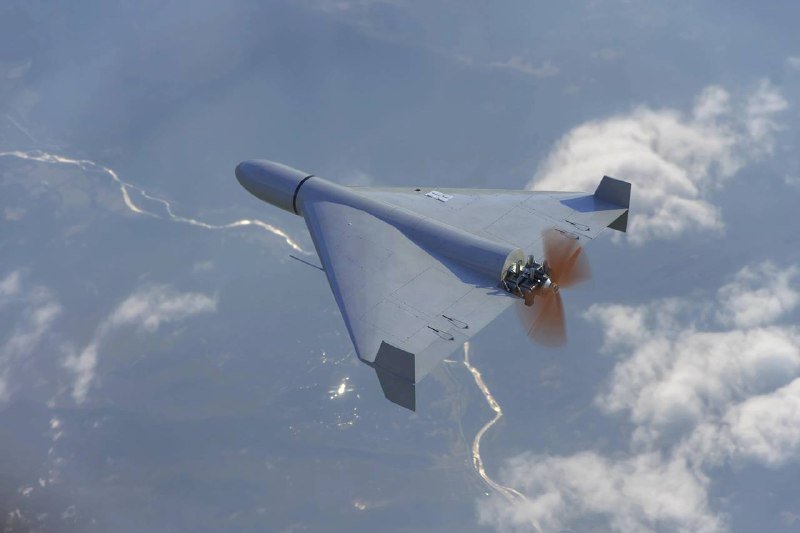
At 03:37 UTC on 18 May 2026, at least two more cruise missiles were tracked heading toward Dnipro. By 03:47, one had struck. By 03:54, another Kh-59/69 impact was confirmed in the city. And before dawn fully broke over central Ukraine, at least 18 people were injured — among them a two-year-old girl and a ten-year-old boy — after Shahed drones completed their pass over a high-rise residential building in the city's centre. This is not a paragraph of dispatches. It is a portrait of a war that has become structurally invisible.
The documentation is thorough. Ukrainian military bloggers and OSINT channels tracked the incoming ordnance in real time, mapping impacts against a city grid that has been struck so many times that responders arrive before the dust settles. The injured are counted. The children's names will surface, eventually, in Ukrainian Telegram channels, in the Kyiv Independent, in wire reports that Western readers will encounter somewhere between a celebrity verdict and a sports result. The question this piece poses is uncomfortable in direct proportion to how easily the question has become rhetorical: what does it mean that this is no longer news?
The Geometry of Indifference
There is a operational logic to Russia's targeting of Dnipro that analysts tracking the war have documented extensively. The city sits at a rail and logistics nexus that supplies Ukrainian forces across the eastern front. It is also a city of roughly one million people, the kind of urban concentration that makes cruise missile strikes statistically likely to hit something meaningful — and humanly certain to hit someone civilian. The strikes documented on 18 May landed in residential districts. The Kh-59/69 family of air-launched cruise missiles, in their current operational deployment, are not precision weapons in any meaningful sense; they are instruments designed to overwhelm air defences through volume and to accept civilian harm as a acceptable operational cost.
That acceptance is the story. Not the missile. Not the drone. The calculus that places those systems over a mid-rise apartment block and counts the aftermath as routine.
Western coverage of the war in Ukraine has, by the third year of full-scale invasion, developed a formal vocabulary for these events. Statements of condemnation are issued. Arms shipments are announced, sometimes increased, sometimes delayed by parliamentary procedure. The language of horror is deployed and then retired for reuse at the next strike. What has not emerged — what the structural incentives of 24-hour news, social media feeds, and electoral politics make almost impossible to sustain — is a mode of attention that treats each strike on a Ukrainian city as the discrete catastrophe it is rather than as a data point in a trend line.
The Fatigue That Isn't
It is common to speak of Western "fatigue" with Ukraine aid as though the phenomenon is primarily economic or political — a budgetary argument that ran out of steam. The strikes on Dnipro suggest a more fundamental problem. The fatigue, if that is the word, is perceptual. The information environment has normalized the categories so thoroughly that "Russian forces strike residential area in Dnipro" registers as background noise rather than as a sentence requiring the reader to stop.
This publication has noted before that the architecture of humanitarian attention is not designed for wars that last years without resolution. The early-phase images — the Bucha street footage, the Mariupol theatre — burned themselves into a collective visual memory because they were new, because they were shocking in the specific sense of contradicting the assumptions a European war had been made to mean in the post-1945 imagination. Three years on, the same city is struck again. The same demographics — children, the elderly, civilians in the wrong apartment block at the wrong hour — appear in the injury reports. The pattern is too consistent to be random and too familiar to be novel.
That familiarity is not a product of Ukrainian resilience or of Russian ingenuity. It is a product of editorial decision-making at scale — of the moment when a story moves from the front page to the wire ticker to the brief mention in a morning briefing. The move is not dishonest. It reflects a genuine constraint: there are only so many column inches, so many broadcast minutes, so much audience attention available before the next event overtakes the previous one. But the constraint is not neutral in its effects. It calibrates the moral register of the response to a level of violence the system has decided to find sustainable.
What Russia Is Actually Calculating
The strikes on Dnipro are not random. They are not gestures of strength by a military that has been degraded by three years of attritional warfare. They are signals, calibrated to a specific audience: the Ukrainian civilian population, the Ukrainian government, and the Western governments whose material support keeps Ukraine's air defence and front-line capabilities functioning.
The signal is straightforward. Resilience can be degraded. Attention can be overwhelmed. The cost of supporting Ukraine is not only financial — it is measured in the quality of life of citizens in partner countries who are asked to absorb energy price shocks, inflation, and the slower costs of economic realignment, and who are now asked to accept that these costs buy them a war that produces images they have learned to scroll past. Every strike on a city that makes the wire but not the front page is a data point in Russia's larger strategic communication to Western publics: this will not end, and your capacity to sustain attention to it is finite.
That calculation is not irrational. It is cynical in the specific, precise sense of treating human moral capacity as a resource to be depleted rather than a commitment to be honoured. The question Western governments face is not whether they can afford to continue military and economic support to Ukraine — the consensus on that question remains, for now, broadly intact — but whether they can sustain the moral and political framing that makes that support legible to their own populations. A strike on Dnipro that generates a wire report and a statement of condemnation and then disappears from view is a small victory in a long campaign to answer that question in the negative.
The Children Are Not a Metaphor
This piece has argued, in the register appropriate to an opinion column, that Western attention has become structurally miscalibrated to the reality of an ongoing invasion. That argument is sound. It is also incomplete, and the incompleteness matters.
The two-year-old girl and the ten-year-old boy injured in central Dnipro on the morning of 18 May are not data points in an argument about media cycles. They are children who were asleep in their apartment building when a Shahed drone completed its pass and when a Kh-59/69 warhead detonated somewhere in the structure or its vicinity. They will carry those injuries — physical and psychological — for years. Their parents will explain to them, when they are old enough to ask, why the sky above their city is a threat vector rather than simply the sky. These are not abstractions. They are the specific human cost that Western policy deliberation must be held to account for in concrete terms, not as rhetorical devices.
The arms shipments that Western parliaments debate in the abstract are the systems that keep Ukrainian airspace contested. The economic support is the revenue that funds emergency services in cities like Dnipro that are struck repeatedly. The diplomatic engagement is the framework within which the legitimacy of Ukraine's defence is maintained at the level of international law. All of it connects, at the end of a long chain of causality, to whether a two-year-old girl sleeps safely or does not. That is the stakes of a war that has become too familiar to shock and too consistent to surprise. It remains, despite the familiarity, a war of choice — and the choices that sustain it are made in capitals that have the power to end it.
Wire provenance
This editorial synthesis draws on the following public wire/social posts:
- https://t.me/s/sTsaplienko/14234
- https://t.me/AMK_Mapping/8942
- https://t.me/AMK_Mapping/8941
- https://t.me/AMK_Mapping/8940