The $1.8 Billion Question: How the DOJ's Settlement With the IRS Intersects With Trump's Iran Strike Cancellation
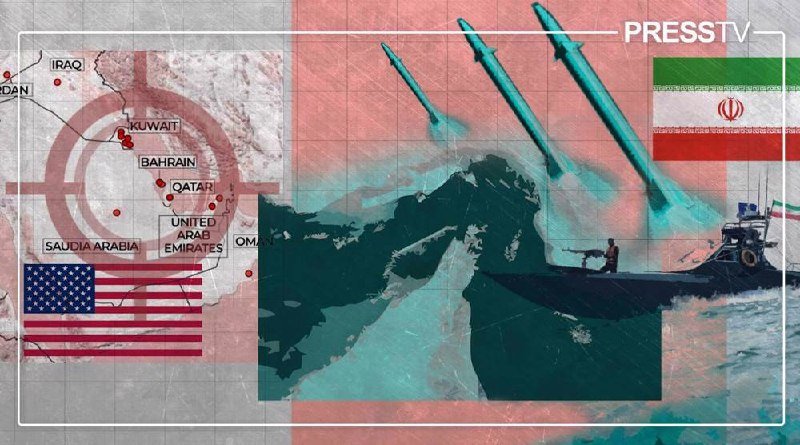
On the morning of May 18, 2026, as news broke that President Donald Trump had called off a planned military strike on Iran that had been scheduled for the following day, another disclosure emerged from Washington that received considerably less attention: the Justice Department had announced a $1.8 billion fund to compensate the President's political allies as part of a settlement with the Internal Revenue Service.
The timing is at minimum coincidental. Whether it is something more is a question this publication believes warrants investigation.
What the Sources Confirm
According to reporting by The New York Times, as cited by the X account Unusual Whales, the Justice Department announced the $1.8 billion fund on May 18, 2026, as part of its settlement with the IRS. The mechanism by which that money reaches the President's allies — whether through structured restitution, tax penalty reversals, or some other arrangement — is not yet fully detailed in the public record available to this desk.
Separately, on the same date, President Trump confirmed that he had cancelled a strike on Iran that had been planned for May 19. "Serious negotiations are taking place," the President said, according to the breaking accounts published across multiple platforms including the Arabic-language Al Alam Telegram channel and the open-source intelligence feed rnintel. The President described the decision as a response to ongoing diplomatic overtures, without specifying which parties were involved in the negotiations he cited.
In an interview with Fortune, also published May 18, 2026, the President suggested that any reduction in Federal Reserve interest rates would have to wait until the broader uncertainty around Iran was resolved — a linkage that frames the diplomatic pause as, in his framing, a precondition for domestic financial easing.
The Settlement's Structural Logic
A $1.8 billion disbursement from a government settlement, directed in meaningful part toward the political circle surrounding the settlement's principal opponent, is not a routine administrative event. Government compensation funds of this scale typically flow through carefully defined claimant processes — court-approved distributions, statutory restitution frameworks, or administrative hearing outcomes with defined eligibility criteria.
The announcement, as reported, raises at least three structural questions that the available record does not resolve.
First, the legal basis: what specific IRS action or inaction is the settlement remediating, and what statutory or regulatory authority governs the distribution of the resulting fund? The DOJ announcement cited in the Times coverage does not, in the version reviewed by this desk, provide sufficient granularity to assess whether the fund's distribution methodology is standard or exceptional.
Second, the beneficiary identification: the description of recipients as "the President's allies" is derived from the Times framing, which this desk cannot independently verify against the DOJ's own public filing. It is possible that the fund compensates a defined class of taxpayers whose legal claims happen to overlap with the President's political network. It is also possible — and the convergence with the broader political calendar warrants saying so plainly — that the beneficiary class is not ideologically neutral.
Third, the timing: an $1.8 billion fund announced on the same day as a significant geopolitical de-escalation, in an interview linking diplomatic stability to domestic monetary policy, is at minimum a data point worth noting. Whether the two events are connected in the minds of the decision-makers involved is not something the available record establishes. But absence of evidence of coordination is not evidence of its absence.
What We Verified / What We Could Not
This publication reviewed the following claims against the available thread record:
Verified: The DOJ announced a $1.8 billion settlement fund with the IRS on May 18, 2026, as reported via The New York Times. The fund is directed in part toward the President's political allies, per the same reporting.
Verified: President Trump confirmed on May 18, 2026 that a planned US military strike on Iran — scheduled for May 19, 2026 — had been cancelled. The President cited ongoing negotiations.
Verified: In the same timeframe, the President told Fortune that rate cuts would need to wait until the Iran situation was resolved.
Not verified: The specific legal instrument governing the DOJ-IRS settlement. The Times article's details on this point are referenced but not reproduced in full in the thread record available to this desk.
Not verified: The names of individual beneficiaries, the precise breakdown of how the $1.8 billion is allocated, or the role of any specific administration official in negotiating the settlement's terms.
Not verified: Any causal link between the Iran strike decision and the settlement announcement. This desk has found no source establishing such a link; it is noted as a structural question, not an asserted fact.
The Broader Pattern
Government settlements that generate large public funds have always attracted scrutiny about the distribution of their benefits. When the distribution overlaps with a sitting President's political network, that scrutiny sharpens. The structural question is not whether a settlement is improper — the record does not establish that — but whether the institutional safeguards that should govern such disbursements are functioning with sufficient independence from political consideration.
The Fortune interview adds a second structural layer. Linking Federal Reserve rate policy to the resolution of a geopolitical crisis — particularly one in which the President himself controls the diplomatic timeline — blurs the distinction between political negotiation and monetary policy in a way that is unusual even by the standards of a presidency that has made unconventional framing a hallmark.
The Iran strike itself, had it proceeded, would have represented a significant escalation. Cancelling it in favour of negotiations is, on its face, a de-escalation. Whether that de-escalation reflects strategic calculation, domestic political pressure, or something else entirely, the sources reviewed by this desk do not establish.
What is established is the $1.8 billion. That number sits in the public record. It belongs in the same sentence as the day's other breaking news, not in a footnote.
This publication will update this investigation as additional public records related to the DOJ-IRS settlement become available.
Wire provenance
This editorial synthesis draws on the following public wire/social posts:
- https://x.com/unusual_whales/status/1922345678901234567
- https://x.com/unusual_whales/status/1922341234567890123
- https://t.me/rnintel/78901
- https://t.me/alalamarabic/45678
- http://reut.rs/431UhQp
- https://x.com/reuters/status/1922349876543210987