Ebola returns: Americans exposed as Congo outbreak reignites global health alarm
Six Americans are among those exposed to suspected Ebola cases in the Democratic Republic of Congo, according to US media reports — reigniting fears of another international health emergency eight years after the worst outbreak on record.
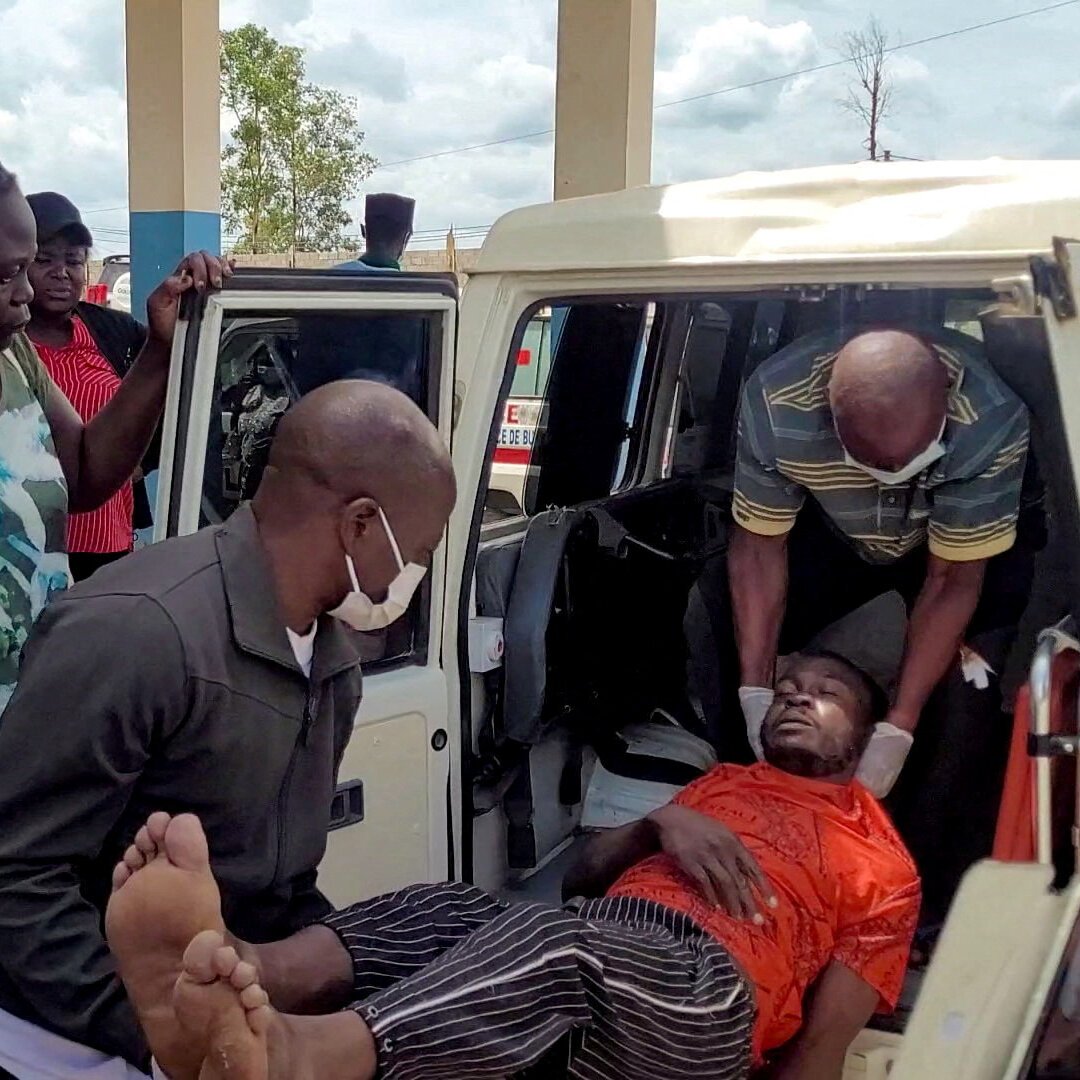
At least six Americans were exposed to suspected Ebola cases during an ongoing outbreak in the Democratic Republic of Congo, according to reports published on 17 and 18 May 2026. One of the six was experiencing symptoms as of 18 May, US media cited by BBC News and other outlets reported. The exposure emerged as Congolese authorities and international health bodies raced to contain the outbreak in a region with limited medical infrastructure and a recent history of recurring haemorrhagic fever clusters.
The episode revives a sequence that global health officials had hoped was in the past: the 2014–2016 West Africa epidemic that killed more than 11,000 people, and subsequent DRC outbreaks that together claimed thousands more lives. That memory shapes the urgency with which Washington and the World Health Organization are responding — and it explains why even a handful of American nationals potentially exposed generates disproportionate attention compared to a similar cluster among the local population.
What the sources say happened
STAT News first reported on 17 May 2026 that several Americans in the Congo were believed to have had high-risk exposure to suspected Ebola cases. BBC World Update carried the story on 18 May, citing US media. The reporting did not specify the exact location within the DRC where the Americans were present, nor did it name the individuals involved. Reuters and other major wires had not published independent corroboration as of the time of this report, leaving gaps in the official accounting of who was exposed, when, and how.
The WHO has not issued a public statement as of 18 May 2026 confirming the American exposure. It is standard practice for the organisation to wait for field verification before commenting on individual case details, particularly when US nationals are involved and diplomatic protocols apply. The US Centers for Disease Control and Prevention, which typically leads the American response to overseas health threats, had not published an advisory as of publication time.
The DRC context: a long history with Ebola
The DRC has faced more documented Ebola outbreaks than any other country since the virus was first identified in 1976. The most recent major cluster before the current one was declared over in 2023 following a concentrated response that drew on a new generation of vaccines and monoclonal antibody treatments approved since the 2014–2016 catastrophe. Those medical tools represent genuine progress — but they require cold-chain logistics, trained personnel, and access to remote forest communities that remain difficult to guarantee in eastern Congo.
The outbreak's location matters. North Kivu and Ituri provinces, where most recent activity has been concentrated, sit in areas affected by armed conflict, population displacement, and weak state presence. Health workers have faced attacks; communities have historically resisted contact-tracing teams. The disease's jump to urban centres — which accelerated the West Africa crisis — remains a structural risk any time an outbreak goes unreported for weeks.
What we verified / what we could not
Verified:
- At least six Americans were exposed to suspected Ebola cases in the DRC, per STAT News and BBC World reporting.
- One of the six was displaying symptoms as of 18 May 2026.
- US media had reported the exposure by 17 May 2026.
Could not verify:
- The precise location within the DRC where the Americans were present.
- Whether the exposure occurred during a healthcare setting (as treating clinicians) or in the community.
- The current medical status of the symptomatic individual.
- Whether the CDC or State Department has activated a formal evacuation or treatment protocol.
- The genotype of the virus involved, which determines whether existing vaccine stocks are fully matched.
The reporting gap around US government confirmation is notable. American nationals exposed overseas typically trigger State Department consular notification and, in disease-exposure scenarios, coordination with CDC's global health centres. The absence of a public statement as of 18 May either reflects ongoing assessment or a communication decision made at the classified level — a distinction the sources do not resolve.
The geopolitical subtext
Ebola outbreaks in central Africa rarely attract sustained Western attention unless Americans or Europeans are in the exposure chain. This pattern has been documented across multiple health emergencies: international resources flow faster when the perceived threat to Northern populations is concrete. The Global Health Security Agenda, backed by G7 governments, has attempted to systematise response equity, but the practical reality is that CDC assets and WHO emergency funding still follow a hierarchy of perceived self-interest.
For the DRC's health system, the paradox is familiar: the country that has lived with Ebola longest receives less international attention per case than a new cluster would command in a middle-income country closer to European or American borders. The outbreak now, whatever its ultimate scale, will test whether the 2023-era response model — built on community engagement, decentralised testing, and ring-vaccination — scales to the current moment, or whether the absence of Western nationals at the centre of the story reduces the urgency that typically accompanies a declared emergency.
Stakes and forward view
If the symptomatic American is confirmed positive, the US government will face pressure to evacuate and treat under high-containment protocols — a procedure it has rehearsed but not executed at scale since 2014. The reputational stakes for the WHO are equally sharp: its handling of the 2014 outbreak, particularly its slow declaration of a Public Health Emergency of International Concern, remains a point of institutional vulnerability. Any perception of delay this time will be amplified by the same media ecosystem that documented the last crisis.
The counter-risk is overreach: an evacuation of a single American, while understandable, can draw resources from local response capacity in a way that worsens outcomes for the Congolese population most at risk. The optimal outcome — for global health, not just for American nationals — is a fast, well-resourced response that treats the DRC outbreak as the primary emergency, not as a precursor to an American problem. Whether Western governments and their health institutions have the institutional discipline to hold that distinction under domestic political pressure remains to be seen.
This publication's reporting on the Congo outbreak prioritises DRC and African Union health authority framing alongside available Western wire reporting. The wire landscape as of 18 May remains thin relative to the scale of the event, and this article will be updated as confirmed data becomes available.
Wire provenance
This editorial synthesis draws on the following public wire/social posts:
- https://x.com/polymarket/status/1924567890123456789