The Flotilla Interception and the Limits of Symbolic Solidarity
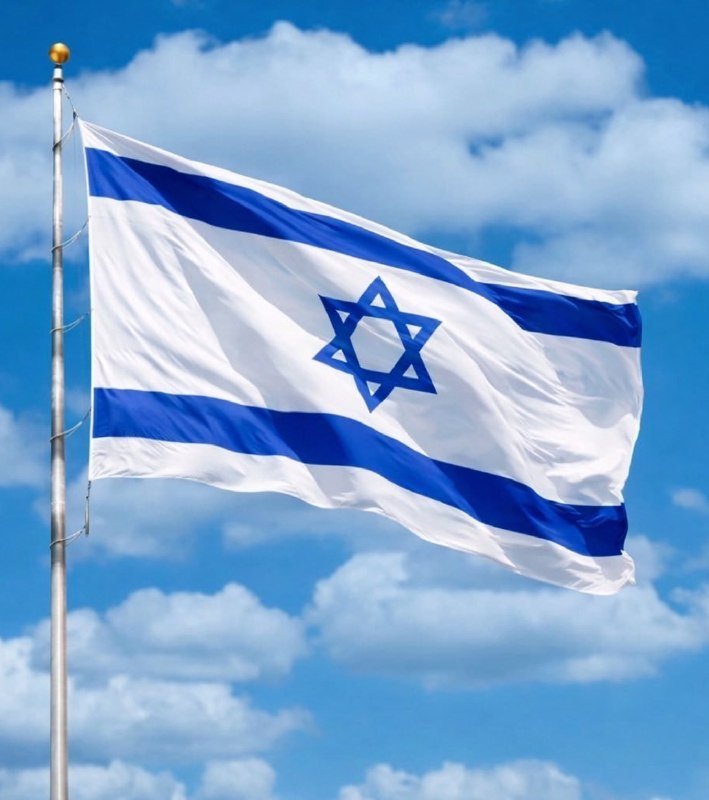
On May 18, 2026, Israeli naval forces intercepted a vessel that had set sail from Turkey toward the Gaza Strip. The Israeli Foreign Ministry had issued statements calling on all participants to alter course and return immediately, warning that it would not permit any breach of the naval blockade imposed on the Palestinian enclave. The operation, confirmed by Israeli domestic media, ended with control of the vessel transferred to Israeli authorities. The episode replayed, with near-identical choreography, incidents that have punctuated this conflict for nearly two decades.
The pattern is familiar enough to have become its own genre of international incident. A ship departs from a friendly or semi-friendly port carrying activists, journalists, and humanitarian supplies. Governments issue warnings. Israeli forces board. The footage generates headlines, diplomatic protests, and a brief spike in global attention to Gaza's humanitarian conditions. Then the ship docks in Israel, its cargo is inspected, some of it may eventually reach the Strip, and the news cycle moves on. The blockade remains intact. The political conditions producing Gaza's dependency remain intact. Nothing structural changes, but everyone has performed their role in a ritual of contested legitimacy.
What makes this particular interception worth examining is not the event itself but what it reveals about the escalating gap between symbolic gesture and political effect in the context of the Gaza blockade. Turkey's role in facilitating the voyage is not incidental. Ankara has positioned itself, with varying degrees of consistency, as a diplomatic interlocutor with Israel while simultaneously hosting and enabling gestures that challenge Israeli sovereignty claims over Gaza's maritime access. The calculation is partly domestic—Turkey's governing coalition has found recurring political utility in championing the Palestinian cause—and partly geopolitical, a mechanism for maintaining regional relevance as its relationship with Western partners has grown more complex.
The effectiveness of such gestures, however, warrants scrutiny. Aid flotillas capture global media attention in a way that sealed-border crossings, siege economics reports, and UN agency funding crises do not. The psychological weight of a ship being boarded by armed naval personnel produces imagery that static data about caloric intake or clean water access cannot replicate. Yet that very visibility may be, from a policy standpoint, counterproductive. Each intercepted flotilla refreshes the international conversation about the blockade without fundamentally shifting the political conditions that make the blockade viable. Israel absorbs the reputational cost of the interception; Western governments issue statements of varying degrees of concern; the Turkish government registers its protest; and the status quo reasserts itself within days. The blockade does not lift. The access restrictions do not ease. The 2.3 million people in Gaza remain subject to an arrangement whose contours are determined by security calculations that flotilla gestures, however sincere, have never managed to override.
The alternative reading—that each interception strengthens the moral case against the blockade, building international pressure toward a tipping point—is not without merit. Public opinion in European capitals has shifted meaningfully over the past decade, and the diplomatic isolation Israel faces at the International Court of Justice and in UN forums reflects accumulated pressure of precisely this kind. But the historical record of siege-breaking as a mechanism for political change is mixed at best. The 2010 Mavi Marmara incident produced a significant diplomatic rupture between Turkey and Israel that lasted six years. When normalisation eventually came, it came not because the blockade collapsed but because both sides found sufficient strategic interest in restoring bilateral relations. The blockade remained.
Israeli officials have articulated their position with consistent clarity: the naval blockade is a legitimate security measure designed to prevent arms smuggling into Gaza. The Israeli Foreign Ministry's statement on May 18, 2026, reflects a framing that treats any unauthorised maritime access as a potential security threat, regardless of the declared contents of any given vessel. This framing has been accepted, with notable caveats, by several international legal assessments. It is also a framing that places the burden of proof on those attempting to deliver aid, rather than on those imposing restrictions that affect civilian populations at scale. Whether one finds that allocation of burden persuasive, it is the operative framework under which the interception occurred—and it is a framework that flotilla activism, by its nature, cannot directly challenge without shifting to the longer and less photogenic work of litigation, diplomatic pressure, and institutional reform.
There is a version of this analysis that concludes flotillas are therefore pointless. That would be an overstatement. Acts of solidarity carry intrinsic human value—activists aboard those vessels are not performing for cameras alone, and the relationships built through shared risk have genuine political dimensions that outlast any single incident. But for those whose objective is measurable improvement in Gaza's humanitarian conditions, the record suggests that maritime gestures are a poor return on significant investment of resources, organisational capacity, and political capital. The organisations that have sustained and scaled humanitarian access to Gaza—UN agencies, the Red Cross, and established international NGOs—have done so not through confrontation but through the slower, less dramatic work of maintaining functional relationships with all parties to the conflict. The flotilla's dramatic logic and the blockade's bureaucratic logic operate on different timescales and toward different metrics of success. Conflating them produces spectacle without leverage.
The May 18 interception is likely to generate the customary round of condemnation, counter-condemnation, and calls for independent investigation. Turkey will summon Israel's ambassador. Western foreign ministries will issue carefully worded statements. UN officials will express concern. The vessel will dock, its contents inspected, and some portion may reach Gaza under Israeli supervision within weeks. The blockade will remain. Gaza's population will remain. The architectural choice to address humanitarian need through a restricted-entry framework rather than through normalised commercial and civilian access will remain a settled feature of the regional landscape, resistant to the episodic interventions of symbolic solidarity. That is the uncomfortable baseline from which any serious assessment of what this interception means—and what it cannot mean—must begin.
Monexus covers the Israel-Palestine conflict from the perspective of established international-law principles and humanitarian first principles, treating harm to civilians on all sides as equally worthy of record.
Wire provenance
This editorial synthesis draws on the following public wire/social posts:
- https://t.me/alalamarabic/78941
- https://t.me/amitsegal/44512
- https://t.me/alalamarabic/78939
- https://t.me/alalamarabic/78938