Gaza Execution Threats Reveal How State Media Manufactures Legitimacy
Statements from Hamas on 18 May 2026, amplified through Iranian state media, offer a case study in how armed movements use prisoner politics to frame themselves as defenders of international law.
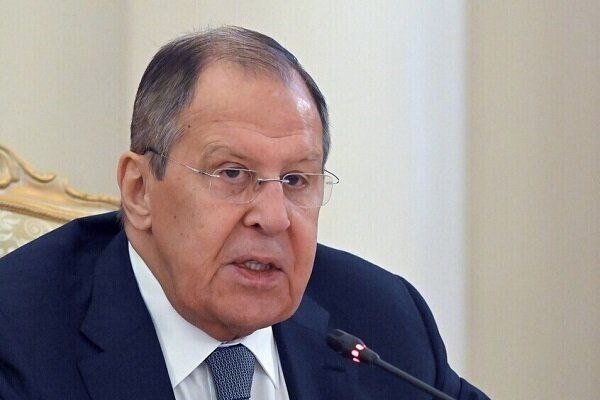
On 18 May 2026, Hamas issued a statement calling an Israeli decision to begin executing Palestinian prisoners a "cowardly criminal decision" that would not deter what it termed "our struggling people from continuing their struggle and legitimate resistance in defense of their land and sanctities." The statement, carried verbatim by Al Alam, the Arabic-language service of Iranian state broadcaster IRIB, went further: it described the measure as "a serious escalation and a flagrant violation of norms and international law." A separate filing from the same channel quoted a Hamas official calling the execution decision a "war crime."
This publication finds that the episode is less about the immediate legal dispute — which remains unresolved as of this writing — and more about the machinery of narrative construction that surrounds it. When a political and military organisation under international scrutiny issues a statement, the question is never only what happened. It is who frames it, through which channel, and to what audience.
The Prisoner as Political Currency
The practice of executing prisoners during active conflict is prohibited under the Geneva Conventions. That is not in dispute among established legal authorities. What varies — dramatically — is how actors on every side of a conflict translate that legal fact into political language. Hamas's statement used the vocabulary of international law against an adversary it simultaneously characterizes as a criminal enterprise. The effect is to position the resisting party as the authentic bearer of the legal-moral order, while delegitimizing the opposing state's very existence.
This rhetorical inversion is not new to asymmetric conflict. Armed groups that cannot match state military capacity have long sought to compete on the terrain of moral authority. But the mechanism matters. The statement was not issued through Hamas's own communication channels and left to stand alone. It was amplified through a state-affiliated international broadcaster, translated into Arabic, and distributed as urgent wire content at 08:37 and 08:58 UTC on 18 May 2026. The institutional packaging — official-looking alert flags, repeated distribution, cross-referencing with other Arabic-language wire services — lends the statement an authority its content alone would not command.
What the Iranian Media Frame Adds
The decision to route these statements through Iranian state media is not incidental. Al Alam serves a dual function: it reports on regional affairs for an Arabic-speaking audience and it functions as a diplomatic instrument for Tehran's foreign policy posture. By carrying Hamas's framing without visible editorial challenge or countervailing legal context, the channel performs a specific service: it normalizes the resistance-as-legal-defender narrative for an audience that includes, but is not limited to, the Gaza context.
The framing also serves Iran's own current diplomatic posture. Statements filed at 08:05 UTC on the same morning from what Al Alam identifies as official Iranian-briefing context emphasized that negotiations were focused on ending the war and securing regional security through joint mechanisms — not on nuclear concessions. The prisoner execution story, carried in the same wire bundle, reinforces a message: Tehran and its allies are the parties pursuing serious diplomacy, while their adversaries resort to lawlessness. The simultaneity of the filing is itself a editorial choice.
The Structural Problem with Legitimacy Claims
There is a structural tension at the heart of how armed movements claim legal-moral authority. International humanitarian law was not designed as a weapon in propaganda warfare — it was designed to protect civilians and combatants from practices that are inherently cruel regardless of the justice of the underlying cause. When a group under counterterrorism designations invokes that same legal framework, the invocation is selective: it invokes the protections of the legal order while actively contesting the political order from which those protections derive their force.
This is not a contradiction unique to Hamas. It appears across asymmetric conflicts. But acknowledging its universality does not dissolve the editorial question of how media institutions handle such invocations. When a wire service distributes a statement using the language of international law as though the self-characterization were self-evidently accurate, it performs an unexamined legitimization function. The statement becomes news not because its claims are verified, but because it was issued by a named actor in a named conflict.
The sources do not indicate that any Western or Israeli official response had been issued at the time of filing. What the record shows is a one-sided distribution of framing — which, in the absence of countervailing coverage, becomes the dominant narrative for outlets relying on the wire.
What Follows If This Frame Holds
If the framing in which armed resistance routinely positions itself as the defender of international law while its adversaries are cast as lawbreakers goes unexamined, several things tend to follow. First, it becomes easier for external audiences — including those in the Global South, where sympathy for Palestinian cause remains high — to view any Israeli or Western response as inherently unlawful, regardless of its specific content. Second, it reduces the political space for negotiation that relies on both parties accepting shared procedural norms. Third, it consolidates the narrative advantage of the party that has less to lose from a legal vacuum, because that party planned its operations in the knowledge that such a vacuum might be created.
None of this excuses the execution of prisoners. It does not rehabilitate the legal record of any actor in this conflict. It is, instead, a note on the architecture of justification — on who benefits when statements about law and order are amplified without scrutiny, and what that amplification costs the prospects for anything resembling a negotiated resolution.
This publication's own coverage of these statements differs from the wire in one deliberate respect: it names the channel through which they were distributed and notes what the distribution itself communicates. The wire carried the content. We are interested in what the carriage reveals.
Wire provenance
This editorial synthesis draws on the following public wire/social posts:
- https://t.me/alalamarabic/98234
- https://t.me/alalamarabic/98236
- https://t.me/alalamarabic/98231
- https://t.me/alalamarabic/98229
- https://t.me/alalamarabic/98228