Gulf States' Intervention Stalls Trump Administration's Iran Strike Plan
President Trump's decision to pause a planned military strike on Iran came not from Western hand-wringing but from Gulf states pressing their own strategic interests at a moment when their leverage over Washington happens to align with de-escalation.
President Donald Trump announced on May 18, 2026, that the United States would pause a military strike on Iran that had been planned for the following day. The announcement, delivered at the White House, marked an unexpected deferral of what administration officials had described in background briefings as a proportional response to Iranian provocations in the Gulf of Oman. Trump said he was holding off at the request of Gulf states, and that "serious negotiations are now taking place." The reversal, announced just hours before the operation window was set to open, sent oil markets into a brief spasm before prices stabilized.
The decision rewrites the most immediate version of the story. Initial wire accounts framed the pause as a product of American diplomatic caution — a president known for muscular rhetoric choosing the table over the strike package. That reading is not wrong, but it misplaces the fulcrum. Gulf states did not request restraint because they share Washington's appetite for a settlement. They requested restraint because they share Iran's neighbourhood and, increasingly, its interest in keeping the Hormuz Strait operational. The distinction matters: what looked like American wisdom may have been Arab leverage, exercised at a moment when Riyadh, Abu Dhabi, and Doha all had reason to move the needle away from confrontation.
The Gulf Equation Washington Often Forgets
The six monarchies of the Gulf Cooperation Council — Saudi Arabia, the United Arab Emirates, Qatar, Kuwait, Oman, and Bahrain — have spent two decades watching the United States oscillate between containment and engagement with Tehran. They have their own grievances with Iranian regional behaviour: Houthi strikes on Saudi infrastructure, interference in Bahrain, Qatar's long diplomatic siege, the slow entrenchment of Tehran's proxy networks from Lebanon to Yemen. But their calculus on military escalation differs fundamentally from Washington's. Every barrel of oil that transits the Strait of Hormuz represents revenue, stability, and domestic legitimacy. A conflict that closes or threatens the strait — even briefly — is not a strategic inconvenience for Gulf capitals. It is an existential variable.
That is why Saudi and Emirati officials have spent the past eighteen months building quiet channels to Tehran, a process that accelerated after the US-China summit in Geneva the previous week. Nikkei Asia reported on May 18, 2026, that Iranian negotiators had taken a harder line with Washington since those talks, suggesting Beijing signalled something to Tehran about the scope of any Sino-American understanding. Whether that signal was a green light, a warning, or a mixture of both remains unclear from the available sourcing. What is clear is that the Chinese diplomatic context shifted Tehran's expectations — and that, in turn, pushed Gulf states toward more active intervention with Washington.
What "Serious Negotiations" Actually Means
The phrase "serious negotiations are now taking place" carries enough ambiguity to support competing readings. The charitable version: Gulf-mediated back-channels have produced a genuine framework — some combination of sanctions relief, nuclear constraints, and regional de-escalation — that both sides are willing to test before resorting to force. The less charitable version: the pause is a negotiating tactic, giving the administration cover to demonstrate strength while the military posture remains unchanged and the strike window merely shifts. Administration officials quoted in background by wire services have not clarified which version obtains.
The available sourcing does not resolve the ambiguity. Al Jazeera's breaking coverage on May 18 characterized the pause as a response to Gulf state intervention, citing Trump's own remarks. The BBC's wire summary carried the same framing. Neither outlet reported the content of whatever negotiations are supposedly underway, nor did either identify the specific intermediary governments. Oman has historically played this role; its foreign ministry has not issued a statement as of publication. Qatar, which hosts the US Central Command forward headquarters and maintains its own channel to Tehran, is another plausible vehicle. Without a named intermediary or confirmed substantive talks, the word "serious" must be read as aspirational rather than verified.
The Hormuz Variable in Plain Sight
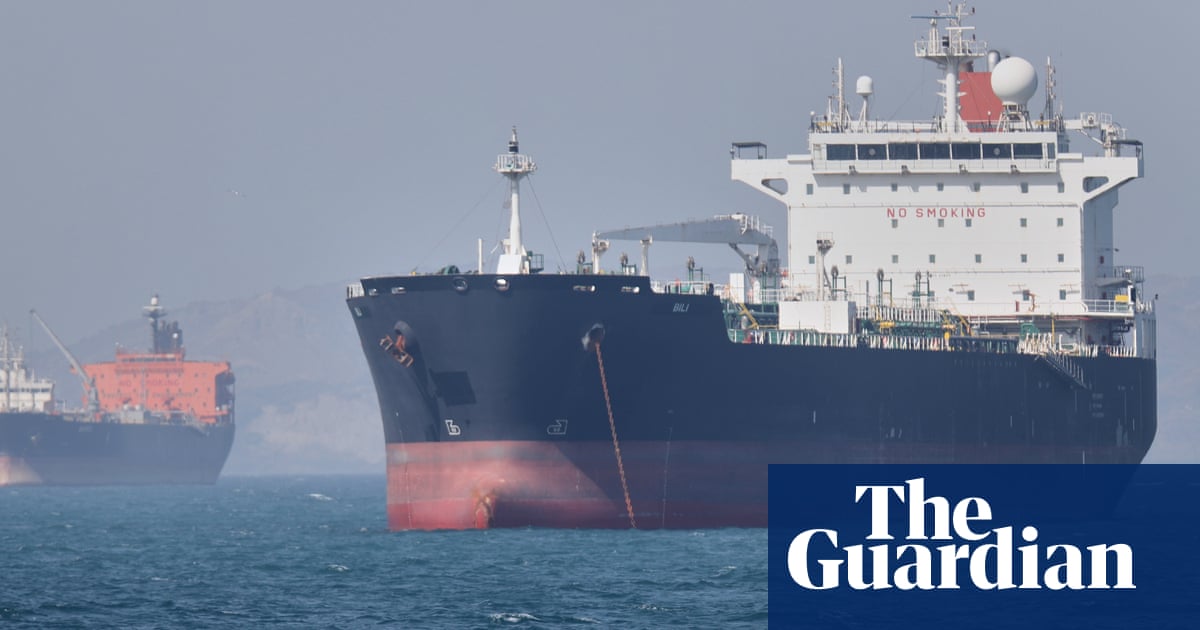
Strip away the diplomatic language and what sits underneath this episode is a chokepoint that handles roughly a fifth of the world's oil traded by sea. The Islamic Republic of Iran has never formally threatened to close the strait — such a move would trigger an immediate international response that Tehran cannot sustain — but the mere possibility functions as a background constraint on everyone who depends on the waterway. Gulf states live inside that constraint. Their interest in keeping Hormuz open and unthreatened is structural, not sentimental.
That structural interest sometimes aligns with American hardliners who want to dismantle Iran's nuclear programme and constrain its missile capability. Sometimes it aligns with those who argue that a negotiated freeze — keeping the nuclear programme below weapons threshold in exchange for sanctions relief — is the only durable option. Right now, in this particular moment, Gulf capitals appear to have concluded that a pause serves them better than a strike. The reasons are not purely altruistic: a US strike, even a limited one, could trigger exactly the Iranian response — harassment of commercial shipping, mining of the approaches, rhetorical escalation — that would make Hormuz less reliable. Gulf states have calculated that they lose more from a disrupted strait than they gain from a weakened Iran.
This is the part of the story that the dominant Western framing systematically undersells. The intervention was not a gesture of regional solidarity with peace. It was an exercise of self-interest by governments who happen, for the moment, to want the same outcome as those urging diplomacy.
What Comes Next Depends on What the Negotiations Actually Contain
The next seventy-two hours will test whether the pause produces anything substantive or merely buys time. If Gulf-mediated talks produce a credible framework — even a temporary one involving verifiable caps on enrichment and a halt to regional proxy activity — the pause will be remembered as a diplomatic opening. If the strikes resume after a brief interval and the negotiations prove to have been a fiction maintained for domestic and allied consumption, the Gulf capitals will have expended goodwill for nothing and will find their influence diminished the next time a crisis comes around.
The China dimension complicates any clean resolution. Beijing has deepened its economic relationship with Tehran over the past decade, providing diplomatic cover and investment in sectors Western sanctions were designed to strangle. The signal Iranian officials appear to have taken from the US-China summit is that Beijing will not abandon them — and that calculation may make Tehran less willing to accept a deal that looks like capitulation. If the negotiations stall because Iran believes it has a backstop, the pause becomes a prelude to a more dangerous cycle rather than an exit from one.
For now, the strikes are paused. That is not nothing. But the machinery that made them possible — the US carrier groups in the Gulf, the Iranian missile deployments along the strait's northern shore, the diplomatic rupture that preceded this moment — remains in place. A pause is not a settlement. Gulf states may have bought time. Whether they bought anything more depends on conversations happening in back-channels that none of the available sourcing has yet disclosed.
This publication covered the announcement through Al Jazeera's breaking desk and BBC wire summaries. The dominant Western framing emphasized Trump's unilateral decision-making; this article foregrounds Gulf state agency and the Hormuz calculus that shapes it. Nikkei Asia's reporting on the China-Iran signal provided the structural context for understanding Tehran's harder line.
Wire provenance
This editorial synthesis draws on the following public wire/social posts:
- https://t.me/BBCWorldoffl/
- https://t.me/NikkeiAsia/
- https://t.me/nikkeiasia/