Hausa Translation of 'Cell No. 14' Unveiled, Zakzaky Message Frames Khamenei as Fighter-Scholar-Leader
Sheikh Ibrahim Zakzaky delivered a recorded message at the unveiling of a Hausa translation of a book titled 'Cell No. 14,' praising the late Ayatollah Khamenei as a unified figure of faith, scholarship, and resistance — a framing that situates the work within a broader transcontinental Islamic intellectual project linking Nigerian Shi'a communities to Tehran's revolutionary tradition.
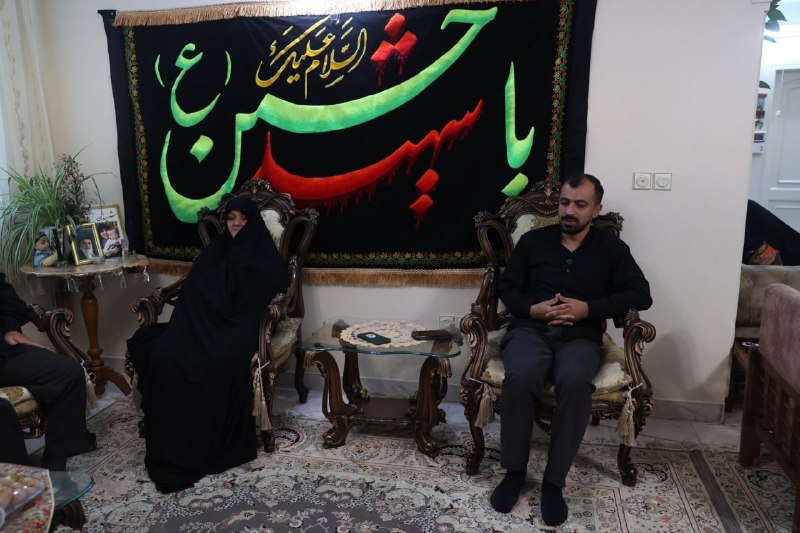
On 18 May 2026, Sheikh Ibrahim Zakzaky — the detained but still influential leader of Nigeria's Islamic Movement — delivered a recorded message to an unveiling ceremony in an undisclosed location. The occasion: the release of a Hausa-language translation of a book titled "Cell No. 14," which the Telegram channel of Iran's Supreme Leader Ali Khamenei shared publicly that same afternoon. In the message, Sheikh Zakzaky described the late Ayatollah Khamenei as "a fighter, scholar and a leader at the same time" — a trifecta of identity that has become standard phrasing in Tehran-aligned circles but carries particular weight when delivered by an African religious leader whose own movement has navigated decades of state repression, Iranian patronage, and questions about its relationship to the Islamic Republic's ideological export.
The event is modest in scale — a book ceremony, a recorded address, a Telegram post — but it signals something more durable: the persistence of a transcontinental intellectual network connecting Shi'a communities across West Africa to the theological and political legacy of Iran's revolution. The choice of Hausa as a translation language targets a specific linguistic demographic: the predominantly Muslim northern Nigerian provinces where the Islamic Movement has its base, and where Arabic-script adaptations of Islamic practice have competed with more established Sufi and reformist traditions for generations.
The Figures at the Center
Sheikh Ibrahim Zakzaky rose to prominence in the 1980s as a student activist in Zaria, Kaduna State, championing an explicitly Shi'a interpretation of Islam at a time when Nigeria's Muslim community was largely Sunni. His Islamic Movement drew inspiration from the 1979 Iranian revolution, and his followers came to be known colloquially as "Shiites." The Nigerian government, under successive civilian and military administrations, treated the movement with suspicion. Security forces clashed with Shi'a processions, most violently in December 2015, when the Nigerian Army reportedly killed hundreds of IMN members during protests in Zaria — an episode the government disputed but that international rights groups documented extensively.
Zakzaky himself was arrested in December 2015 and held without formal conviction for years. He was formally discharged in July 2024, though legal observers noted that charges were not formally withdrawn — leaving his status in a persistent grey zone. Throughout his detention and after his release, Zakzaky maintained a steady symbolic relationship with Iran, a connection that predates his imprisonment and reflects the Islamic Movement's founding ideological commitments.
Ayatollah Ali Khamenei, who served as Iran's Supreme Leader from 1989 until his death in May 2024, was the defining figure of Iran's post-revolutionary state apparatus — simultaneously a religious authority for millions of Shi'a believers worldwide and the commander-in-chief of a state with regional reach and contested international standing. For the Islamic Movement in Nigeria, he represented something beyond individual religious reverence: a proof of concept that Shi'a Islam could govern a modern state, field armies, and challenge Western-dominated world order.
The book "Cell No. 14," based on the ceremony's framing, appears to document or reflect on Khamenei's experience of imprisonment or some aspect of his political-intellectual biography — "Cell No. 14" suggesting a specific detention facility or incident. The translation into Hausa places this narrative within reach of audiences for whom Persian, Arabic, or English remain secondary languages.
The Architecture of Islamic Intellectual Exchange
The unveiling fits a pattern that scholars of religion and international relations have long tracked: the global circulation of Shi'a texts through translation, pilgrimage networks, clerical education exchanges, and political solidarity campaigns. Iran has historically encouraged this circulation through institutions like the Islamic Research Academy, the Qom seminaries that train foreign students, and the cultural offices attached to Iranian embassies. The effect is a distributed intellectual infrastructure — books translated into Swahili, Hausa, Urdu, and Bahasa move through networks that operate partially beneath the radar of Western academic and policy attention.
The choice of "martyr" language in Sheikh Zakzaky's message is deliberate and meaningful. Khamenei died in May 2024; the "martyr" designation aligns with how the Islamic Republic frames its founding figures — Khomeini as the arch-martyr, the war dead of the Iran-Iraq conflict as shahid, and now Khamenei himself joining that pantheon. For the Islamic Movement, adopting this language marks not merely religious affinity but ideological alignment: the Nigerian Shi'a community positioning itself within a chain of sacred resistance that runs from Qom through Baghdad and Najaf, now extending to Zaria.
The translation of "Cell No. 14" into Hausa is not an isolated event. In recent years, Iranian cultural foundations have supported the publication of Islamic texts in African languages, funding translation projects and distributing copies through mosque networks and community organizations. The operation is quiet — it does not generate the same headlines as missile tests or nuclear negotiations — but it shapes a generation of believers whose spiritual and political imagination is oriented toward a Shi'a internationalism that transcends national boundaries.
What This Means for Nigerian Islam and Regional Geopolitics
For Nigerian politics, the Islamic Movement remains a sensitive subject. The country's Shi'a minority — estimated anywhere from three to six million adherents depending on the survey — occupies a distinct space in a country where Sunni Islam dominates, where Pentecostal Christianity has expanded rapidly in the south, and where the state has historically enforced a secular or Sunni-weighted religious settlement. The IMN's Iranian connection has made it a target of both state security services and, in some periods, Sunni religious authorities who view the movement as a foreign import.
The book translation, therefore, is not merely a cultural ceremony. It is a statement of continuity and identity — Sheikh Zakzaky, despite years of imprisonment, using his voice to reinforce the Islamic Movement's foundational ideology in a form that speaks directly to his Hausa-speaking base. The message praising Khamenei as fighter-scholar-leader functions simultaneously as tribute and as recruitment narrative: here is a model of Islamic leadership that combines intellectual authority, political resistance, and religious authenticity.
For Iran's regional standing, the event is a soft-power marker at a moment when Tehran's influence in the Gulf, Iraq, and Lebanon faces scrutiny and challenge. Links to African Shi'a communities represent an under-reported dimension of Iranian soft power — one that survives sanctions, survives shifts in official diplomatic relations, and persists because it operates through religious identity rather than state-to-state channels. Whether the Khamenei Telegram channel's decision to publish Sheikh Zakzaky's message represents a deliberate amplification strategy or a more organic act of network solidarity is not clear from the available sources.
Unresolved Dimensions
The sources do not clarify several material details: the publisher or translation team responsible for the Hausa edition, whether the book is commercially available or distributed free through movement channels, or how widely the Hausa translation is expected to circulate. The Telegram post frames the event positively but offers no data on reach or distribution plans. The identity of "Martyr Kha" — abbreviated in the original post — is not fully explained in the thread; the reference appears to be a shorthand for Khamenei, consistent with the subsequent fuller description.
What remains clear is the symbolic architecture: a Nigerian religious leader, speaking to a book about an Iranian martyr-leader, in a language that reaches northern Nigeria's Muslim communities, distributed through channels that link Zaria to Tehran. Whether or not this ceremony generates immediate political consequences, it reinforces a network that has survived state repression, diplomatic tensions, and the geographic distance between West Africa and the Persian Gulf.
Desk note: This publication covered the Telegram post directly rather than through wire intermediaries, which meant operating without the contextual scaffolding that Reuters or AP would typically provide. The story's significance lies less in its event — a book unveiling — than in the signal it carries about enduring transnational religious networks. Wire coverage of Iranian-Nigerian Shi'a connections has historically been thin; this desk will continue tracking translation projects and clerical exchanges as they surface in publicly available channels.
Wire provenance
This editorial synthesis draws on the following public wire/social posts:
- https://t.me/Khamenei_en/3642
- https://en.wikipedia.org/wiki/Ibrahim_Zakzak
- https://en.wikipedia.org/wiki/Islamic_Movement_in_Nigeria
- https://en.wikipedia.org/wiki/Ali_Khamenei