India's Strategic Contradictions: Nuclear Deals, Frozen Borders, and the Reform That Won't Come
Four dispatches from a single day reveal a country projecting extraordinary regional weight while structural reforms that could convert that weight into durable power remain consistently deferred.
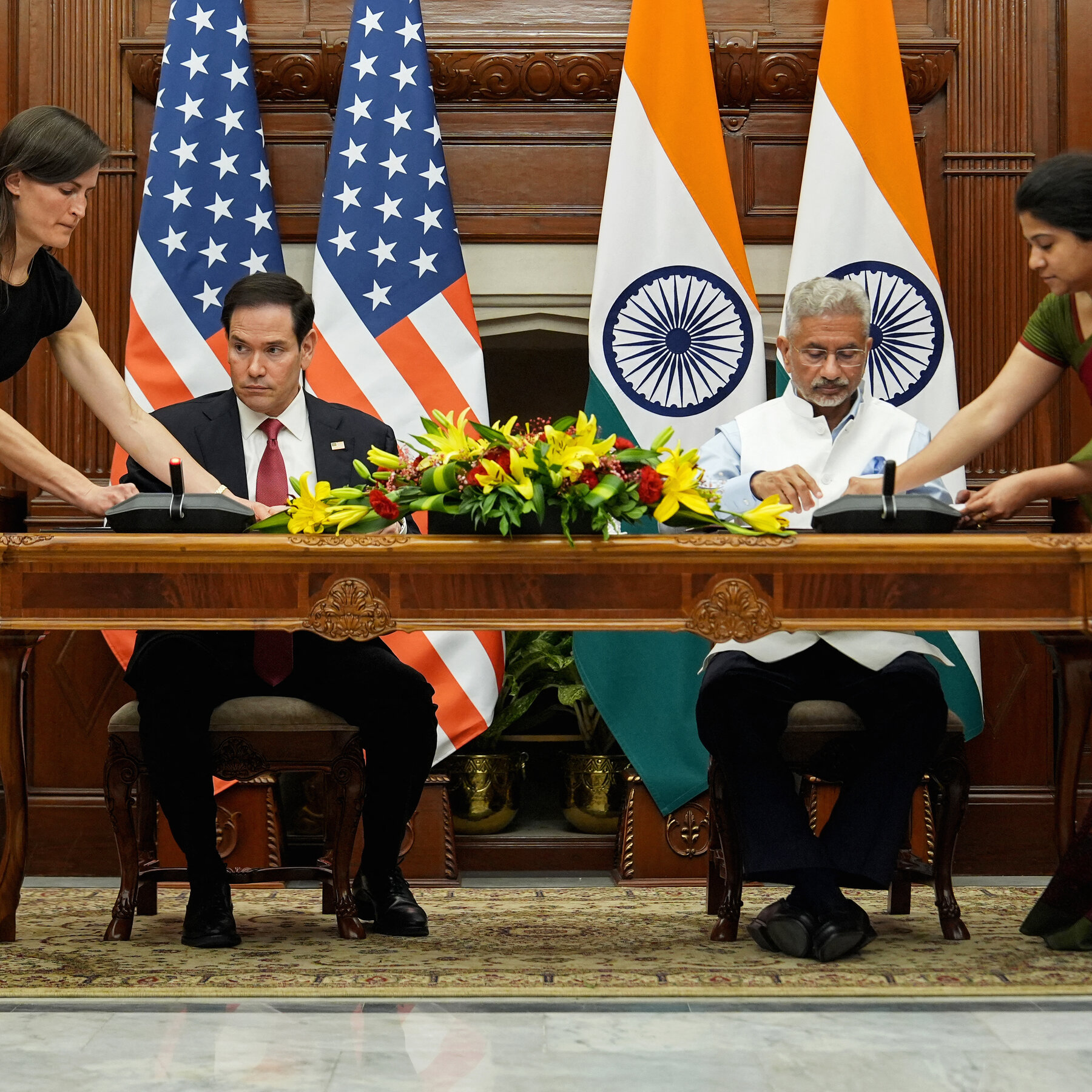
Four dispatches from The Indian Express on a single day reveal a country at a structural crossroads. On 18 May 2026, coverage traced US nuclear companies engaging with Indian officials on investment potential, a sign that Washington views New Delhi as a long-term energy partner worth cultivating. A separate analysis examined the collapse of India-Pakistan diplomatic channels, finding that the two neighbours effectively no longer maintain a functional dialogue. Yet two domestic challenges received less international ink: an agricultural subsidy spiral The Indian Express economics desk called unsustainable, and a noted scarcity of dissenting voices in India's English-language intellectual space compared to Pakistan's more restless literary culture. These four threads point in the same direction — India is a country of enormous scale and ambition, but one whose structural contradictions resist easy resolution.
India's positioning in 2026 reflects a paradox. It projects greater regional weight than at any point in its post-independence history — larger economy, deeper international partnerships, more institutional depth. Yet the domestic subsidy architecture underpinning its agricultural sector remains unreformed, its relationship with Pakistan frozen at a diplomatic level, and its English-language public sphere thinner than raw numbers might suggest. The question is not whether India is rising — the economic data supports that claim — but whether its structural constraints will allow that rise to be converted into durable power. The nuclear investment interest from Washington, the agricultural subsidy spiral, and the Pakistan dialogue collapse all speak to that underlying tension.
The Nuclear Dimension
US nuclear companies reportedly sought inputs on investment potential in India's civil nuclear sector, according to reporting published 18 May 2026 by The Indian Express. The story received modest coverage outside Indian wire services, but its implications deserve closer attention. Washington's interest in nuclear cooperation with India is not new — the 2008 civilian nuclear agreement opened the door — but the current engagement suggests a second-order strategic recalculation. The United States is signaling that India is a priority energy partner in a region where China's nuclear footprint is expanding and where civilian energy demand is accelerating faster than renewable infrastructure can meet.
The geopolitical framing is not incidental. India and the United States share an interest in shaping Indo-Pacific energy architecture in ways that reduce dependence on Middle Eastern supply chains and hedge against single-source vulnerabilities. When US nuclear companies seek investment briefings from Indian counterparts, they are doing so with the tacit encouragement of a US policy establishment that sees New Delhi as a structural counterweight in a multipolar competition. That does not make the deal commercially simple — India's nuclear liability framework has historically created friction — but it does make the strategic alignment real.
The Subsidy Paradox
The agricultural subsidy architecture presents a starker problem. India's minimum support price mechanism has been a political fixture for decades, ensuring floor prices for key crops and providing income security to a farming constituency that represents a significant electoral block. The Indian Express, drawing on its economics desk reporting, described the current arrangement as a spiral — each intervention creates dependency, which generates pressure for the next intervention, which deepens the fiscal burden, which makes correction progressively harder to execute. The publication's position was blunt: India needs to snap out of this pattern or face compounding structural costs.
The analysis is not novel. Economists inside and outside government have made similar arguments for years. What is notable is the consistency of the gap between diagnosis and action. Successive administrations have acknowledged the distortionary effects of open-ended subsidies, yet reform attempts have consistently stalled before reaching implementation. The political arithmetic is straightforward — the farming lobby is concentrated enough to mobilize against reform while the costs of the subsidy system are diffuse enough to be borne by no single constituency in a way that generates equivalent pressure. The result is structural inertia. India generates the intellectual framework for reform and then fails to act on it.
The Dialogue Void
The India-Pakistan dynamic compounds the structural picture. A separate piece published 18 May 2026 examined why the two countries no longer talk to each other at a meaningful diplomatic level, tracing the deterioration through several administrations on both sides. The analysis found that back-channel communication has effectively replaced formal dialogue as the default instrument, and that even back-channel activity has thinned. Security concerns, domestic political calculations, and the asymmetry of threat perception between the two capitals have together produced a situation where two nuclear-armed neighbours maintain no functioning summit-level engagement.
The consequences are structural, not merely rhetorical. Without formal channels, escalation dynamics become less predictable. Without diplomatic contact, misperception fills the space where communication should be. And without regular engagement at the working level, both governments operate with assumptions about the other side that are updated slowly or not at all. The piece acknowledged that back-channel processes exist but noted their limitations — they are typically narrow, episodic, and invisible to public accountability in ways that formal diplomacy is not.
Intellectual Infrastructure and the Question of Dissent
The fourth thread is the most diffuse but not the least significant. A cultural analysis noted that India possesses more English-language academies and publishing infrastructure than Pakistan, but fewer public intellectuals who function as consistent dissenting voices within that space. The piece cited Mohammed Hanif — the Pakistani novelist and journalist whose work has consistently challenged official narratives in ways that have generated both acclaim and friction — as an example of the kind of voice the analysis suggests India lacks in equivalent proportion.
This is a difficult claim to operationalize, but the structural logic has weight. Institutional depth and intellectual ferment are not the same thing. A country can have large universities, active publishing houses, and professional journalism without producing a disproportionate share of voices willing to challenge power in sustained, public ways. India's English-language media ecosystem is sophisticated, but it operates within a set of political and commercial pressures that shape what gets amplified. The piece's framing — that institutional scale does not automatically produce intellectual restlessness — points to a distinction that matters for any account of how power actually operates in a society. The capacity to build is not the same as the willingness to question.
Stakes and the Structural Constraint
The four threads together suggest a country that is structurally powerful but strategically constrained by its own internal architecture. The US nuclear interest is real and reflects a geopolitical alignment that India has cultivated deliberately over two decades. But that interest encounters the same friction that blocks agricultural reform — an institutional environment that produces analysis, generates attention, and then fails to convert insight into durable action. The dialogue void with Pakistan represents the most acute expression of that failure: a structural gap between two governments that both nominally want stability but neither has found a formula for achieving it through direct engagement.
The path forward is not神秘. It requires fiscal discipline in agricultural policy, institutional creativity in restoring diplomatic channels, and a degree of intellectual independence that cannot be mandated by government but only cultivated through environments that reward risk-taking in public discourse. What the sources reviewed for this piece suggest is that India has the analytical capacity to identify these needs. The conversion gap — between knowing what is required and executing it — is the structural constraint that will define the next phase of New Delhi's rise. Whether that conversion gap narrows or widens will determine whether India's scale translates into the kind of power that shapes regional and international order, or remains a measure of potential that was never quite realized.