Iran's Bitcoin Gambit: How Tehran's Strait of Hormuz Insurance Plan Could Reshape Global Shipping Finance
Tehran's reported $10 billion plan to settle maritime insurance in Bitcoin for ships passing through the Strait of Hormuz is a geopolitical signal wrapped in financial architecture—designed to exploit a chokepoint, sidestep dollar dominance, and reframe the rules of coercive pressure.
On 18 May 2026, Iranian state-adjacent media circulated a framing that placed the Strait of Hormuz squarely in the language of economic warfare: the passage, the announcement suggested, was "more dangerous than the atomic bomb"—a declaration that shattered Western arrogance in a single stroke. Hours later, a more substantive report emerged, detailing a plan reportedly developed inside Iranian financial institutions to settle maritime insurance premiums for ships transiting the strait in Bitcoin, generating what sources described as a potential $10 billion marine insurance programme.
The Decrypt report on the same date described a platform capable of settling cargo cover in Bitcoin under a proposed framework for marine policies and certificates. Whether the plan is fully operational, a sophisticated negotiating position, or an elaborate diplomatic signal remains unresolved—but its very existence represents something the Western financial architecture has not yet had to contend with at scale: a dollar-denominated system of coercive leverage facing a credible, sanction-proofed alternative at one of the world's most strategically sensitive chokepoints.
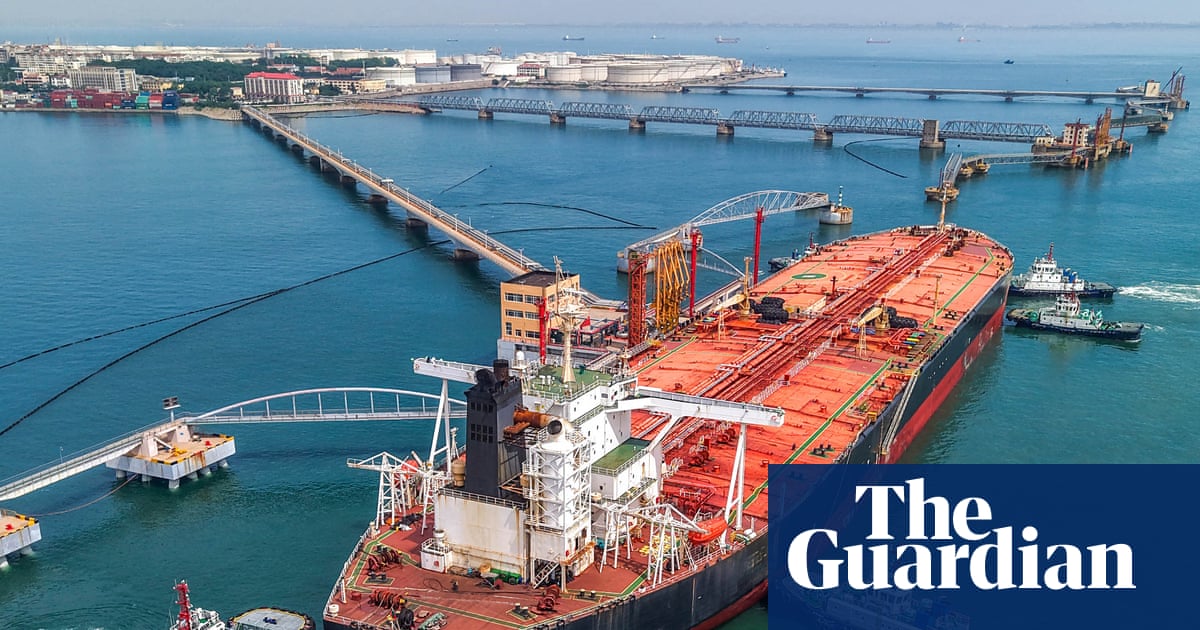
The Strait of Hormuz is not an abstraction. The waterway, at its narrowest just 21 miles wide, processes roughly 21 million barrels of oil per day—approximately one-fifth of global daily oil consumption. Tankers bound for Asia, Europe, and North America funnel through lanes that Iran controls from its northern shore. For decades, the strait's military and strategic significance has been the backdrop for Iranian posturing. What is new is the financial architecture being proposed alongside it.
Maritime insurance is, in normal circumstances, a technical and unglamorous business. The International P&I Group, a mutual assurance association backed by British and European underwriters, insures roughly 90 percent of the world's ocean-going tonnage. Its member clubs—and the London Market insurers who reinsure them—sit inside a sanctions compliance architecture that has, since 2012, progressively hardened against Iranian counterparties. For an Iranian shipper, or a vessel carrying Iranian oil, access to standard coverage has become either legally impossible or operationally prohibitively expensive.
The Bitcoin-based insurance model reportedly proposed by Tehran targets that vulnerability directly. By denominating premiums and claims in a cryptocurrency that cannot be frozen by executive order, and by routing settlements through a platformIranian financial institutions reportedly developed for the purpose, Tehran would create an alternative circulatory system for a market the West has, up to now, effectively controlled through the dollar's reach. The $10 billion valuation cited in initial reporting appears to represent the aggregate premium volume the platform might generate if adopted at scale—ambitious, but not implausible given the volume of traffic passing through the strait.
The Sanctions Override
To understand why this matters, it is necessary to understand what the current dollar-denominated insurance architecture actually does—and what it costs Iran.
The architecture of sanctions enforcement in shipping runs through several layers. Primary sanctions prohibit US persons from transacting with designated entities. Secondary sanctions extend that prohibition to non-US persons who conduct significant transactions with those same entities. Marine insurance, because it involves risk assessment of entire cargoes, counterparties, and jurisdictions, sits comfortably inside the secondary sanctions net. Lloyd's of London underwriters, the International P&I Group, and the major reinsurance markets in Bermuda and Switzerland have, since 2018, maintained compliance programmes that effectively exclude vessels operating under Iranian flag or carrying Iranian-origin oil from standard coverage without explicit Treasury licensing.
Iran's exclusion from the SWIFT messaging system in 2018—following the Trump administration's withdrawal from the Joint Comprehensive Plan of Action—compounded the problem by severing the correspondent banking relationships Iranian financial institutions needed to settle dollar-denominated premiums. The Islamic Republic's banks found themselves not merely sanctioned but cut off from the plumbing that makes international financial commerce possible.
Tehran has spent the intervening years exploring alternatives. Cryptocurrency has featured in those plans, but previous Iranian engagement with Bitcoin largely involved domestic mining operations and limited bilateral settlements with regional partners willing to accept the asset outside formal banking channels. The reported insurance platform represents a different order of ambition: not a workaround for petty transactions, but a direct challenge to the mechanism by which Western sanctions leverage actually operates at scale.
Hormuz as Leverage
The Strait of Hormuz has long been Tehran's most potent non-military instrument of coercive diplomacy. Revolutionary Guard commanders have repeatedly threatened to close the waterway in response to perceived Western aggression—or to Iranian military operations that provoke Western retaliation. Those threats have historically been treated with a mixture of alarm and scepticism: a full closure would harm Iran's own oil revenues and would almost certainly trigger a US military response under longstanding freedom-of-navigation doctrine.
The insurance proposal reframes the calculus. Rather than a binary choice between closure and restraint, a Bitcoin-settled insurance system offers Tehran the ability to exercise graduated, commercially plausible pressure on shipping flows. Vessels that carry Iranian oil, or that are owned by companies under Iranian influence, could be offered preferential rates on Iranian Bitcoindenominated coverage—while vessels seeking to avoid Iranian waters could find their access to standard coverage disrupted by sanctions-driven compliance withdrawals. The asymmetry would not require a single missile to function.
The framing that appeared in Iranian state-adjacent circles on 18 May—positioning the strait itself as a weapon more formidable than nuclear capability—should be read in this context. The statement is not a threat to close the passage. It is an assertion of financial sovereignty over a chokepoint, calibrated to resonate with an audience that has spent seven years watching Iranian oil revenues evaporate under the weight of financial sanctions.
What Remains Unresolved
The sources available to this publication on 18 May 2026 do not permit a full technical assessment of the platform reportedly under development. The Decrypt report, which provided the core financial details, did not include comments from the Iranian financial institutions reportedly behind the platform. It was not possible to independently verify the $10 billion valuation cited in initial coverage, nor to confirm the legal status of any certificates the platform might issue, the reinsurance arrangements that would back them, or the dispute resolution mechanisms that would govern claims.
Equally unclear is the question of adoption. The major shipping companies whose vessels transit Hormuz regularly—frontline carriers, energy majors with chartered tonnage, the independent tanker owners who move the bulk of Persian Gulf cargo—are predominantly Western-incorporated or heavily exposed to Western capital markets. Even if an Iranian Bitcoin insurance platform were fully operational, a European shipping company accepting its certificates would face a secondary sanctions exposure that no commercial advantage could straightforwardly offset. The platform may therefore be designed less for broad adoption than for use by a subset of operators already operating in Iran's shadow market for oil—a market that exists precisely because sanctions have driven it underground.
The structural question is whether the platform represents a durable infrastructure asset or a political performance. The announcement's timing alongside nationalist rhetoric about "shattering arrogance" suggests an audience that is partly domestic and partly regional—a signal to Gulf state competitors, to Asian energy buyers who have grown weary of dollar-exposed payment mechanisms, and to the Western capitals whose sanctions architects have watched Iranian oil exports fluctuate but never collapse entirely. That audience may be satisfied by the signal alone.
The Forward View
If the platform moves beyond the proposal stage—even in a limited form, serving only the subset of Iranian-adjacent shipping that already operates outside the formal market—the implications compound. The precedents established in Hormuz would not stay in Hormuz. Other sanctioned states with critical maritime chokepoints—the Russian Federation over Baltic and Arctic routes, Venezuela over Caribbean approaches—would have a template to adapt. The dollar's role in sanctions enforcement depends not on its reserve currency status alone but on the infrastructure built around it: the correspondent banking relationships, the messaging systems, the insurance markets, the legal frameworks for commercial dispute resolution. A credible alternative to even one of those layers represents a crack in a structure that has proven, until now, remarkably difficult to circumvent.
Western governments are aware of this trajectory. The US Treasury's Office of Foreign Assets Control has issued guidance on cryptocurrency-based sanctions evasion several times since 2021, and the Financial Crimes Enforcement Network has moved to require cryptocurrency exchanges handling significant oil-sector transactions to file enhanced suspicious activity reports. Whether those tools are adequate to address a sovereign-state-operated platform at the scale reportedly contemplated is a question the next phase of reporting will need to answer.
What is not in doubt is the strategic intent. The Strait of Hormuz has always been a passage. Tehran is working to make it a price-setting mechanism for a parallel financial order—one denominated in cryptocurrency, insulated from the SWIFT network, and accountable to no G7 regulator. Whether that order materialises in the next year or the next decade, the direction of travel is one the Western financial architecture can no longer afford to dismiss as propaganda.
This article was filed on 18 May 2026. Wire coverage of the Iranian Bitcoin insurance proposal was first reported by Decrypt on the same date, with subsequent amplification through cryptocurrency news channels on Telegram. Monexus is tracking this story; readers with direct knowledge of the platform's technical specifications or adoption status are encouraged to contact the desk.
Wire provenance
This editorial synthesis draws on the following public wire/social posts:
- https://home.treasury.gov/policy-issues/financial-sanctions
- https://www.fincen.gov/news-room/sar-findings
- https://www.eia.gov/todayinenergy/detail.php?id=43092