Iran's Dual-Track: How Tehran Is Talking Tough While Keeping a Diplomatic Door Open
Foreign Ministry spokesman Ismail Baqaei's press conference on 18 May 2026 laid bare the contradictions at the heart of Iran's current posture: defiant in public, discreetly engaged through Omani intermediaries, and holding the Strait of Hormuz as the underlying lever.
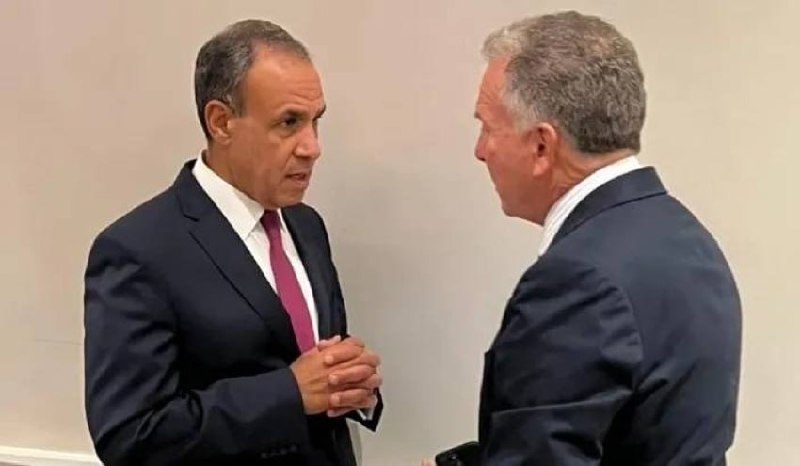
On the morning of 18 May 2026, Ismail Baqaei stood at a podium in Tehran and delivered a Foreign Ministry press conference that managed to be simultaneously bellicose and carefully hedged. Responding to threats attributed to the Trump administration, Baqaei offered a one-line rejoinder that was迅速 disseminated by Iranian state outlets: "We know how to answer Trump." Pressed on a range of issues—from Kuwait's attack on an Iranian border guard vessel to the contours of a potential nuclear agreement with Washington—the spokesman's answers walked a consistent line: Iran would not be bullied, but the door to diplomacy remained unlocked, particularly through the Omani channel.
The simultaneous signals are not accidental. They reflect a governing logic inside Iran's foreign policy apparatus: project enough strength to deter escalation, while keeping enough diplomatic elasticity to avoid total confrontation. What Baqaei laid out that morning was less a comprehensive negotiating position than a statement of irreducible minima—the red lines Tehran will not cross and the levers it retains regardless of American pressure.
The Five Conditions: What Iran Says It Needs
The most concrete element of Baqaei's briefing was his reference to "five conditions" that Iran and the United States would need to satisfy for an agreement. He declined to enumerate them publicly, but the reference itself is significant. Iran has long maintained that any nuclear deal must address more than uranium enrichment levels. Conventional Western framing of the JCPOA focused on centrifuge counts and breakout timelines; Tehran's calculus has consistently included sanctions relief, guarantees against re-withdrawal by a future American administration, and a formal recognition of its right to a civilian nuclear programme under Non-Proliferation Treaty obligations.
The conditions, as this publication understands them from the pattern of Iranian statements and the diplomatic record, are structural rather than transactional. Iran wants written commitments, not executive understandings that a future president can walk back—as happened when the United States withdrew from the Joint Comprehensive Plan of Action in 2018. That single act, in Tehran's reading, demonstrated that an American signature on a multilateral agreement is worth only as much as domestic political consensus permits. The five conditions likely include some version of permanent sanctions relief, verified through mechanisms that survive a change in administration, alongside Iran's core nuclear demands.
The Trump administration's position, as reported across multiple American and regional outlets ahead of the 18 May briefing, centres on a maximalist demand: that Iran reduce its enrichment to below five percent, eliminate its stockpile, and submit to inspections on a timeline measured in months rather than years. Those demands are structurally incompatible with Iran's opening position. The gap between the two sides is not merely technical—it reflects fundamentally different assessments of what an agreement is for. Washington wants to buy a decade of nuclear dormancy. Tehran wants a deal that ends its economic isolation as a functioning sovereign state with legitimate energy ambitions.
Baqaei's reference to the five conditions was notably delivered without rancour. The spokesman presented them as reasonable ask items, the baseline from which negotiation might begin. Whether that represent genuine flexibility or a rhetorical setup for eventual rejection remains to be seen.
Kuwait, the Border Guard Vessel, and the Regional Temperature
Before taking questions on the American dimension, Baqaei addressed an incident that received comparatively little attention in Western wire coverage: an attack by Kuwait on an Iranian border guard vessel operating in Gulf waters. The spokesman's response was clipped: the creation of news around the incident was "incomprehensible." He stopped short of a detailed accusation, which itself tells us something. Either the incident was minor enough that escalation was not Tehran's preferred response, or Iran is managing the bilateral relationship with Kuwait in ways that preclude public confrontation at this moment.
The Kuwait incident sits inside a broader pattern of low-intensity friction in Gulf waters that has persisted for years. Iranian Revolutionary Guard Corps naval assets and patrol boats operate throughout the Persian Gulf, the Strait of Hormuz, and the northern Arabian Sea. American allies in the Gulf—Saudi Arabia, the UAE, Bahrain, and Kuwait—have long monitored these movements with a combination of naval presence and intelligence surveillance. The frequency of incidents is not itself new. What is notable is the diplomatic temperature at the moment of this particular incident: in the same press conference, Baqaei referenced an Emirati intention to "attack Iran" and a visit by an Emirati official to Israel as context for Iran's broader regional posture.
That framing suggests Iran is constructing a narrative in which Gulf Arab states that pursue normalised relations with Israel are ipso facto aligned against Tehran. It is a framing with a clear political purpose. By positioning itself as the defender of a regional order threatened by an Arab-Israeli axis, Iran seeks to divide the Gulf Cooperation Council and create space for a selective diplomatic engagement with states willing to deal. Whether that framing reflects operational reality—Kuwait and the UAE have not, by any public account, coordinated military action against Iran—is less important than whether it helps Tehran manage the narrative around American pressure.
Oman's Backchannel and the Strait of Hormuz Card
The most analytically significant element of Baqaei's briefing was not the defiant rhetoric toward Washington but the sustained reference to Omani consultations regarding the Strait of Hormuz. "Continuous contact with Oman about the Strait of Hormuz," Baqaei said, describing ongoing diplomatic exchanges. Oman has served as a discreet intermediary between Iran and Western powers since at least the 1970s, and its Muscat venue has hosted backchannel talks that rarely surface in public until a deal is substantially complete.
The Strait of Hormuz is the chokepoint through which roughly 20 percent of global oil trade passes. That figure has been a fixed element of strategic calculation for decades, and both American and Iranian military planners have built doctrine around it. For Washington, keeping the strait open is a first-order interest. For Tehran, the strait represents the one lever that makes American military action against Iran genuinely costly. An Iran that is willing to discuss the strait's status through Omani channels is, by definition, an Iran that is engaged rather than simply posturing.
The question is what Tehran wants in exchange. American analysts have long speculated that Iran seeks a formal end to the sanctions architecture, not merely a temporary suspension. Iran also wants a resolution of its nuclear file that does not require it to dismantle the infrastructure that gives it latent breakout capability—the same infrastructure it has expanded significantly since the American withdrawal from the JCPOA in 2018. These are not trivial demands. They require a kind of American flexibility that the current political environment in Washington does not obviously support.
What Baqaei's Hormuz commentary reveals is that Iran understands its leverage. It is not deploying the strait card as a casual threat—the economic disruption such a move would cause is partly a deterrent against Iranian action as well as an asset for Tehran. But the fact that the channel exists, and that it is being used at a moment of elevated tension, tells us something important: both sides are talking, even as the public posture is confrontational.
Structural Context: What This Tells Us About the Deal Landscape
The pattern Baqaei presented—a government that can threaten, accommodate, and signal through the same press conference—is characteristic of regimes that have learned to operate inside a permanent sanctions environment. Iran has survived maximum pressure since 2018. Its economy has contracted, its currency has depreciated, and its oil exports have been substantially reduced. But it has not collapsed. The Islamic Republic has demonstrated a capacity for managed endurance that its adversaries have found more frustrating than anticipated.
That resilience has a structural dimension. Iran sits inside a network of economic relationships—with China, with Turkey, with parts of the non-Western global financial system—that has softened the impact of American secondary sanctions. The RMB-denominated oil trade, the expanded role of intermediary states willing to move Iranian crude without triggering American enforcement, the growth of barter and swap arrangements that avoid dollar-denominated correspondent banking: all of these represent a partial circumvention architecture that the United States has found difficult to close.
The result is a negotiating dynamic that differs from 2013-2015, when the JCPOA was originally negotiated. At that point, Iran was under severe economic stress and the regime's survival calculus pointed clearly toward a deal. Today, Tehran's calculus is less clear. It can survive a bad deal; it believes it can probably survive no deal. That changes the leverage profile significantly.
The five conditions Baqaei referenced are, in this context, not merely negotiating positions. They are a statement about the kind of agreement Iran is willing to accept—an agreement that acknowledges its post-2018 expansion of nuclear capacity, provides durable sanctions relief rather than temporary suspensions, and treats it as a regional power with legitimate security interests rather than a pariah on the cusp of regime change.
Whether Washington can meet those terms politically is the central uncertainty. The Trump administration's domestic base includes constituencies for whom any accommodation with Tehran is politically toxic. An agreement that looks like recognition of Iranian standing is, for many in the American foreign policy consensus, the equivalent of defeat. The gap between the two sides' minimum acceptable outcomes may simply be too wide to close through diplomacy conducted in public.
Stakes: What Happens if the Door Closes
If the Omani backchannel fails and the five conditions remain unmet, the trajectory is toward continued low-level confrontation with periodic escalation risk. Iran will continue to expand its nuclear programme incrementally—building stockpiles, advancing centrifuge technology, developing capabilities that shorten breakout timelines. The international inspection regime will continue to strain against verification limits. American enforcement actions against Iranian oil exports will continue, with mixed results.
The regional dimension matters. An Iran that believes it cannot achieve diplomatic normalisation will have fewer incentives to restrain its proxy networks across the Levant, Iraq, and Yemen. The Islamic Republic's regional posture is already expansive; a failed diplomacy track would likely sharpen it. For Gulf Arab states watching this dynamic, the implication is that they face a more isolated and potentially more aggressive Iran on their periphery if talks break down—and that they will need to manage their own relationships with Washington accordingly.
For Washington, the alternative to a deal is an open-ended containment strategy that requires sustained military presence in the Gulf, continued investment in regional allied capacity, and an acceptance that the nuclear question will remain unresolved. The American voter has shown limited appetite for Middle Eastern interventions. A policy that commits the United States to indefinite vigilance without resolution is a policy that will face periodic domestic pressure to abandon.
Baqaei's press conference was, in the end, not a diplomatic breakthrough. It was a data point. Iran is talking, through a third party, about the strait. It is laying out conditions rather than walking away. And it is making clear that it understands its leverage and intends to use it. Whether that amounts to the foundations of a deal or simply the choreography of managed conflict will depend on events in the weeks and months ahead.
This publication covered Baqaei's press conference via Tasnim News and Mehr News English-language Telegram channels. Western wire services carried elements of the American negotiating position in the same period but did not independently confirm the specific contents of Iran's five conditions as of the time of filing. The Omani channel referenced by Baqaei has not been independently verified by external sources as of 18 May 2026.
Wire provenance
This editorial synthesis draws on the following public wire/social posts:
- https://t.me/JahanTasnim/
- https://t.me/tasnimnews_en/
- https://t.me/Mehrnews/
- https://t.me/Mehrnews/
- https://t.me/Mehrnews/
- https://t.me/tasnimnews_en/
- https://t.me/JahanTasnim/
- https://t.me/tasnimnews_en/
- https://t.me/JahanTasnim/