Iran's Escalation Calculus: London Stabbing, Airspace Threats, and the Price of Retaliation
A UK court case alleging Iranian-directed violence on British soil and a Polymarket wager on airspace closure converge to illustrate Tehran's narrowing diplomatic corridor.
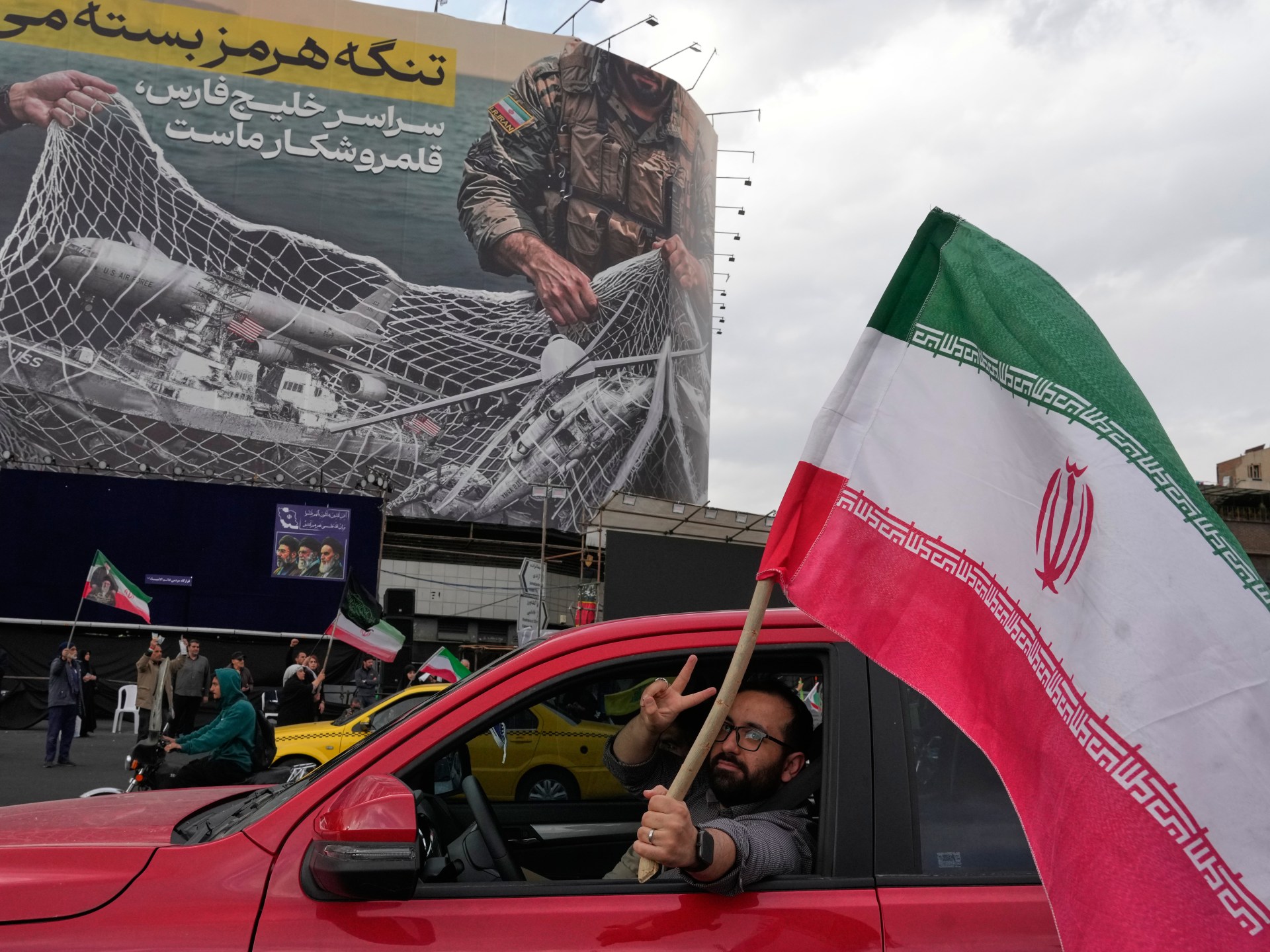
A UK court has heard that two Romanian nationals stabbed a journalist in London at the direction of an Iranian handler — an allegation that, if proven, would represent one of the most direct acts of Iranian state-adjacent violence on British soil in recent memory. The proceedings at the Old Bailey, reported by Reuters on 18 May 2026, centre on Mohammad Khandani, named by prosecutors as the operative who coordinated the attack from abroad. Separately, Polymarket's trading markets are assigning a 39 percent probability that Iran will close its airspace to commercial traffic within the next six weeks — a figure that, while statistically imprecise as a forecast, signals how financial participants are pricing escalation risk into regional infrastructure. The two data points belong to the same thread: a Islamic Republic under mounting international pressure, weighing demonstrative retaliation against the compounding costs of further isolation.
The London case is notable not for its novelty — Western intelligence services have flagged Iranian proxy activity in Europe for years — but for the specificity of the allegation. Khandani, according to the prosecution summary carried by Reuters, is accused of recruiting Romanian nationals to carry out a knife attack on a journalist whose identity remains partially restricted. That the handler operated from outside the UK while directing the assault sharpens a problem European capitals have struggled to articulate coherently: how to hold a sovereign state accountable for委托 violence that stops just short of a diplomatic incident. The Islamic Republic has historically managed plausible deniability through layered proxy relationships. The prosecution's framing — that a named individual coordinated the operation from a specific location — is an attempt to pierce that layer. Whether the evidence meets the standard required for a conviction is a separate question from whether the allegation itself is credible. Multiple European governments have in recent years expelled Iranian diplomats over comparable concerns; the London case suggests those expulsions did not alter the underlying calculus.
The Polymarket probability is, by construction, a crowd-sourced estimate filtered through whatever participants happen to be wagering on a given day. A 39 percent chance of airspace closure by late June is not a prediction — it is a market expressing uncertainty. But that uncertainty itself is informative. Wagering markets on geopolitical contingencies tend to compress toward zero for scenarios observers consider purely theoretical. A reading approaching 40 percent indicates that a meaningful cohort of participants treats an Iranian airspace move as plausible, not merely possible in the abstract. What would trigger such a closure? The sources do not specify, but the structural logic runs in one direction only: Tehran would close its airspace as a retaliatory measure in response to a direct strike on Iranian territory or assets. That places the decision squarely in the hands of actors Tehran cannot control — namely, the Israeli government and, to a lesser extent, an American administration that has maintained maximum-pressure sanctions while periodically signalling openness to diplomatic off-ramps.
The compounding effect of these two disclosures — court-documented violence and market-priced retaliation risk — illuminates the Islamic Republic's current strategic position. On one side, Tehran's regional posture has grown more assertive over the past 18 months, with its nuclear programme advancing to the point where some Western assessments describe a weapons-capable threshold as months rather than years away. On the other, the international response — coordinated sanctions, diplomatic isolation, and sustained arms supplies to regional adversaries — has degraded the Republic's conventional deterrence and financial flexibility. The result is a regime that has historically preferred asymmetric response over direct confrontation, but which increasingly confronts scenarios where asymmetric options carry direct costs. The London prosecution is one such cost: evidence of Iranian-directed violence on Western territory generates additional legal exposure, furthers diplomatic isolation, and provides intelligence services with new data points on operational patterns. An airspace closure, should it materialise, would impose immediate economic disruption not only on Western carriers but on transit routes the Islamic Republic itself depends on for legitimate commerce and diplomatic movement.
What remains unclear — and the sources do not resolve — is whether Tehran's leadership has reached a decision point or is engaged in deliberate ambiguity. States closing airspace is not an abstract contingency: it is a sovereign act with immediate legal and economic consequences. The Islamic Republic's aviation infrastructure includes routes that serve as strategic corridors for diplomatic travel and commercial exchange with non-Western partners. A closure would therefore be, simultaneously, a signal and a self-inflicted wound. The Polymarket market reflects precisely this ambiguity: a 39 percent probability is not a statement about intent but about the market's inability to rule out a move that, if it occurred, would represent a significant departure from the Republic's recent pattern of measured escalation. Historically, Tehran has preferred strikes below the threshold that would trigger direct Western military response. An airspace closure would cross a visibility threshold that tends to concentrate minds in capitals far beyond the region.
The broader pattern — legal accountability for extraterritorial violence, financial markets pricing retaliatory infrastructure disruption, a nuclear programme advancing under sustained international pressure — describes a regime whose room for manoeuvre is contracting. The London case will produce a verdict that, one way or another, adds to the legal architecture surrounding Iranian state activity in Europe. The Polymarket market will continue to tick upward or decay depending on what happens in the interim. Neither development is determinative on its own. Together, they suggest that the Islamic Republic is entering a phase where its choices narrow and the cost of demonstrative action rises — a condition that has historically produced both miscalculation and, occasionally, diplomatic off-ramps that would have seemed implausible weeks earlier.
This desk covered the UK court proceedings through Reuters wire reporting and contextualised the Polymarket market pricing against the broader trajectory of Iranian escalation documented in open-source intelligence reporting. Monexus did not have independent confirmation of Khandani's operational role beyond the prosecution summary.
Wire provenance
This editorial synthesis draws on the following public wire/social posts:
- http://reut.rs/3PJXVex