Iran Foreign Ministry Rebukes Western-Backed UN Resolution, Cites UAE 'Hostile Intent' at Security Council
Tehran's foreign ministry spokesperson rejected a proposed Security Council resolution accusing Iran of destabilising the region, arguing that major powers China and Russia recognise the fundamental causes of Middle Eastern insecurity lie elsewhere.
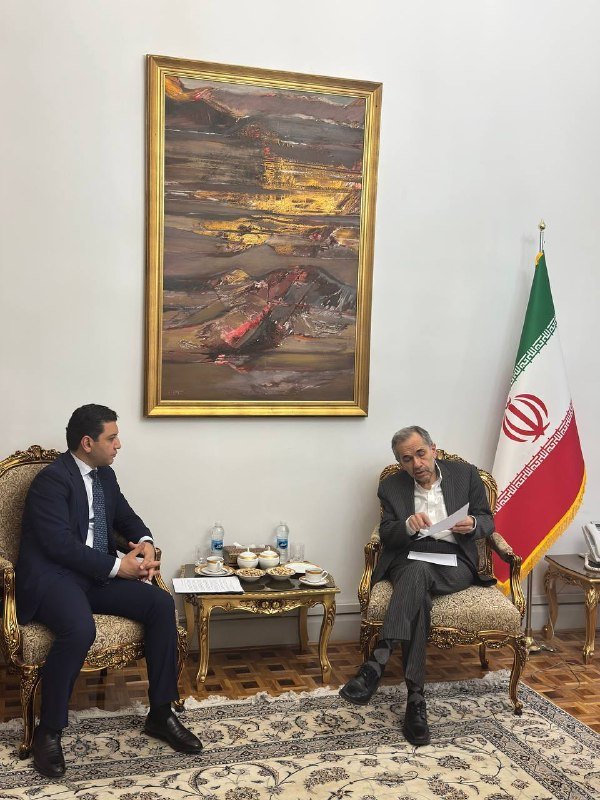
Iran's foreign ministry spokesperson rejected on 18 May 2026 a proposed United Nations Security Council resolution that would accuse Tehran of destabilising the Middle East, arguing that the body has no standing to level such accusations against Iran.
Esmaeil Baqaei, speaking at the ministry's weekly press briefing in Tehran, said the Security Council cannot legitimately charge Iran with making the region insecure, according to statements carried by Iranian state media including Tasnim and Mehr News. The spokesperson cited what he described as shared understanding among permanent Security Council members China and Russia that the principal causes of regional instability differ from the framing in the proposed text.
The briefing comes amid heightened diplomatic activity around the Persian Gulf. Baqaei also addressed what he described as the United Arab Emirates' hostile intent toward Iran, referencing a visit that reportedly factored into the broader context of regional tensions. He stated that Iran bears no enmity toward any country in the region, a position he framed as foundational to Tehran's foreign policy approach.
The proposed resolution — its sponsors and full text not detailed in the available Iranian sources — appears to reflect Western and possibly Arab Gulf state efforts to single out Iranian behaviour in multilateral fora. How exactly the resolution characterises Iran's regional role, and whether it references specific incidents involving the Islamic Revolutionary Guard Corps, proxies, or nuclear programme activities, remains unclear from the Iranian framing alone.
The Resolution Dispute
The substance of the resolution challenge hinges on institutional jurisdiction. Tehran's position is that the Security Council lacks the factual basis to accuse Iran of being the primary source of regional insecurity. According to the Mehr News account of Baqaei's remarks, the Iranian foreign ministry believes China and Russia — both veto-wielding permanent members — understand the underlying causes of instability differently from the resolution's drafters.
This framing puts Beijing and Moscow on record, from Tehran's perspective, as concurring that Western and Arab Gulf states are misidentifying the region's problems. The claim is significant because it suggests Iran is not isolated at the Security Council table, despite US and European pressure campaigns on multiple tracks including nuclear diplomacy, missile programmes, and regional proxy activities.
It is not possible to verify from available sources whether the Chinese and Russian delegations have formally endorsed Iran's characterisation or merely declined to support the resolution in its current form. The proposed text's sponsors, vote timing, and likely outcome are also not detailed in the Iranian media accounts.
Regional Context: The UAE Question
Baqaei's remarks referenced what he described as the UAE's intention to attack Iran — an allegation that, if accurate, would represent a significant escalation in Gulf security dynamics. The Iranian spokesperson did not specify the nature of the reported intention, the evidentiary basis, or the timeframe. The sources do not clarify whether this referred to a direct military threat, a covert operation, or a political-diplomatic act.
The UAE has pursued normalisation talks with Israel and maintained close security ties with the United States, while also engaging in direct back-channel communications with Tehran on regional maritime and trade matters. Iranian officials have repeatedly characterised Emirati behaviour as aligned with US regional strategy, a view that informs the framing in Baqaei's comments.
The notion that a US-aligned Gulf state would contemplate direct military action against Iran would represent a marked departure from the cautious deterrence-and-diplomacy approach that has generally characterised Emirati security policy. The available Iranian sources do not provide corroborating evidence for the claim beyond the spokesperson's statement.
The Limits of the Iranian Framing
What the thread context provides is the Iranian government's public position — a carefully managed diplomatic statement delivered through official media channels. The specificity of the claims about UAE intentions and the scope of Chinese and Russian agreement with Tehran's position cannot be independently verified from these sources alone.
Western delegations, the UAE foreign ministry, and the resolution's sponsors have not been quoted in the available coverage. Whether the proposed resolution references specific Iranian actions — IRGC naval activity in the Gulf, Yemen ceasefire violations, Iraqi militia support, or uranium enrichment advances — is absent from the Iranian account. The argument is framed as a matter of principle: the Security Council cannot accuse Iran, full stop.
The diplomatic history of Security Council engagement with Iran suggests a pattern of Western-drafted resolutions focusing on nuclear compliance, ballistic missile activity, and human rights — with Russian and Chinese cooperation varying depending on the political context and broader great-power relations. What Baqaei is doing here is positioning the new resolution as an extension of that contested history, and claiming the two most likely veto-sources as implicitly aligned with Tehran's view.
Stakes and Diplomatic Trajectory
If the proposed resolution proceeds to a vote, the disposition of China and Russia will be decisive. A Chinese or Russian veto would effectively block the measure, complicating Western efforts to isolate Iran in multilateral fora and potentially energising Tehran's claim that it is the target of unfair geopolitical pressure rather than a source of regional instability.
The alternative — a resolution that passes but without enforcement mechanisms — would have mainly symbolic weight, underscoring Western-Arab Gulf solidarity on Iran policy while demonstrating the limits of multilateral consensus when Russia and China diverge from the Western position.
For Tehran, the goal appears to be establishing that the Security Council is not a legitimate venue for condemning Iranian regional behaviour, on the grounds that Iran's presence in the Gulf, Iraq, Syria, Lebanon, and Yemen is defensive and proportionate. Whether that argument lands depends entirely on whether Beijing and Moscow accept it as more than a public negotiating position.
The UAE, for its part, faces a reputational challenge if the Iranian claim of hostile intent gains traction in regional diplomacy circles — suggesting either that the Emiratis are considering actions they have not publicly contemplated, or that Iran is using the briefing as a pressure tool against a competitor it has long characterised as a US proxy.
This article is based on reporting from Iranian state media including Tasnim, Mehr News, and Fars News. The claims about UAE intentions and the scope of Chinese and Russian agreement with Tehran's position have not been independently corroborated. Monexus will update as additional sources become available.
Wire provenance
This editorial synthesis draws on the following public wire/social posts:
- https://t.me/tasnimnews_en/49798
- https://t.me/mehrnews
- https://t.me/FarsNewsInt
- https://t.me/FarsNewsInt/49797