Iran Calls German Chancellor's Accusations Baseless, Diplomatic Tensions Rise
Tehran's Foreign Ministry spokesman Ismail Baqaei on 18 May 2026 dismissed accusations levelled by the German Chancellor as unfounded, in an unusually direct public confrontation between the two states.
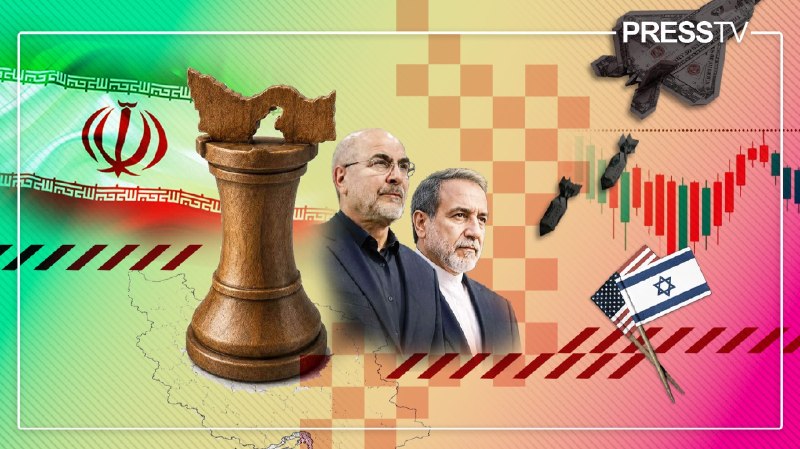
Ismail Baqaei, Iran's Foreign Ministry spokesman, described the German Chancellor's statements as baseless accusations without presenting specific evidence. The confrontation, made public on 18 May 2026, represents an unusually direct public exchange between the two states, whose bilateral relations have grown increasingly fraught over Iran's nuclear programme, regional activities, and human rights record. The German side has not yet issued a direct public response to Baqaei's remarks. The exchange comes as European powers grapple with how to manage a nuclear programme that Iran has steadily expanded since 2019, and as the Trump administration resumes its maximum-pressure campaign on Tehran.
The confrontation underscores a structural reality in contemporary European-Iranian relations: the two sides talk past each other, each citing a catalogue of grievances the other disputes or ignores. Germany has been one of the more vocal European critics of Iran's conduct, yet the mechanisms Berlin has employed — sanctions on ballistic-missile and drone programmes, support for International Atomic Energy Agency inspections, public statements criticising uranium enrichment above civilian thresholds — have not altered Tehran's trajectory. Baqaei's rebuttal reflects a posture Iran has refined under sustained Western pressure: reject the premise, reframe the accusation as interference, and present Western concern as self-interested rather than legitimate.
The Accusation and the Response
Baqaei's statement, communicated through Iran's Foreign Ministry channels on 18 May 2026, characterised the German Chancellor's remarks as an unfounded attack on Iran's sovereign conduct. The statement did not specify which German comments provoked the response, leaving the precise subject of the dispute partially opaque. Iranian state media translated and distributed the statement in both Persian and English across official platforms, a signal that Tehran intended the rebuttal to reach both its domestic audience and international observers simultaneously.
The content of the German Chancellor's original statements, as characterised by the Iranian response, remains uncorroborated by independent sources in the materials reviewed. German government channels had not published a direct account of the exchange at time of writing. The absence of a German primary source means the specifics of what Berlin alleged cannot be confirmed from open sources alone.
A Relationship Built on Friction
Berlin and Tehran have a long history of mutual irritation, but the relationship has deteriorated meaningfully since the collapse of the 2015 Joint Comprehensive Plan of Action. Germany was among the European signatories that attempted to preserve the nuclear agreement after the United States withdrew in 2018, establishing the Instrument in Support of Trade Exchange (INSTEX) as a mechanism to allow sanctioned trade with Iran. The mechanism proved largely ineffective, processing only a fraction of the commercial exchange Tehran sought.
Germany recalled its ambassador to Iran in September 2023 following the death of Mahsa Amini and the subsequent crackdown on protesters. The ambassador was returned several months later, but the episode marked a nadir in bilateral ties. Since then, Germany has expanded sanctions on Iranian entities connected to the ballistic-missile programme and to the production of drones that Western governments say Iran supplies to Russian forces in Ukraine — a charge Iran denies.
That pattern — a series of escalating measures that have not demonstrably altered Iranian behaviour — raises a question the Baqaei statement does not address: what the German government believes public accusations accomplish beyond signalling resolve to domestic and allied audiences. The statement's vehemence suggests Tehran views such language as performance rather than diplomacy, a characterisation Western governments would likely dispute.
The Broader Diplomatic Context
The exchange occurs against a deeply constrained diplomatic backdrop. Talks to revive the nuclear agreement have been deadlocked for over two years. Iran has enriched uranium to up to 84 percent purity — a level just short of weapons-grade — according to IAEA reports reviewed by member-state delegations. The agency has repeatedly expressed concern about the completeness of its knowledge regarding Iran's nuclear programme, a point European governments cite as evidence of the program's potential military dimensions.
The Trump administration, returned to office in January 2025, has reimposed and expanded the full slate of maximum-pressure measures, including secondary sanctions targeting third-country firms that deal with Iranian oil and banking sectors. European companies have broadly complied, mindful of losing access to US markets. The result is an Iran that trades less, pivots harder toward Asian markets, and has less incentive to treat European diplomatic overtures as genuine alternatives to a US deal.
For Germany, which retains significant economic interests in the broader Middle East and depends on a rules-based international trading system it cannot sustain without American security guarantees, the positions are not entirely comfortable. Berlin has simultaneously condemned Iran's nuclear activities, maintained solidarity with Ukraine against Russian aggression — a cause Iran materially complicates through its arms transfers to Moscow — and sought to prevent a wider regional conflict in the Middle East. The German Chancellor's accusation, as characterised by Tehran, sits somewhere in that tangle of interests without resolving it.
What Remains Unresolved
Baqaei's statement does not indicate what specific German remarks provoked the response, leaving a gap in the public record that independent reporting has not yet filled. German government channels have not published the Chancellor's original comments or a response to Iran's rebuttal. The precise substance of Berlin's accusations — whether they concerned the nuclear programme, regional activities, drone transfers, human rights, or some combination — remains unclear from the sources reviewed.
The episode illustrates the limits of public diplomacy as a tool of statecraft. Both sides have spoken, but neither has substantively engaged the other's arguments. Whether this exchange signals a deliberate escalation or represents the routine friction of a deteriorating relationship remains to be seen. What is clear is that Germany and Iran are further apart than they were a decade ago, and neither public accusations nor official rebuttals are narrowing that distance.
This publication's coverage of Iranian diplomatic statements draws on Iranian state-media channels as primary sources, consistent with our practice of reporting official positions from the actors involved. We note the structural limitation of relying on one side's characterisation of a bilateral exchange where the other party's primary statement is not yet in the public record.
Wire provenance
This editorial synthesis draws on the following public wire/social posts:
- https://t.me/tasnimnews_en/52581
- https://t.me/JahanTasnim/89243