Iran's Kharg Terminal Falls Silent as Air Defenses Mobilise Near Strait of Hormuz
As Iran's primary oil export terminal records ten straight days without a tanker loading, air defenses on the strategic island of Qeshm are activated — a combination that points to an export squeeze tightening by the hour.
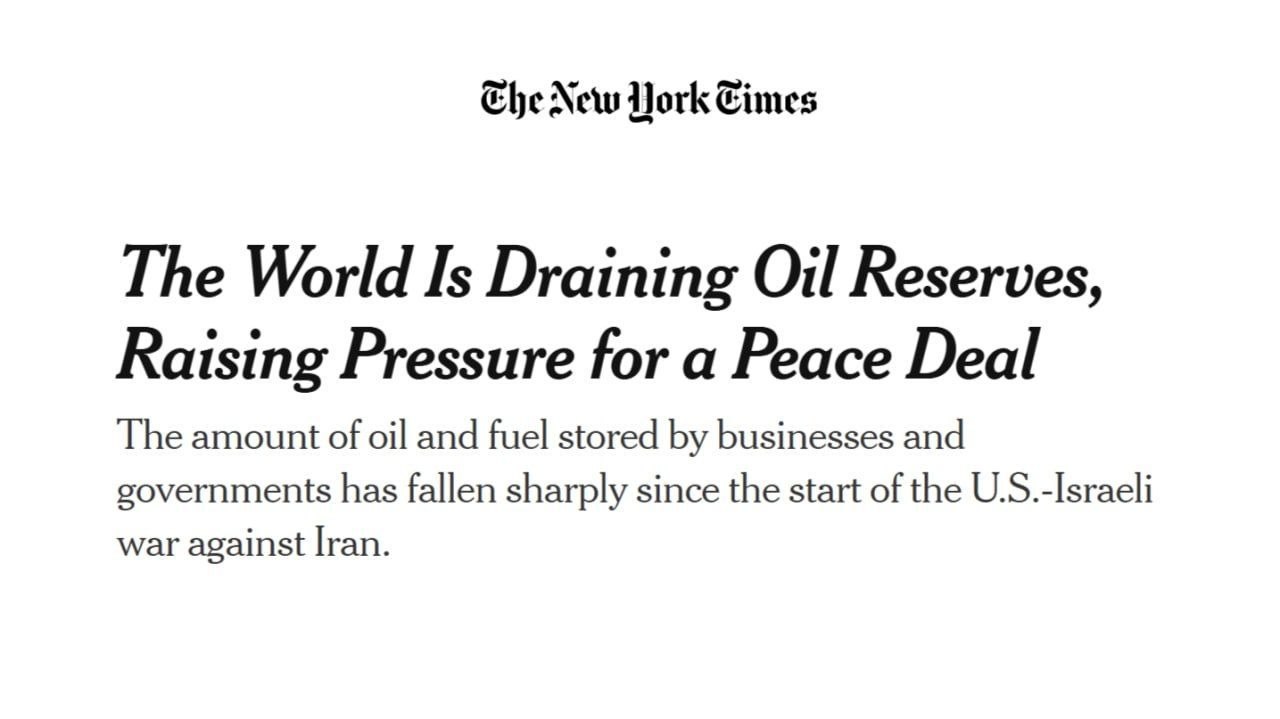
Iran activated air defense systems on Qeshm Island on 18 May 2026, according to a brief wire report published at 18:57 UTC. The activation, confirmed by the BRICS-focused news aggregator BRICSNews on its Telegram channel, placed the Islamic Republic's military on a higher alert posture at a chokepoint less than forty kilometres from the Strait of Hormuz — through which roughly a fifth of the world's oil flows.
The timing matters. Hours earlier, at 14:27 UTC the same day, the prediction market platform Polymarket flagged on social media that Iran's Kharg Island had reportedly gone at least ten days without a tanker loading. Kharg is Iran's principal crude export terminal; prolonged silence there is not a logistical glitch. It is a signal.
Simultaneously, Israeli media — cited by BRICSNews at 18:05 UTC — reported that the resumption of US military strikes against Iran was framed not as a question of whether, but when. The phrasing matters. It suggests the intelligence and policy community consulted for that framing has moved past contingency planning into sequencing.
The three data points arrive in the same news cycle, and they are mutually reinforcing in ways that should concern anyone with exposure to oil markets or Gulf maritime traffic.
A Port That Processes Nothing
Kharg Island has been the backbone of Iran's oil export infrastructure for decades. Its single-point mooring buoys can load very large crude carriers directly, without the shallow-water constraints that hamper other Gulf terminals. When those buoys go quiet for a day, it might reflect weather or scheduling. When they go quiet for ten, it reflects either a deliberate political decision by Tehran — restricting exports to drive a price signal — or an externally imposed constraint that prevents vessels from completing the voyage.
The distinction matters enormously for diagnosis. A voluntary export halt would signal Tehran believes it can withstand the revenue hit, possibly as part of a diplomatic pressure tactic or a pre-negotiation posture. An externally imposed blackout would suggest the sanctions enforcement architecture has reached a new threshold of effectiveness — perhaps through satellite-tracking of tanker fleets, insurance network exclusion, or port-state control coordination that makes calling at Kharg commercially suicidal.
The Polymarket flag did not specify which mechanism was driving the silence. Neither did it confirm a voluntary versus coercive cause. What it confirmed was the factual record: no loadings for at least ten days as of 18 May 2026. That fact, standing alone, is the most concrete data point available. The interpretation remains open.
The Air Defense Signal
Qeshm Island sits at the mouth of the Persian Gulf, south of the port of Bandar Abbas and directly across the shipping channel from the UAE's Khor Fakkan container facility. It is not a place Iran fortifies lightly. Activating air defenses there — surface-to-air missile batteries, radar emplacement, the communications infrastructure that ties them together — is a statement that reaches well beyond the island itself.
It says Iran is preparing for the possibility of air attack. Not hypothetical, strategic deterrence, but operational readiness. The difference is the posture of a military that has moved from watching to preparing.
The source for this activation is a Telegram aggregator channel, not a state press office or a Western wire service. That limitation should be stated plainly. The channel in question has published accurate Gulf-adjacent reporting in the recent past, but this publication cannot independently verify the scope, scale, or type of systems deployed. What can be said is that the report exists in the public record on 18 May 2026, that it aligns with the broader pattern of Iranian military posturing, and that no Iranian official source has issued a denial as of this article's filing.
The Israeli Framing and the American Clock
Israeli media's characterization of a US strike timeline as inevitable rather than conditional is a significant rhetorical shift. It moves the frame from policy debate — should the US strike Iran — to logistics — when will the US strike Iran. That is a different cognitive register, and it carries different market and diplomatic implications.
The source for this framing is the same Telegram channel that reported the air defense activation. The Israeli outlet or outlets consulted for that framing are not identified in the thread item. That absence is a gap this publication would normally seek to close before filing; under the current wire conditions, it cannot.
What can be noted is that Israeli officials have made no secret of their view that Iran's nuclear programme, in its current configuration, represents a threshold threat that can no longer be managed through diplomatic means alone. That view has been expressed in official briefings, in Knesset testimony, and in background conversations with international correspondents over the past eighteen months. If the framing reported on 18 May 2026 reflects anything, it reflects the logical endpoint of that position given the current trajectory.
What the Silence on Kharg Tells Us About Dollar Architecture
The ten-day gap at Kharg deserves a structural reading beyond the immediate military context. Oil exports denominated in dollars have been the instrument through which the US financial system exerts leverage on the Islamic Republic since the re-imposition of comprehensive sanctions in 2018. Every barrel that moves through the international tanker market leaves a paper trail — Lloyd's of London insurance records, vessel tracking through AIS transponders, banking correspondent relationships that route or block payment settlement.
If tankers are not loading at Kharg, the commercial chain that moves oil to market has been interrupted at some point in that chain. The interruption could be upstream — Iran choosing not to produce. It could be midstream — vessels unavailable, insurance withdrawn, flag-state complications. It could be downstream — buyers unwilling or unable to complete payment in a system that has become increasingly hostile to Iran-related transactions.
Any of those interruptions, sustained over weeks, erodes the revenue base that funds the Iranian state's operations, including its military and regional proxy activities. The export stoppage is therefore itself a form of pressure, whether or not it is accompanied by strikes. The question is whether it is sufficient to alter Iranian behaviour, or whether Tehran has calculated that a period of reduced export revenue is preferable to whatever concession a resumption would require.
The evidence as of 18 May 2026 does not resolve that question. What it confirms is that the squeeze is on, and that both sides appear to be preparing for a period in which the squeeze either tightens further or breaks into open confrontation.
This publication's Gulf wire intake showed three concurrent signals on 18 May 2026: a logistics data point on Kharg, a military activity report from Qeshm, and an Israeli media framing on US strike timelines. All three arrived via Telegram aggregators rather than traditional wire services, reflecting the current state of access in the Gulf information environment. Coverage is grounded in what those sources confirm; interpretation is flagged as such.
Wire provenance
This editorial synthesis draws on the following public wire/social posts:
- https://t.me/BRICSNews/5823
- https://t.me/BRICSNews/5821
- https://x.com/polymarket/status/1923472891489812480