Iran's Pezeshkian Draws Red Lines on Nuclear Talks: 'Dialogue Does Not Mean Surrender'
President Pezeshkian's statement that Iran enters negotiations with 'dignity and strength' signals a firm stance against Western pressure ahead of a renewed round of nuclear diplomacy, but analysts warn that fundamental gaps between Tehran and Washington remain wide.
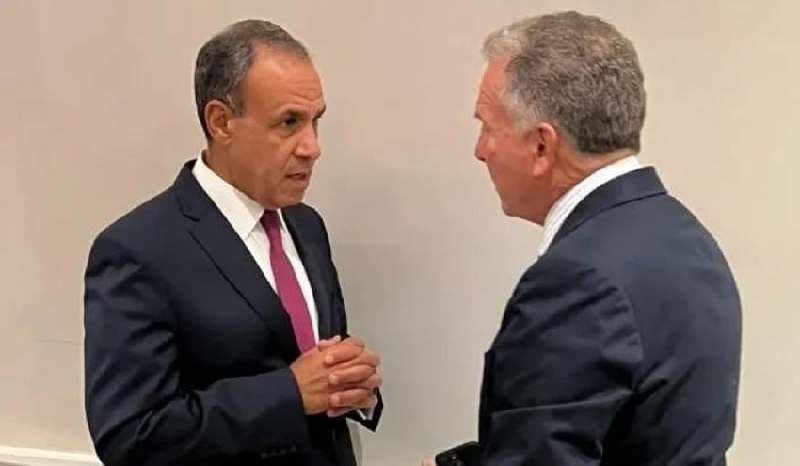
On May 18, 2026, Iranian President Masoud Pezeshkian issued a firm statement on the nature of any future diplomatic engagement between Tehran and Western powers: "Dialogue does not mean surrender." The remarks, carried by Iranian state media including PressTV and Tasnim News, frame Iran as entering negotiations from a position of dignity and national strength, rather than weakness. "The Islamic Republic of Iran enters the dialogue with dignity, authority and protecting the rights of the nation," Pezeshkian stated, according to Tasnim's translation of his comments. The statement arrives as a new round of nuclear diplomacy appears to be taking shape between Iran and the United States, with European mediators also signaling renewed engagement.
The framing is deliberate. For Tehran, the optics of any negotiation have long carried domestic and geopolitical freight that goes beyond the technical substance of any agreement. Iranian officials have watched as previous diplomatic windows—most notably the 2015 Joint Comprehensive Plan of Action—closed under the weight of domestic political shifts in Washington and maximum-pressure campaigns that followed. Pezeshkian's insistence that dialogue carries no connotation of capitulation is designed to preemptively rebut any characterization of the coming talks as Iranian concessions, a concern that resonates with hardliners in Iran's political establishment who view engagement with the West as inherently asymmetric. The message is calibrated for dual audiences: a domestic one that remains deeply skeptical of American intentions, and an international one that will be watching to see whether Tehran's stated red lines translate into negotiating positions or merely rhetorical posture.
The Shape of the Diplomatic Opening
The renewed push toward talks follows months of indirect communications facilitated by Oman and Switzerland, channels that have historically served as back-channels between Iranian and American officials when direct diplomatic relations are severed. Western officials, speaking to news agencies on background in recent weeks, have described a narrow but real window for a preliminary framework—a characterization that Iran has neither confirmed nor denied. The outlines of what a potential agreement might look like remain speculative, but the broad parameters discussed in recent diplomatic exchanges include caps on Iran's enriched uranium stockpile and enrichment levels, in exchange for partial sanctions relief, primarily the suspension of secondary sanctions targeting Iran's oil and banking sectors.
For the United States, the calculus is complicated by the current administration's stated dual-track approach: engagement with Tehran coupled with continued maximum-pressure measures intended to increase the cost of non-compliance. American officials have publicly maintained that all options remain on the table while simultaneously expressing openness to a diplomatic resolution. This posture—neither pure hawks nor pure dovEs—is familiar territory in Washington, but it creates uncertainty for Tehran, which must weigh the risk of investing political capital in negotiations against the possibility of a sudden collapse in American willingness to sustain diplomatic progress. Iranian analysts tracking the negotiations have noted that past experience, particularly the collapse of the nuclear deal following the American withdrawal in 2018, has left a lasting imprint on Tehran's approach to any new understanding with Washington.
Domestic Constraints on Both Sides
Pezeshkian's negotiating position is not without constraint. Elected in 2025 on a platform that promised economic relief through the lifting of Western sanctions, he has faced mounting pressure from within Iran's political establishment, where hardline factions remain deeply skeptical of American intentions. The Iranian parliament—where hardliners and their allies hold a substantial majority—has already signaled reluctance toward any framework that includes verification measures deemed intrusive to national sovereignty. Any deal that reaches the Iranian leadership will need to clear a domestic political bar that has defeated previous efforts, particularly the JCPOA's fate in the face of parliamentary resistance and Supreme Leader Ayatollah Khamenei's public expressions of distrust toward American commitments.
On the American side, the domestic political environment for a Iran deal is similarly fraught. A Senate resolution passed earlier in 2026 reaffirmed congressional authority over sanctions relief, effectively requiring any administration that secures a preliminary agreement to return to Capitol Hill for approval—a process that historically has exposed deep divisions within both parties on Iran policy. The deal's critics in Washington have argued that the existing architecture of sanctions remains an effective tool and should not be traded away for promises from a regime they consider untrustworthy. Proponents counter that the alternative—a continued path toward nuclear threshold capability—carries greater risks, including a regional arms race that would accelerate as Gulf states react to an unconstrained Iranian nuclear program.
The Structural Stakes
The current diplomatic opening exists within a broader structural context: the erosion of the non-proliferation regime's authority in the Middle East, the expanding web of regional rivalries involving Iran, Israel, and Gulf Arab states, and the wider fragmentation of the post-Cold War security architecture in Europe and Asia. Iran's nuclear program has advanced considerably since the 2015 agreement was struck, with uranium enrichment at levels far exceeding civilian use and centrifuge capacity expanded significantly. Verification challenges that were difficult to manage in 2015 have grown in proportion to Iran's technical advancement. Whether a new framework can address these realities—and whether it can do so in a way that both sides can credibly claim as a success—remains the central question.
The stakes extend beyond the nuclear file. A successful diplomatic outcome would alter the trajectory of Iran's regional posture, potentially reshaping the dynamics of proxy conflicts from Yemen to Iraq to Syria. It would also set a precedent for the broader relationship between the United States and Iran—two powers that have had no formal diplomatic ties since 1980—potentially opening channels on issues including energy security, maritime navigation in the Persian Gulf, and the status of American detainees held in Iranian prisons. A collapse in talks, by contrast, would likely trigger a fresh cycle of sanctions escalation, intensify regional tensions, and accelerate the timeline for Iran to approach weapons-grade enrichment capability—a prospect that neither Washington nor its regional allies publicly says it is prepared to accept.
What the coming weeks will likely reveal is not whether the two sides can agree on everything, but whether they can agree on enough—and whether the political environments in both Tehran and Washington can sustain even a partial agreement against the weight of domestic opposition. Pezeshkian's statement on May 18 sets out the terms of Iranian engagement. What follows will test whether those terms are genuinely positions, or merely posture.
Desk note: This publication covered Pezeshkian's May 18 statement by leading with the Iranian framing as reported by Tasnim and PressTV—mirroring how Iranian state media presented the remarks. Western diplomatic reactions, when available from approved wire sources, will be updated in the wire feed. The broader structural analysis reflects this publication's standard approach to nuclear non-proliferation coverage: treating verification and regional security balance as first-order concerns, rather than framing the story primarily through the lens of great-power competition.
Wire provenance
This editorial synthesis draws on the following public wire/social posts:
- https://t.me/presstv/34521
- https://t.me/tasnimnews_en/18452
- https://t.me/GeoPWatch/8921