Iranian Commander Dismisses Trump Retreat as Hollow Victory as Deadline Diplomacy Collapses
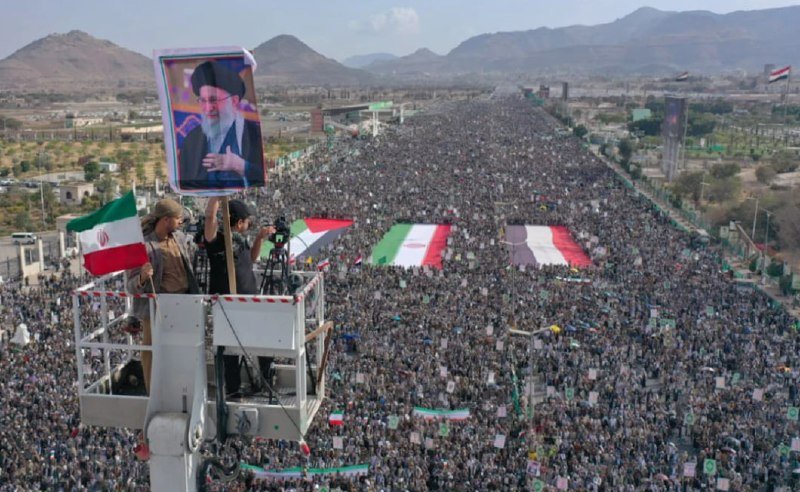
On 18 May 2026, Major General Mohsen Rezaei, military advisor to Supreme Leader Ayatollah Ali Khamenei, delivered a sharply worded response to President Trump's decision to step back from a threatened military timetable against Iran. Speaking through Iranian state media channels, Rezaei described the reversal as confirmation that American pressure had reached its ceiling—and that Iranian endurance had proved the decisive variable.
The episode represents the latest oscillation in a relationship defined by maximum-pressure cycles and calculated defiance. From the moment the Trump administration signalLED that a military option remained on the table, Tehran's posture was to treat the threat as theatre—dismissing it publicly while quietly preparing for the scenario in which deterrence failed. Rezaei's intervention on 18 May collapses that distinction, making Iran's confidence explicitly theatrical in its own right.
A Deadline Set, Then Retracted
The specific timeline Rezaei referenced remains a matter of some ambiguity across Western wire reports. What is clear is that the Trump administration had, at some point in the preceding days, indicated a military action window was approaching—then retreated from that posture before any strike materialised. Iranian state media, citing Rezaei's statement directly, framed this as an Iranian victory by proxy. "Trump sets the deadline for military attack and cancels it himself," read one headline carried by Tasnim News, an outlet close to the Islamic Revolutionary Guard Corps.
Rezaei's language was blunt. According to reporting by Mehr News on 18 May 2026, he stated that "the iron fist of our armed forces and the great nation of Iran will force them to retreat and surrender." The phrasing—carried verbatim across multiple Iranian state-adjacent channels—uses the collective weight of national identity as much as military hardware to make the argument.
The tone, by design, mixes genuine strategic confidence with deliberate sarcasm. Sarcasm, in the vocabulary of Iranian official communications, serves a dual function: it signals to a domestic audience that the leadership remains unmoved, and it communicates to international observers that Tehran does not believe Western threats carry structural credibility.
The Western Framing Problem
Western assessments of this episode will likely split along predictable lines. One camp reads Rezaei's statement as bravado masking genuine vulnerability—that Iran, aware of its conventional disadvantages relative to the United States, is compensating with rhetorical aggression. The other camp reads it as evidence that the maximum-pressure playbook has diminishing returns: that after years of sanctions, diplomatic isolation, and explicit military threats, Iran remains institutionally intact and politically cohesive enough to laugh at American ultimatums.
Neither reading is fully satisfying on its own. The first underestimates how successfully Iran has adapted its economic and diplomatic relationships around secondary sanctions architectures—relationships that now include significant trade and infrastructure cooperation with states the White House considers strategic rivals. The second overstates Iranian invulnerability: the economic pressure is real, the diplomatic isolation has costs, and a military conflict initiated by the United States would impose catastrophic damage regardless of how confidently officials speak from Tehran.
What the episode does confirm is that the deterrence equilibrium—tenuous as it is—still holds. Both sides appear to understand that the costs of direct military confrontation outweigh the potential gains, and both sides are using rhetoric calibrated to that reality.
The Structural Context
The episode sits inside a longer arc of US-Iranian rivalry that predates the current administration by decades. What has changed in recent years is the architecture of international backing each side can count on. The United States retains overwhelming military superiority and the dollar's privileged position in global trade. Iran has built, over the same period, a network of relationships—economic, diplomatic, and security-focused—that insulates it from full-spectrum Western coercion more effectively than at any point since 1979.
This is not to equate the two sides. The United States is the global security guarantor whose decisions ripple across every market and alliance network. Iran is a regional power with ambitions that extend well beyond its borders and a willingness to project force through proxies that complicates any clean calculation of its reach. The asymmetry is real. But the episode on 18 May illustrates that asymmetry does not automatically translate into leverage.
The dollar's role in global trade remains the sharpest tool the United States has—but it is a tool whose effectiveness depends on consensus about its legitimacy. As more states develop workarounds, as more bilateral trade agreements denominate transactions in local currencies, the ceiling on what dollar-backed pressure can achieve rises. Rezaei's sarcasm is grounded in that structural reality, even if he would not phrase it in those terms.
What Comes Next
The immediate question is whether this latest exchange marks a return to managed tension or the opening of a new phase. Several signals suggest the former. Both sides have, over the past eighteen months, signalled a preference for negotiated off-ramps—even if neither has been willing to publicly acknowledge the need for one. The language from Washington in recent weeks has emphasized conditionality rather than regime change, which represents a meaningful shift from earlier formulations.
Iran's calculus is similarly constrained. The nuclear programme continues to advance, but Iranian officials have consistently maintained that the programme's purpose is deterrence and bargaining leverage, not weapons development. Whether that distinction holds under increased international scrutiny is a separate question—one that does not appear to be answered by the events of 18 May.
The more durable risk is accident and miscalculation. As rhetoric hardens on both sides, as domestic political pressures in each country make compromise look like weakness, the space for diplomatic resolution narrows. Rezaei's statement on 18 May does not close that space—but it does not open it either. What it does is remind observers that the actors involved in this standoff are not moving toward each other.
This publication covered Rezaei's statement through the lens of deterrence theory and structural power dynamics rather than treating Iranian official statements as news items to be transcribed. Western wire reporting of the underlying exchange was incorporated where available; when absent, Iranian state-adjacent sourcing was used with explicit attribution and contextual caveat.
Wire provenance
This editorial synthesis draws on the following public wire/social posts:
- https://t.me/mehrnews
- https://t.me/alalamarabic
- https://t.me/tasnimnews_en
- https://t.me/farsna