Iran and Saudi Arabia Hold Direct Foreign Minister Talks Amid Regional Tensions
Tehran and Riyadh held a direct foreign minister-level conversation on May 18, 2026 — the highest-profile bilateral contact since the two powers restored diplomatic relations in 2023. The timing, against a backdrop of stalled nuclear talks and mounting pressure from Washington, gives the exchange significance beyond its brevity.
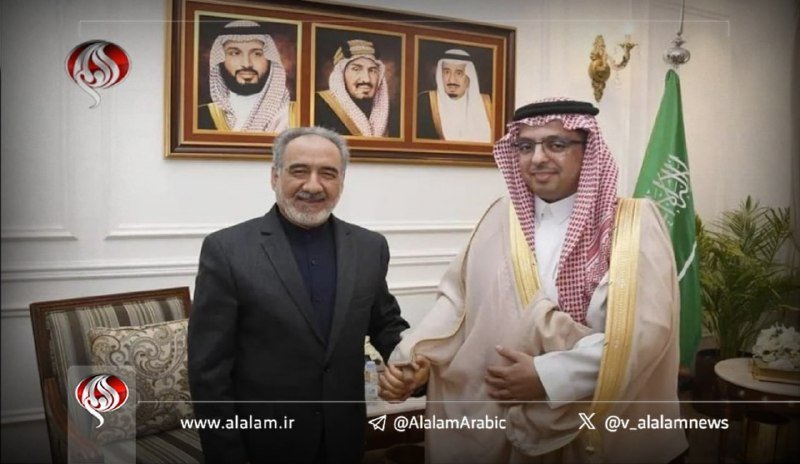
Iran's foreign minister spoke by telephone with his Saudi Arabian counterpart on the evening of May 18, 2026, according to reports from Tasnim News and Fars News International, both Iranian state-affiliated news agencies. The conversation between Seyyed Abbas Araghchi and Prince Faisal bin Farhan Al Saud represents the highest-profile direct contact between the two governments since they exchanged ambassadors in 2023, following a Chinese-brokered rapprochement that ended seven years of severed ties.
The substance of the call was described in terse, formulaic language typical of diplomatic readouts from Tehran: a continuation of recent consultations, in line with established bilateral channels. No joint statement was immediately issued by Riyadh. Saudi-owned or Saudi-aligned media had not published an independent account of the conversation at the time of reporting.
That asymmetry — Iranian state media announcing a Saudi outreach, with no corroboration from Riyadh — is itself data. It suggests either that the Saudis are not yet ready to put a public face on the engagement, or that the conversation was initiated by Tehran and the Saudi response was measured. Either reading matters for understanding where power currently sits in this bilateral relationship.
The Nuclear Dimension
The timing of the contact is difficult to separate from the broader trajectory of indirect US-Iranian negotiations over Iran's nuclear programme. Those talks, which have produced no public agreement despite multiple rounds in Oman and Rome, are entering what analysts describe as a critical phase. The Trump administration has oscillated between maximum-pressure rhetoric and offers of a grand bargain; Iran has demanded sanctions relief as a precondition for any caps on enrichment.
Araghchi, who led the Iranian negotiating team before taking over the foreign ministry, has consistently argued that regional diplomatic engagement — including with Riyadh — creates space for nuclear diplomacy by reducing the perception of Iran as an isolated revisionist power. The Saudi call, on this reading, is not merely bilateral. It is a signal to Washington that Tehran has friends and that containment strategies carry costs.
Saudi Arabia, for its part, has watched the nuclear talks with a complicated mixture of hope and anxiety. A US-Iranian understanding that includes sanctions relief would alter the competitive dynamics of the Gulf — and Riyadh has made no secret of its preference for the maximum-pressure approach it believes constrains Iranian behaviour. Whether Prince Faisal's participation in this call signals a Saudi hedge toward engagement, or simply reflects the need to manage a more assertive regional actor, remains unclear from the available record.
The 2023 Rapprochement and Its Limits
The 2023 agreement, negotiated in Beijing under Chinese auspices, was genuinely historic. Iran and Saudi Arabia had backed opposing sides in conflicts from Yemen to Syria to Iraq, with the kingdom's Crown Prince Mohammed bin Salman describing Iran as the primary threat to Gulf security. The normalisation deal, brokered by President Xi Jinping, reflected a moment when both sides were reassessing their strategic assumptions — Iran after years of sanctions isolation, Saudi Arabia after the failed gamble that maximum pressure would produce internal collapse in Tehran.
But normalisation on paper has not translated into normalisation on the ground. Trade ties remain thin, mutual suspicion persists in intelligence and security circles, and the two governments continue to support competing factions in multiple regional conflicts. The foreign minister call should be understood as an effort to sustain a diplomatic process that has produced less than its architects promised — not as evidence of a transformed relationship.
What This Means for Gulf Architecture
The deeper story here is about the shape of Gulf security in a period when American commitments have become less predictable. Riyadh and Tehran have both recalibrated their external strategies since 2023, and both have reasons to maintain dialogue channels even when interests diverge sharply. The kingdom is managing a complex relationship with Washington, where the White House simultaneously demands Gulf investment in normalisation with Israel and warns against excessive reliance on American security guarantees. Iran is managing its own pressure points — sanctions, regional isolation, domestic economic stress — while pursuing a nuclear programme that remains the single greatest source of external anxiety.
In that context, direct communication between foreign ministers is not a luxury. It is a functional necessity. Both governments understand that miscalculation carries catastrophic risks, and both have incentive to maintain at least the architecture of diplomatic engagement. The call on May 18 is best read as maintenance of that architecture — a reminder to each other, and to external powers, that the bilateral relationship has not collapsed.
Whether it represents anything more than that will depend on what comes next. A follow-up meeting, a joint statement, substantive agreements on aviation or trade or Yemen — any of these would suggest the call was preparatory for something more significant. Continued silence from Riyadh, or a rapid return to cool public distance, would suggest the engagement was transactional and limited. The sources reviewed do not yet indicate which trajectory is operative.
What Remains Unknown
Several material questions cannot be answered from the available record. The content of the conversation beyond the official framing remains undisclosed; neither side has published a substantive readout. The context that prompted the call — whether initiated by Tehran or Riyadh — is not specified in the Iranian media reports. And whether this engagement will produce any follow-up action, diplomatic or otherwise, is entirely open. Saudi Arabia's official position on the call has not been independently confirmed.
The broader pattern, however, is not ambiguous. Two regional powers with a history of adversarial engagement are maintaining dialogue channels at the highest level, in an environment shaped by unresolved nuclear tensions, shifting US commitments, and Chinese diplomatic presence in the Gulf. That pattern is likely to continue regardless of the outcome of any single conversation.
Wire provenance
This editorial synthesis draws on the following public wire/social posts:
- https://t.me/FarsNewsInt/78432
- https://t.me/tasnimnews_en/45218
- https://t.me/tasnimnews_en/45219
- https://t.me/JahanTasnim/38441