Iran Signals Stranglehold on World's Most Critical Oil Chokepoint as Nuclear Talks Falter
Tehran's announcement of a new body to oversee the Strait of Hormuz — the conduit for roughly a fifth of the world's oil — comes as direct negotiations with Washington appear to have stalled, raising the prospect of renewed maritime disruption at the world's most critical energy bottleneck.
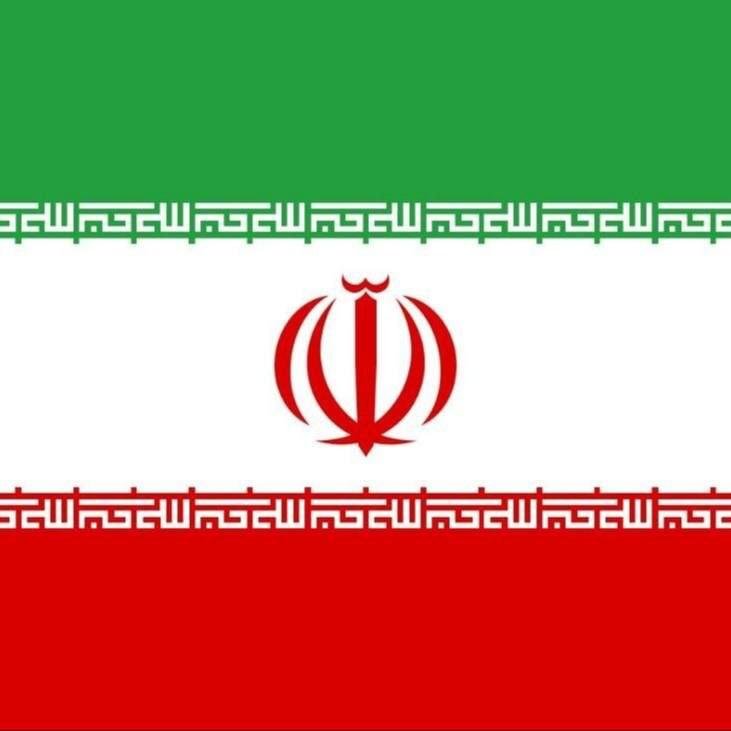
Iran announced on Monday the creation of a new government body charged with managing the Strait of Hormuz, the narrow Persian Gulf waterway through which roughly a fifth of the world's daily oil supply passes. The move, reported by France 24 on 18 May 2026, signals a deliberate intensification of Tehran's administrative control over the passage at a moment when direct talks with the United States over Iran's nuclear programme have shown no visible progress. The announcement follows months of disruption to commercial shipping linked to the wider conflict between Iran and a US-led international coalition that has included air strikes and counter-operations since early 2026.
The timing is not accidental. Iran has for decades used the strait's strategic geography as leverage in diplomatic standoffs with Washington and its Gulf allies. By establishing a dedicated oversight body, Tehran is signaling that it is prepared to formalise and potentially expand that leverage — not merely as a wartime instrument but as a permanent feature of its relationship with global energy markets. President Donald Trump, speaking to reporters on the same day, struck a more hopeful note, saying there was a "very good chance" the United States could reach an agreement with Iran to prevent it from acquiring a nuclear weapon. The contradiction between Trump's diplomatic optimism and Iran's administrative consolidation of Hormuz control encapsulates the fundamental tension in the current US approach to Tehran.
A Waterway Too Critical to Ignore
The Strait of Hormuz is, by any measure, the world's most strategically significant maritime bottleneck. Approximately 21 million barrels of oil traverse it daily — a volume that, if disrupted, would send shockwaves through global energy markets within hours. LNG tankers carrying Persian Gulf gas also pass through its narrowest point, which at its minimum width is just 21 nautical miles across. This concentration of throughput means that even limited interference with traffic — minesweeping delays, patrol boat interdictions, or the deployment of anti-ship missiles to coastal positions — can generate outsized market reactions. A 2024 assessment by the US Energy Information Administration estimated that a complete, prolonged closure of the strait would require a months-long redirecting of supplies via Cape of Good Hope routes, adding significantly to delivery costs and times.
Iran has historically exploited this asymmetry. In 2019, during a separate period of heightened US sanctions pressure, Tehran tested the limits of that leverage by briefly impeding tanker traffic in the Persian Gulf. The economic impact was felt immediately in oil price spikes. What is different now is that Iran is building an institutional apparatus — the new oversight body — that could systematise and potentially legalise that interference under the guise of legitimate maritime administration. Western officials have noted with concern that such a body could be used to justify selective inspections, delays, or denial of passage to vessels flagged to countries or companies under sanctions, under the cover of regulatory compliance.
The Diplomacy Gap
Trump's stated confidence about a nuclear deal sits uncomfortably alongside the evidence on the ground. US officials, speaking on condition of anonymity to wire services, have described the current round of indirect negotiations as "stuck on verification" — the perennial flashpoint in any US-Iran nuclear arrangement. The core disagreement concerns what Iran would be required to surrender: uranium enrichment capacity, stock sizes, or monitoring access. The Trump administration has insisted on a permanent dismantlement of the enrichment programme; Iran has insisted on the right to a peaceful civilian nuclear capability, a position it has maintained since before the original 2015 Joint Comprehensive Plan of Action. That gap proved unbridgeable once before, under separate US administrations, and sources familiar with the current talks suggest it remains unbridged now.
There is a plausible alternative read of Iran's Hormuz announcement that complicates the standard "pressure and brinkmanship" narrative. Tehran may be creating institutional infrastructure precisely in anticipation of a deal — a body that, once sanctions relief arrives, would be tasked with ensuring orderly commercial traffic rather than disrupting it. Iran's state media framed the new body in precisely those terms: as an administrative upgrade to maritime governance, not as a threat. Whether that framing reflects genuine intent or is designed to inoculate Tehran against accusations of bad faith ahead of talks is, at present, unknowable from the available sources.
The Structural Context
What is happening in the Persian Gulf cannot be separated from the broader collapse of the post-Cold War energy security architecture. The world's dependence on a single, confined waterway for a fifth of its oil supply has always been a structural vulnerability. Western governments have long been aware of it; the US Fifth Fleet's Bahrain-based presence exists in large part to keep that corridor open. But military deterrence alone has never been a substitute for political resolution, and the current conflict has strained even that deterrence to its limits. Iranian coastal missile systems, drone capabilities, and naval assets have been deployed in ways that make a coercive reopening of the strait — should it be closed — an extraordinarily costly undertaking, both in material terms and in the diplomatic fallout it would generate across Asia, Europe, and the Middle East.
The geopolitical stakes extend beyond oil. China, which imports roughly half its crude oil through the strait, has a direct interest in its continued openness. Beijing's reaction to the announcement has not yet been reported in detail by wire services, but Chinese state media and diplomatic accounts from recent years indicate that China views any threat to the strait's transit as a threat to its own energy security. India, Japan, South Korea, and the European Union — all major importers of Gulf energy — occupy similarly exposed positions. A closure, or even a sustained period of uncertainty about strait access, would hand Tehran an effective veto over any coordinated Western pressure campaign. That reality gives Iran structural power that no amount of sanctions or military posturing has yet neutralised.
What Comes Next
The immediate question is whether the new Hormuz oversight body represents a preparation for confrontation or a preparation for normalised post-deal governance. The distinction matters enormously for markets, for allied governments in the Gulf, and for the nuclear talks themselves. If Tehran is building administrative capacity to regulate strait traffic as part of a future sanctions-relief scenario, the body could become a stabilising factor. If it is designed to formalise coercive leverage, it represents the most significant escalation in Tehran's economic statecraft since the current conflict began.
Markets have so far reacted with measured caution. Brent crude prices have edged upward since the announcement, according to preliminary trading data, but have not approached the levels seen during the acute phase of the 2019 tanker incidents. That restraint may reflect investor uncertainty about the announcement's true intent — or it may reflect a belief, held by some traders, that the nuclear talks remain more likely to succeed than fail. That belief is now the primary counterweight to Tehran's Hormuz signal. If the talks collapse, the new oversight body will be ready. If they succeed, it will be repurposed. Either way, the world's most critical energy chokepoint has just become more complicated.
This publication covered the Hormuz announcement via France 24 and Insider Paper wire reporting. Western wire services framed the story as an escalation signal from Tehran; Monexus notes that the same announcement, viewed through the lens of post-deal regulatory planning, carries a substantially different and less alarming implication — one that has received less prominent treatment in initial US wire copy.
Wire provenance
This editorial synthesis draws on the following public wire/social posts:
- https://t.me/insiderpaper
- https://t.me/france24_en
- https://t.me/insiderpaper
- https://t.me/france24_en