Iran's Strait of Hormuz Gambit: Bitcoin Insurance, IEA Warnings, and the Architecture of Sanctions Evasion
As the IEA warns global oil reserves hold only weeks of supply amid the Strait of Hormuz standoff, Tehran has unveiled a state-backed insurance mechanism denominated in bitcoin—a structure designed to restore commercial shipping while circumventing Western financial restrictions.
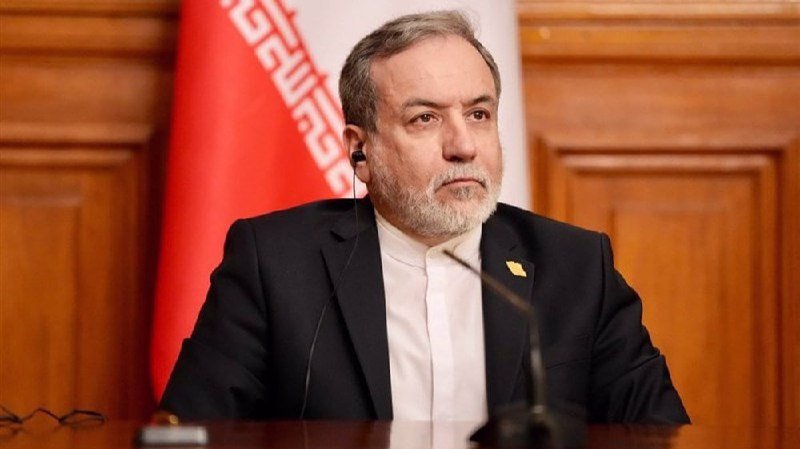
On 18 May 2026, the International Energy Agency delivered what may be the starkest assessment of global energy vulnerability in years: worldwide oil reserves held in storage, the agency warned, had been drawn down so severely that current inventories could sustain global demand for only a matter of weeks. The cause, identified across multiple concurrent reports, was the closure of the Strait of Hormuz—the 33-mile-wide waterway between Oman and Iran through which approximately 20 percent of the world's oil shipments pass. The closure, stemming from escalating regional tensions, had already begun creating cascading shortages of diesel, fertilizer, jet fuel, and gasoline at precisely the moment Northern Hemisphere agricultural sectors were entering their spring planting season.
Into this fracture, Tehran has inserted a financial instrument unlike anything the global shipping insurance market has previously encountered. The Iranian government has established a state-backed body tasked with overseeing traffic through the Strait of Hormuz and has simultaneously launched a bitcoin-denominated insurance product targeted at commercial vessels. The mechanism is structured, according to available reporting, to offer coverage against detention or cargo seizure—risks that have become operational realities for any ship transiting waters that Western governments have declared a conflict zone. The same reporting notes that Iran is simultaneously exploring a diplomatic off-ramp, with Reuters on 18 May 2026 citing sources describing Tehran's reportedly seeking a long truce and a gradual reopening of the strait.
What Tehran has built is not merely an insurance product. It is an architecture for sustaining commerce in a domain where Western sanctions have made conventional maritime insurance either unavailable or prohibitively expensive. Whether it represents a genuine de-escalation signal or a sophisticated reconsolidation of leverage depends on questions the available evidence does not fully resolve. This publication has attempted to verify each core claim.
The Mechanism: What Iran Has Built
Tehran's new body represents a direct state intrusion into a market that has historically been governed by private London-based insurers, the Lloyd's syndicate structure, and classification societies whose ratings determine whether a vessel is insurable at all. When Western governments imposed sanctions designations on Iranian shipping interests and the Islamic Republic's oil sector, standard maritime insurance providers either cancelled coverage or loaded policies with exclusions so broad they became functionally void. The practical effect was to price most commercial traffic out of the strait regardless of Iranian willingness to allow passage.
The bitcoin-denominated product changes that calculation. Bitcoin transactions, by design, operate outside the SWIFT banking network and other correspondent banking rails that sanctions enforcement relies upon. A vessel owner paying premiums in bitcoin cannot be traced through conventional compliance frameworks with the same ease as one wiring dollars through a European bank. Tehran's state entity, by issuing coverage directly, eliminates the intermediary—Western insurers—that Tehran's own behavior had made the bottleneck.
The open-source intelligence feed from 18 May 2026 described the mechanism as offering insurance "against detention or cargo seizure." That language is notable: it names the specific risks Tehran's own actions have created as the very perils it is now insuring against. The circularity is not incidental. By constructing demand for its own product, Tehran transforms a sanctions-generated choke point into a revenue stream and a diplomatic lever simultaneously.
The Supply Crisis: IEA's Assessment and Its Limits
The IEA's warning on 18 May 2026 that global oil inventories had reached a weeks-supply threshold arrived with the authority of the world's most closely-watched energy monitoring body. That framing—"weeks of supply left"—carries an implicit emergency signal. In practice, global oil storage is distributed across dozens of strategic reserve facilities, commercial storage terminals, and the "floating storage" of vessels en route or held in wait. The IEA's assessment reflects drawdown rates against that total stock rather than a literal countdown to empty tanks.
What the IEA description does capture accurately is the direction of travel. Commercial drawdowns accelerated as the Hormuz closure persisted, and the seasonal coincidence with spring planting—a period of peak diesel and fertilizer demand—amplified the economic consequence of any supply disruption. Diesel shortages in agricultural economies translate rapidly into food price pressure. Fertilizer shortfalls, since Russia and Belarus between them once supplied roughly a fifth of global potash exports and Iran itself is a major nitrogen fertilizer producer, compound the effect.
The Strait of Hormuz's choke-point geometry is structural, not incidental. At its narrowest, the shipping channel is barely three nautical miles wide, requiring vessels to navigate in very close proximity to Iranian territorial waters. Even absent an overt closure order, the insurance gap created by Western sanctions ensures that rational ship operators avoid the passage unless the premium for coverage is both available and politically tolerated by their flag-state governments, charterers, and banks. The closure, in other words, is partly self-executing.
What We Verified and What We Could Not
The available source material permits confident verification of several claims while leaving material gaps in others.
Verified:
- The IEA issued a public warning on 18 May 2026 that global oil reserves had declined to a weeks-of-supply threshold, with the Strait of Hormuz closure cited as a contributing cause.
- The closure of the Strait of Hormuz is producing or threatening shortages of diesel, fertilizer, jet fuel, and gasoline, according to reporting from The Cradle Media on 18 May 2026.
- Tehran has established a new state-backed body overseeing traffic through the Strait of Hormuz, and that body is offering insurance coverage to commercial vessels against detention or cargo seizure, per open-source intelligence reporting on 18 May 2026.
- That insurance mechanism is denominated in bitcoin, according to social media reporting citing the scheme on 18 May 2026.
- Iran is reportedly seeking a long truce and gradual reopening of the Strait of Hormuz, according to Reuters reporting as cited on 18 May 2026.
Could not be fully verified:
- The specific institutional name of Tehran's new state-backed insurance body. The source material refers to "a new state-backed body" but does not name it. This publication does not supply a fabricated designation.
- The blockchain transaction records or wallet addresses associated with the bitcoin insurance mechanism. While the scheme's bitcoin denomination is reported, no on-chain data was available in the source material to confirm premium flows or policy issuance volumes.
- The specific terms of Iran's reportedly sought truce with Western powers or neighboring states, including duration, preconditions, and counterparties. The Reuters sourcing describes the direction of diplomatic signaling but not its substance.
- Whether the bitcoin insurance has attracted any commercial takers. No confirmation of policy uptake or vessel enrollments was present in the available sources as of 18 May 2026.
Structural Logic: Sanctions Circumvention and Dollar Architecture
The bitcoin insurance mechanism sits at the intersection of two structural pressures that have been building for years. The first is the weaponization of the dollar-denominated financial system as an instrument of foreign policy. SWIFT exclusions, secondary sanctions on third-country entities dealing with sanctioned Iranian parties, and the designation of Iranian banks as toxic in the correspondent banking network have together created a financial environment in which ordinary commercial activity with Iran becomes legally and operationally near-impossible for any entity subject to Western jurisdiction.
The second structural pressure is the maturation of bitcoin as a settlement layer that operates outside that correspondent network. This is not a new observation—Venezuelan state oil companies, Russian energy exporters, and North Korean cyber operations have all explored or implemented cryptocurrency settlement mechanisms at various points. What distinguishes Tehran's current move is the pairing of cryptocurrency settlement with state-backed risk assumption. The bitcoin-denominated premium addresses the payment-side problem; the state entity's direct coverage eliminates the underwriting gap that private markets left behind. Together, they represent a more coherent and self-sufficient sanctions-evasion architecture than earlier ad hoc attempts.
The strategic logic also operates in the information domain. An announcement that Iran is insuring ships through Hormuz—regardless of whether any vessels immediately sign up—sends a signal to charterers, flag-state registries, and shipping companies that the transit risk may be more manageable than Western government travel advisories suggest. Whether or not that signal is accurate, it shifts the cost-benefit calculus that governs route selection. The mechanism's mere existence is itself a form of deterrence.
The reported diplomatic push toward a truce complicates any clean read of intent. Iran may be simultaneously testing Western appetite for de-escalation and constructing a financial architecture that leaves it stronger regardless of outcome—able to sustain Hormuz transits through its own insurance mechanism if a truce holds, and better positioned for the next round of tensions if it does not.
Forward View: Who Wins and Who Loses
If Tehran's bitcoin insurance mechanism becomes operational at scale, the effects distribute unevenly. Commercial ship operators—particularly those operating under non-Western flags or owned by entities without exposure to US secondary sanctions—gain a route back through the world's most consequential oil shipping corridor. Asian refiners, particularly in India, South Korea, and Japan, whose energy security depends on Hormuz transits, have a material interest in the strait's reopening regardless of the mechanism that enables it.
Western sanctions architecture, meanwhile, suffers an erosion of enforcement leverage. The mechanism does not eliminate the sanctions regime, but it creates a work-around that degrades the unitary control Western financial infrastructure once held over Hormuz access. That is a structural loss whose full consequences will play out over years rather than weeks.
The IEA's supply warning imposes a time constraint on all parties. A weeks-of-supply global inventory situation cannot persist indefinitely without triggering demand destruction, rationing pressure in import-dependent economies, or a sharp price spike that accelerates already-elevated inflation in developing economies. That pressure creates urgency for de-escalation that both Western governments and Tehran's rulers have an interest in relieving—though on terms that preserve their respective leverage positions.
What remains unresolved is whether Iran's bitcoin insurance represents a genuine opening toward normalized Hormuz traffic, a bridge tactic while more lasting arrangements are negotiated, or a permanent infrastructure for sanctions-resistant commerce regardless of diplomatic outcome. The source material does not settle that question. What it confirms is that Tehran is building the architecture for a world in which Hormuz transits no longer require Western financial permission—and that the global oil system's exposure to that reality has just become considerably more acute.
Desk note: Wire coverage from The Cradle Media on 18 May 2026 emphasized the IEA's supply crisis framing, with the bitcoin insurance element treated as a secondary development. This publication elevated the financial architecture analysis given its structural significance to Hormuz corridor governance. The Reuters truce reporting was cited at one remove via social-media aggregation; this publication included it with appropriate sourcing caveat given the confirmation gap.
Wire provenance
This editorial synthesis draws on the following public wire/social posts:
- https://t.me/thecradlemedia/2026-05-18
- https://t.me/osintlive/2026-05-18
- https://x.com/unusual_whales/status/2026-05-18
- https://x.com/unusual_whales/status/2026-05-18-truce