The Stadium and the Situation Room: How Iran-US Diplomacy Collapsed Into the World Cup Lobby
At 17:37 UTC on May 18, 2026, Axios reported that the United States had rejected Iran's latest peace proposal ahead of a situation-room briefing. Four hours earlier, US representatives speaking to the same outlet had delivered a more blunt message: Iran should, in their words, "throw some candy on the table," or face the prospect of renewed military strikes. By 18:12 UTC, Iran's national football team was touching down in Turkey, players and staff in tow, for a pre-World Cup training camp — still awaiting the visas required to enter the United States for the tournament's opening matches.
The juxtaposition was not lost on observers tracking both the diplomatic record and the sporting calendar. On the same day that negotiators in third-country capitals were reportedly circulating a proposal Tehran described as its most comprehensive in years, the American position, as characterised by Axios, offered neither a formal response nor a framework for one. What remained was a public demand dressed as an ultimatum, and a football squad stuck between a border crossing that will not come and a tournament that starts in weeks.
This is what the collapse of a diplomatic channel looks like when it is tracked in real time — not through the slow accumulation of treaty failures, but through the immediate texture of a world where military escalation and sporting logistics are processed by the same news cycle, assessed by the same prediction markets, and reported by the same wire services.
A Peace Proposal Rejected Before the Situation Room Met
The rejected proposal, the details of which remain limited to what Axios reported on May 18, was described by Iranian state-adjacent outlets as the most substantive offer Tehran had tabled since the collapse of the original nuclear agreement. That accord — the Joint Comprehensive Plan of Action — had unravelled under the weight of American withdrawal in 2018, a decision that Tehran's government has consistently cited as the foundational act of the current crisis.
Whether or not the May 2026 proposal contained genuine compromises on nuclear enrichment limits or sanctions relief architecture, the US response, as characterised by Axios, was to reject it before the National Security Council's situation room had convened to formally assess it. That sequencing matters. A peace proposal that is not formally reviewed is a proposal that has been deemed, at the level of political signal, not worth engaging. The rejection came not after deliberation but as a precondition for it.
US officials, speaking on background to Axios, framed the rejection as a function of accumulated distrust — Iran had not, in their assessment, offered enough concrete concessions to justify the diplomatic investment that a formal response would require. Iranian officials, for their part, have described the rejection as evidence that the United States is not interested in a negotiated outcome and is instead using diplomacy as cover for a policy of coercive pressure that includes, but is not limited to, the threat of military force.
The Polymarket prediction market, which tracks crowd-sourced assessments of geopolitical probability, registered a 39 percent chance by 20:05 UTC that Iran would close its airspace by the end of next month — a measure of how seriously the market takes the prospect of escalation. That figure, while not a forecast, reflects a degree of investor concern that conventional diplomatic channels are not functioning as a stabilizing mechanism.
The "Candy on the Table" Ultimatum
The Axios reporting on the "throw some candy on the table" comment — attributed to US representatives on May 18 — has attracted significant attention for its casual framing of what is, in substance, a demand for unilateral concessions. The phrase, colloquial in register and dismissive in tone, was used in the context of explaining what Iran would need to do to avoid further military action.
International negotiations routinely involve demands, conditional offers, and calibrated pressure. What distinguishes the Axios characterisation is the apparent absence of any reciprocal offer on the US side — no partial sanctions relief, no suspension of additional measures, no face-saving mechanism that Tehran could present to its domestic political audience as a tangible outcome of negotiation. The message, as reported, was essentially: give us what we want, and we will not bomb you.
Iranian state media, when covering the Axios reporting, framed the comment as evidence of bad faith — an American delegation more interested in issuing demands than in conducting a dialogue. Whether or not that characterisation is fair to the full range of US positions, it is the framing that will circulate in Tehran, in the regional capitals watching this process, and in the chancers where any future diplomatic effort would need to be grounded.
The language matters because it signals the degree to which the diplomatic vocabulary between these two governments has eroded. The formal channels — the envoys, the back-channel communications, the third-country intermediaries — appear to have been supplemented or supplanted by public statements calibrated for domestic audiences rather than for the negotiating table.
Iran's Team in Turkey, America's Stands in the Stands
On May 18, 2026, Iran's national football team arrived in Turkey for a pre-World Cup training camp. The squad's presence in Antalya — a standard pre-tournament preparation for a team accustomed to European training bases — would not normally register as geopolitical news. What makes it relevant is the context in which it is occurring.
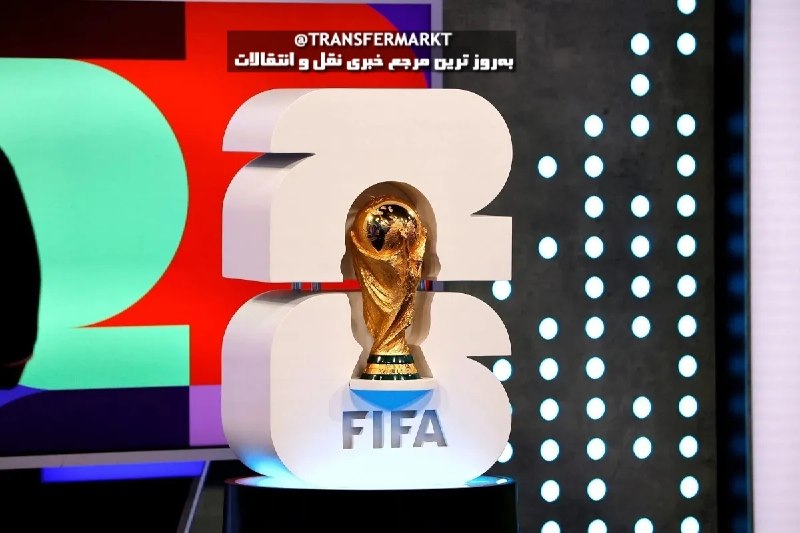
The Iran national team is scheduled to participate in the 2026 FIFA World Cup, co-hosted by the United States, Canada, and Mexico. The team's players and staff, as of May 18, had not received the US visas required for entry into American territory. The Iranian Football Federation has described the visa delays as anomalous given the timeline of tournament preparation. American officials have not publicly addressed the specific status of the visa applications.
Prediction markets tracked a 12 percent probability on May 18 that Iran would be unable to participate in the World Cup — a figure that, while low in absolute terms, is extraordinarily elevated for a major sporting event where participation is assumed rather than speculative. The Polymarket market reflects a calculation that the combination of diplomatic escalation, visa complications, and the possibility of Iranian airspace closure or other kinetic events could result in the team's absence from the tournament.
The football dimension matters for several reasons beyond sport. The World Cup is one of the few remaining contexts in which Iran and the United States occupy something approaching the same symbolic space — not as adversaries in a negotiation or combatants in a conflict, but as participants in a shared institutional framework governed by international sporting bodies. The potential absence of one team, for political reasons, would be a visible measure of how far the breakdown has extended.
There is also a domestic political dimension on both sides. In Iran, the national football team carries significant symbolic weight — a source of pride and, in recent years, a site of contested political expression, most notably when players declined to sing the national anthem at a 2022 fixture in protest at domestic crackdowns. The team's participation in a global tournament, and the atmosphere in which that participation occurs, is read in Tehran as a signal about the country's standing in the world. In the United States, hosting a team from a country with which relations are at crisis point raises its own set of questions about protocol, security, and the optics of normalisation.
The Structural Picture: Diplomatic Channels and Their Absence
What the May 18 developments illustrate is not simply a failure of a single negotiation or a single diplomatic initiative. It is the cumulative result of years in which the formal channels between Washington and Tehran have been either closed or operating at such a low level of trust that their outputs are negligible.
The United States withdrew from the JCPOA in 2018. It subsequently reinstated and expanded sanctions under the maximum pressure campaign. Iran, in response, moved beyond the enrichment limits agreed in the original accord. Direct diplomatic engagement has been intermittent and generally unsuccessful. Third-country intermediaries — Oman, Switzerland, and others — have attempted to keep lines open, but the gap between what Iran has been willing to offer and what the United States has been willing to accept has not narrowed in any sustained way.
The Trump administration's return to office in 2025 introduced additional volatility. The current position, as characterised by Axios on May 18, appears to involve a high degree of public pressure — economic, diplomatic, and, implicitly, military — as the primary instrument of engagement. Whether or not that approach reflects a calculated strategy to force a capitulation, an unwillingness to offer the reciprocal gestures that diplomacy requires, or a genuine belief that Iran will not negotiate in good faith regardless of the circumstances, is not something the public record makes clear.
What is clear is that the mechanisms that allow two governments to communicate, de-escalate, and resolve differences without those differences becoming crises are not functioning. The peace proposal that was rejected on May 18 was not, by all accounts, a document that solved the underlying disagreements. But it was a document — an object that could be responded to, revised, built upon. The decision to reject it before formal review suggests that the question being asked in Washington is not "how do we get to a deal" but "whether we want a deal at all."
The prediction-market probabilities — 39 percent on airspace closure, 12 percent on World Cup non-participation — reflect a recognition that without functioning diplomatic channels, the range of possible outcomes is wide and the probability of adverse outcomes is elevated. Markets price in the absence of stabilisation mechanisms, and the numbers are not reassuring.
What Comes Next
The immediate next step is the situation-room briefing that the Axios report cited as imminent on May 18. What emerges from that briefing — additional sanctions, diplomatic isolation measures, military positioning, or a surprising signal of openness — will set the terms for the next phase. The Iranian response, whatever form it takes, will be shaped by the domestic political calculation that Tehran's government must make: whether to double down on the rejected proposal and seek international support for its conciliatory posture, to respond to pressure with pressure of its own, or to accept that the diplomatic window has closed and to manage the consequences accordingly.
The football team's visa situation offers a small but illustrative test case. If the visas are granted in the coming weeks, it will suggest that even at the height of a diplomatic crisis, the operational machinery of international engagement continues to function in limited ways. If they are not, the symbolism will be stark: a World Cup in the United States without one of the qualified participants, because the host country chose not to issue the entry documents.
The broader stakes are larger than any single tournament or ultimatum. The question of whether Iran and the United States can find a framework for managing their disagreements — nuclear, regional, economic — without those disagreements becoming a military confrontation is not a hypothetical. It is the present and immediate policy question facing both governments, and the international system that sits between them.
What the Axios reporting on May 18 reveals is a moment at which that question is being answered, in public, with very little diplomatic furniture left in the room.
This publication's coverage of the Iran-US diplomatic track prioritises reporting from primary sources, including Axios reporting on both the rejected peace proposal and the characterisation of US official positions. Where Iranian state-adjacent sources are cited, the framing has been noted. The sporting logistics dimension has been developed from Polymarket market data and publicly reported team movements. Monexus will continue to track the situation as the World Cup approaches and the diplomatic record develops.
Wire provenance
This editorial synthesis draws on the following public wire/social posts:
- https://www.state.gov/iran-sanctions/