Raila Jr. Confronts Treasury CS Over Alleged Slights to Odinga Family — Kenya Coalition Tensions Surface Again
Raila Odinga Jr.'s public demand that Treasury Cabinet Secretary John Mbadi cease remarks he describes as disrespectful to his family has laid bare the fragility of the political arrangement that brought President William Ruto into office — and raises questions about whether the Odinga family's patience with the administration is running out.
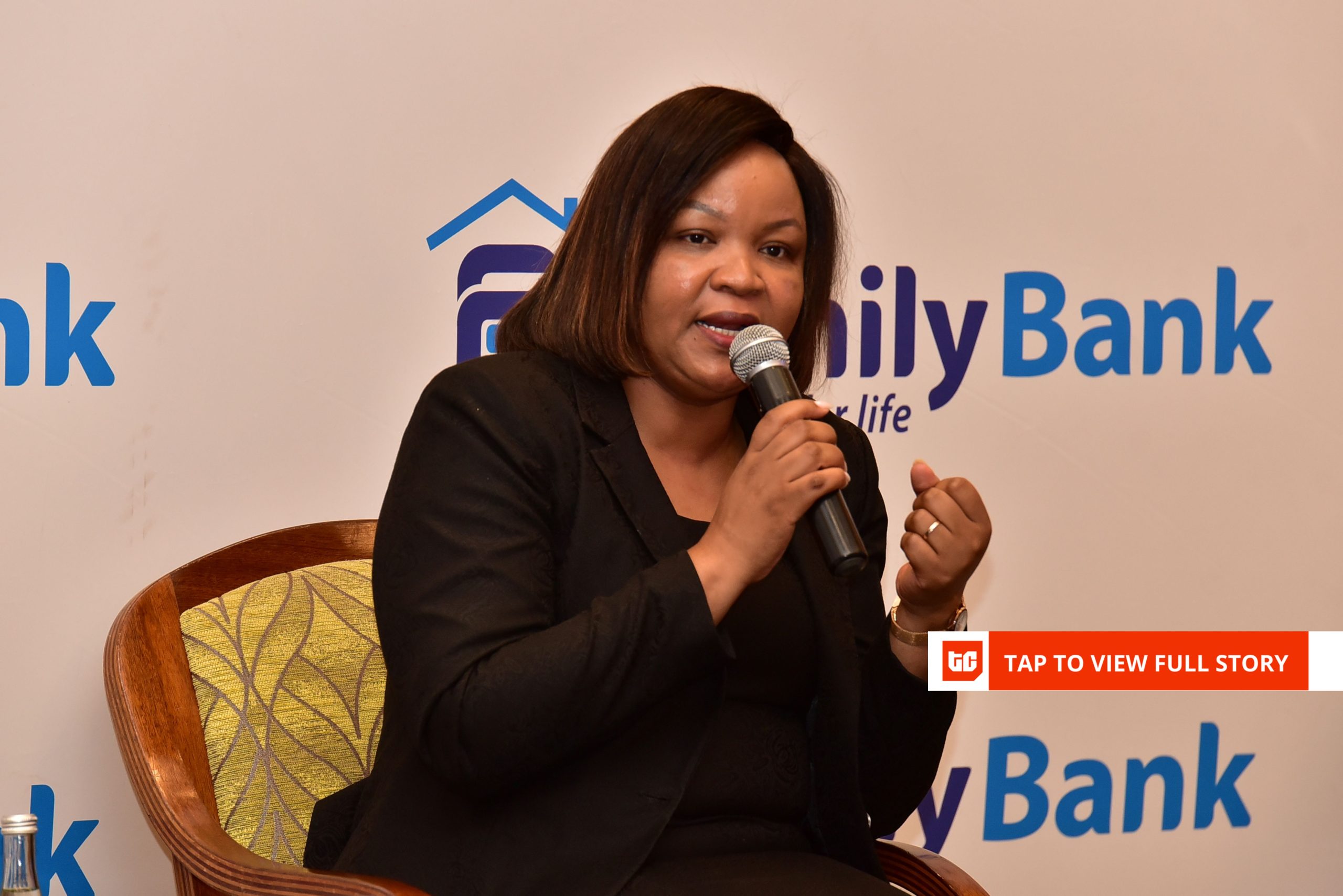
Raila Odinga Jr. has publicly demanded that Treasury Cabinet Secretary John Mbadi stop what he called disrespectful remarks about his family — the latest and most pointed indication yet that the arrangement between President William Ruto's administration and the Odinga political machinery is under material strain.
The confrontation, reported by Kenya's Daily Nation on 18 May 2026, stops short of formally severing ties with the government, but its language is unambiguous. Raila Jr., the youngest son of former Prime Minister Raila Odinga, framed Mbadi's comments as beneath the dignity owed to a family that he said had shaped Kenya's political landscape for decades. The demand that Mbadi "stop disrespecting my family" lands against a backdrop of mounting friction within Kenya's ruling coalition — one that has always been an uneasy confluence of interests rather than a unified ideological bloc.
The immediate trigger for the public rupture is not fully articulated in available sources, and neither party has offered a transcript of the specific exchange that precipitated the statement. What is clear is that the dispute is rooted in how the Odinga family — long accustomed to being a gravitational centre of Kenyan politics — perceives its standing within a government it helped to legitimise but in which it holds limited formal authority. Raila Odinga himself, now in his late seventies, accepted the role of Adenantere Mbinwa Mkuu (a title of historical significance) in the administration after a decade of opposition that included contested elections and at times confrontational relations with the state. That accommodation was always understood in Nairobi political circles as a strategic retreat rather than a full political surrender, and the latest statement from his son suggests the family is watching the calculus closely.
The Treasury portfolio is not incidental to this dispute. Kenya's national budget, its debt management strategy, and its distribution of county-level allocations are the raw currency of political loyalty in the devolved system. Whoever controls the Treasury shapes which constituencies receive road contracts, which county governments receive conditional grants, and which national programmes get accelerated. For the Odinga family's extensive political network — spanning Luo ethnic strongholds in western Kenya and various civil society and regional actors who attached themselves to the NASA coalition — access to that pipeline is not merely a matter of policy preference; it is how political networks survive and reproduce themselves between election cycles.
That Mbadi, himself a senior member of the Odinga-aligned orbit who transitioned into the Ruto administration, now sits at the head of that pipeline creates a particular texture to the confrontation. Sources within the Kenyan political commentariat have noted in recent months that Mbadi's communications with Odinga-aligned constituencies have at times been interpreted in those circles as insufficiently deferential — a tension that becomes acute when political figures with competing masters try to manage competing demands simultaneously. The current flare-up suggests that this management is failing at a moment when the political environment around the Ruto government is already complicated by economic pressures, including the ongoing restructuring of domestic debt and the political difficulty of containing the cost of living without the fiscal space to do so.
It would be too simple to read this as a straightforward family-versus-technocrat dispute. Kenya's coalition architecture has been structured around the premise that the Odinga family's incorporation into the administration would neutralise a potent opposition force. That incorporation came with understandings — some public, some private — about the distribution of political space and economic resources. When those understandings are felt to be violated, the response from the Odinga side has historically been swift and public. Raila Jr.'s statement follows a pattern: name the insult, name the offender, make clear that the tolerance is finite. What is less predictable is whether the response escalates beyond rhetoric, or whether it is designed precisely to force a renegotiation of terms without actually breaking the arrangement.
The implications for the Ruto administration are significant regardless of intent. Any signal that the Odinga family is reconsidering its positioning weakens the coalition's coherence at a moment when the government needs all available political capital to manage a difficult fiscal situation. The opposition space in Kenya, historically fractured, would consolidate quickly around an Odinga family that had re-established its independent political identity. That prospect is not lost on the administration's strategists, which means the Mbadi-Raila Jr. exchange is likely to generate diplomatic follow-up rather than simply being left to fester in the media.
What remains uncertain is whether Raila Sr. himself endorses or is even fully aware of the public tone his son has adopted. The former Prime Minister has been less visible in day-to-day political operations in recent months, and the public confrontation between his son and a senior cabinet minister raises the question of who speaks for the Odinga family in 2026. If this is an authorised statement — a deliberate signal sent through a family member rather than through official communications channels — it suggests a strategic calculation about timing and leverage. If it is not authorised, it suggests the younger generation of the family is establishing its own independent political voice, with different calibrations of acceptable risk than the older generation.
Either reading points to a coalition under pressure. The Ruto administration entered office with a broad but internally contradictory mandate — including promises of economic reform, agricultural transformation, and a diplomatic posture that would keep Kenya aligned with both Western partners and the expanding Chinese development footprint across East Africa. Managing those commitments while keeping a coalition of convenience intact has required continuous political maintenance. The Mbadi-Raila Jr. episode suggests that maintenance is becoming harder.
The sources for this article draw from Kenyan wire reporting and do not include independent confirmation of the specific remarks that Mbadi allegedly made. Monexus will continue to monitor the situation as the government and the Odinga family work through whatever follow-up this confrontation produces.
This article was sourced from Kenyan wire reporting. Monexus covered the family-government dynamic through the lens of political economy rather than personality — the friction here reflects structural competition over resource allocation, not merely personal grievance.