The $111 Barrel and the DMZ: What Kim Jong-un's Military Buildup Really Signals
North Korea ordered a strengthening of frontline units along the inter-Korean border on May 18, 2026 — the same day Brent crude touched $111. The timing is not incidental, and neither is the framing.
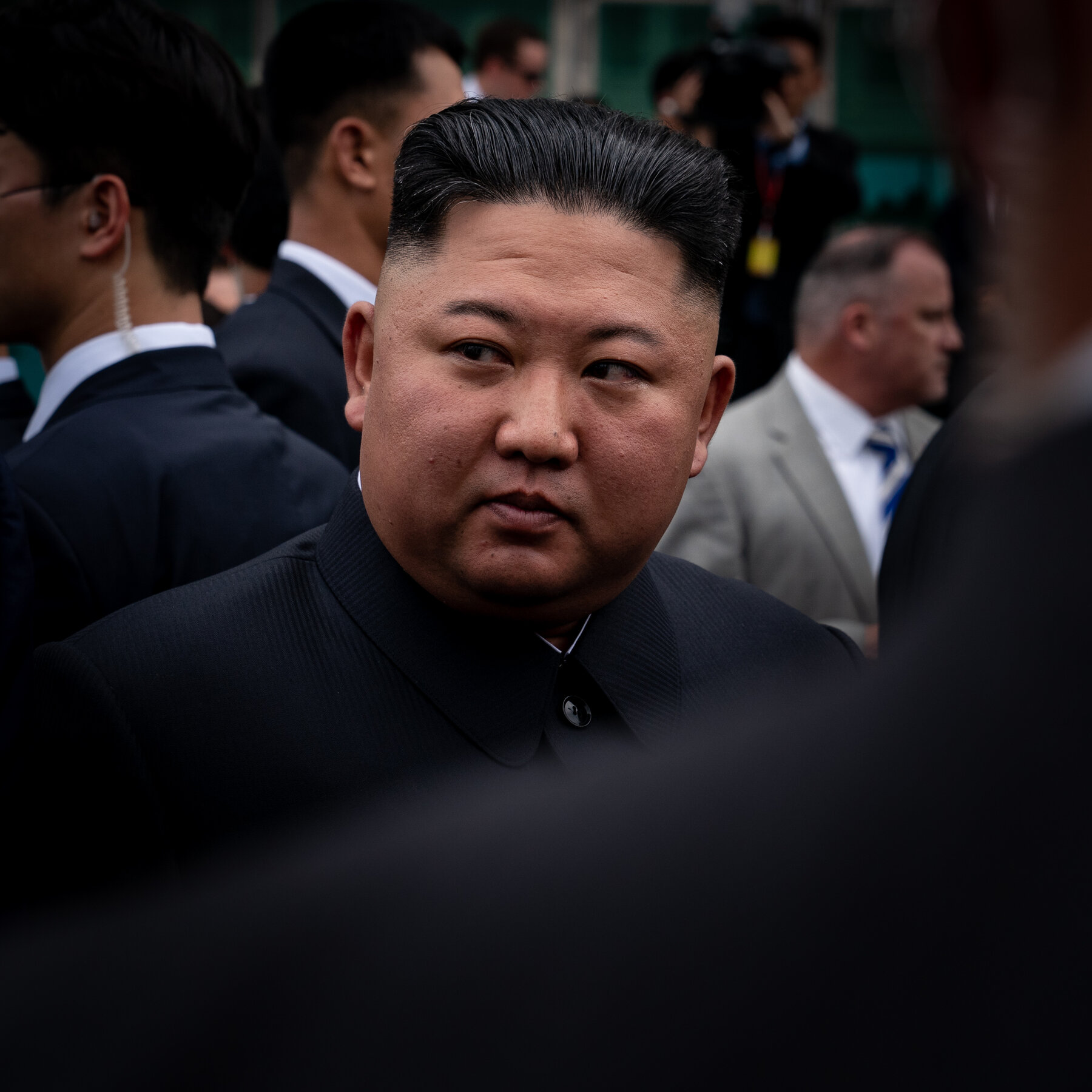
On May 18, 2026, North Korean leader Kim Jong-un ordered the strengthening of military units along the border with South Korea, according to state media KCNA. The same day, Brent crude oil climbed to $111 per barrel. The two data points are not unrelated. What the world is watching is a regime that frames every act of military posturing as defensive necessity — and then uses that framing to extract concessions from neighbors and adversaries alike.
The official line from Pyongyang is that strengthening frontline units is essential to "more thoroughly deterring war." That language is deliberate. It positions Kim as a responsible actor preventing conflict rather than generating it. Whether foreign audiences credit that framing matters less than what the framing obscures: the internal pressures that make provocations structurally useful to a regime under economic duress. And the price of a barrel of Brent crude is one measure of that duress.
The Border Order: What Kim Actually Said
KCNA reported on May 18 that Kim described the reinforcement of front-line units on the inter-Korean border as a priority "to more thoroughly deterring war." He called similar strengthening of major rear units equally essential. The announcement did not specify troop numbers, deployment timelines, or the types of units involved. The opacity is characteristic. North Korean military communications routinely announce intent without detail, forcing neighboring states and the United States to respond to a signal without knowing its scale.
South Korea's defense establishment will treat the announcement as a genuine development, not merely rhetorical. The Korean Peninsula's demilitarized zone is the world's most heavily fortified border. Any reconfiguration of forces there — even an incremental one — changes the calculus of potential engagement. Seoul monitors these shifts continuously, and this week's announcement will feed into ongoing defense posture reviews.
The timing coincides with heightened diplomatic activity across the region. South Korea has deepened trilateral security cooperation with the United States and Japan over the past two years. China, North Korea's principal diplomatic sponsor and economic lifeline, has maintained a studied silence on recent statements from Pyongyang. That silence is itself a signal.
The Oil Price Variable
The $111 Brent figure is not a background detail. North Korea's economy runs on imported energy and imported food. International sanctions have compressed both supply lines for years. When the global oil price rises, the cost of every concession Beijing extracts for maintaining its energy transit — or simply the cost of everything North Korea cannot produce domestically — rises in tandem.
Kim's regime has survived previous rounds of international pressure by combining military intimidation with selective diplomatic outreach, waiting for adversaries to compete for influence. This strategy has a structural dependency: it requires the international environment to be fractured enough that no single actor can enforce a coherent response. An oil price spike that destabilizes allied governments, stretches defense budgets, or redirects Western attention toward energy security weakens that coherent response before Kim has to act.
Whether the current price level reflects sustained market pressure or a temporary spike remains to be seen. What matters for the peninsula calculation is the direction of travel. If $111 becomes the floor rather than the ceiling, the economic pressures on Pyongyang compound — and history suggests regimes facing compounding economic pressure reach for external distraction.
What Beijing Wants
China is the variable that makes any North Korean escalation legible. Beijing provides the majority of North Korea's energy imports and the bulk of its food aid in normal years. It also provides diplomatic cover at the United Nations, where Chinese representatives have consistently watered down new sanctions measures.
This is not simple charity. Beijing views a unified, US-allied Korean Peninsula as a strategic encroachment on its periphery. A North Korea that acts as a buffer state — occasionally noisy, occasionally threatening, never quite collapsing — serves Chinese interests. It keeps American military assets focused on the northeast Asian flank and reduces pressure on China's western frontier.
But Beijing also does not want a war on its border. A conflict large enough to produce a refugee crisis, a direct US military presence, or a collapsed state on its border would impose costs China currently avoids. This creates a ceiling on how much it will tolerate from Pyongyang — and a reason why Chinese officials have, in private, applied pressure on North Korean leaders to avoid provocations that cross certain thresholds.
The question now is whether $111 oil changes Beijing's calculation. Higher global prices strain China's own energy imports. A more expensive North Korea — one that requires more economic support to remain stable — is a less useful buffer and a larger burden simultaneously.
What Seoul Can Do
South Korea is most exposed to whatever Kim is signaling. The DMZ is not an abstraction: it is a 250-kilometer scar across the peninsula, lined with mines, surveillance equipment, and more than a million active military personnel on the southern side alone. Any shift in North Korean posture there requires a response.
Seoul has options beyond escalation. A transparent communication of readiness to its alliance partners, coordination with Tokyo on intelligence-sharing, and quiet back-channel signals to Beijing that the situation is being monitored — these tools are available and have been used before. The South Korean government has also been deepening economic ties with the Global South, which gives it diplomatic leverage that earlier administrations lacked.
The calculus for Seoul is this: Kim's announcement may be the opening move in a pressure campaign, or it may be routine military administration dressed in maximalist language. South Korea cannot afford to assume the former and be wrong, or the latter and be surprised. That uncomfortable ambiguity is the defining condition of life on this particular border.
The Honest Uncertainty
The truth is that outside analysts — and likely most insiders — do not know precisely what Kim intends. North Korea's decision-making is opaque by design. The announcement of strengthened border units and the oil price spike happened on the same day, but correlation is not causation. Kim may be responding to internal pressures generated by the oil price. He may be using the announcement to signal distress to Beijing in a form it cannot ignore. He may simply be doing what North Korean military planning does periodically: announcing consolidation in language designed to sound threatening.
What the evidence supports is this: regimes under economic pressure frequently reach for external conflict as a consolidation mechanism. The oil price adds real uncertainty to Pyongyang's internal budget. The border announcement adds real uncertainty to the regional security environment. Taken together, they describe a situation that demands attention — not panic, not dismissal, but a level of sustained focus that Western news cycles rarely sustain.
South Korea and its partners should be watching the border not for a specific threat but for any change in pattern: different patrol frequencies, altered surveillance postures, new infrastructure construction near the demarcation line. Oil prices will tell part of the story. The other part remains opaque until Pyongyang chooses to reveal it. The $111 figure is a reminder that global commodity markets do not stop at the DMZ.
Wire provenance
This editorial synthesis draws on the following public wire/social posts:
- https://t.me/alalamfa
- https://t.me/alalamfa