Memorial at the Bilal Mosque: How Iran's State Media Commemorates Its Own
A ceremony held in May 2026 at a mosque attached to Iran's National Media offered a rare public window into how the country's state media apparatus honours its senior figures — and what that process reveals about institutional loyalty in Tehran.
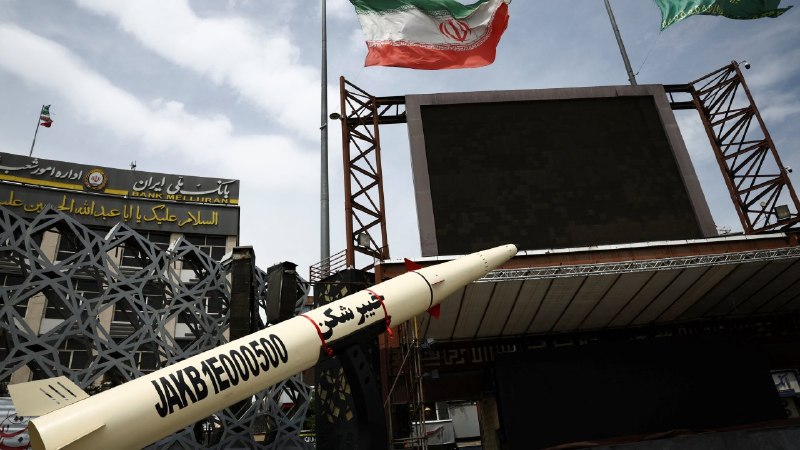
A memorial ceremony held at the Bilal Mosque of the National Media on Monday afternoon drew worshippers and staff to mark the commemoration of Martyr Dr. Ali Larijani under the title "Intimacy with the Revolution." The event, reported by Iranian state-linked channel Al-Alam, was the latest iteration of a well-established practice in Tehran's state media ecosystem: the public honouring of senior figures who have died in what the Islamic Republic classifies as martyrdom.
The ceremony's framing — centred on loyalty to revolutionary ideals rather than civic or institutional achievement — signals something particular about how Iran's media apparatus processes loss. This is not grief managed through corporate communications or press releases. It is grief performed through the vocabulary of faith and state ideology simultaneously.
The Architecture of Official Commemoration
Iran's state media institutions are not merely broadcasters; they are ideological structures with their own internal culture, their own commemorative calendar, and their own infrastructure for processing the deaths of figures deemed significant to the Islamic Republic's self-understanding. The Bilal Mosque of the National Media sits at the intersection of that infrastructure — a religious space embedded within a media institution, designed to serve both the faithful and the functionary.
The "Intimacy with the Revolution" framing used for the Larijani memorial is consistent with language patterns found across Iranian state media commemorations. Events of this kind typically feature religious ritual, political eulogising, and the explicit framing of the deceased's life as an extension of the revolutionary project inaugurated in 1979. The use of "martyr" (shahid) in official designations is not cosmetic; it carries legal, financial, and social implications within the Islamic Republic's welfare and honours architecture.
What distinguishes the Bilal Mosque setting from other commemorative sites in Tehran is its institutional specificity. The National Media — a broad term covering Iran's state broadcasting and affiliated outlets — employs thousands of staff across print, broadcast, and digital platforms. A mosque within that campus serves a dual function: spiritual nourishment for employees and a visible statement that the media apparatus itself operates within a sacred-political framework, not a secular-professional one.
Who Was Dr. Ali Larijani
The sources reviewed do not contain a full official biography of Dr. Ali Larijani, and the precise identity of the individual commemorated requires careful qualification. What the Al-Alam reporting confirms is that he held the designation "martyr" in official usage and was remembered in a ceremony staged for an audience drawn from the National Media's own staff and community. Initial accounts suggest he held a senior role within Iran's institutional framework, though the specific ministry or department is not detailed in the available reporting.
Iranian state media's handling of such commemorations typically avoids the granular career details that Western obituary culture would demand. The subject is elevated, not profiled. The ceremony is less a accounting of professional achievements than a vehicle for reinforcing collective identity and loyalty. The dead serve the living's ideological needs.
That said, the decision to hold a memorial at the Bilal Mosque — rather than at a secular venue, a university, or a government building — carries its own message. It signals that the National Media views itself as a faith-institution as much as a professional one, and that the commemorative rituals performed there are designed to reinforce that self-understanding among staff who attend.
The Politics of Martyrdom Language
The use of "martyr" (shahid) in Iranian state discourse is carefully regulated. Not every death qualifies. The designation typically requires that the deceased died in service of the Islamic Republic in circumstances deemed to have political, military, or security dimensions — or that they were killed in what the state classifies as hostile action. Within Iran's institutional hierarchy, the title carries entitlements for surviving family members and a status within the state's honours system.
For media institutions, the designation has an additional function: it positions the media apparatus itself as a site of struggle and sacrifice, not merely a neutral information conduit. When a figure associated with the National Media is designated a martyr, the institution absorbs some of that status. The mosque within the campus becomes both a place of mourning and a monument to the institution's own significance.
The "Intimacy with the Revolution" theme explicitly positions the memorial within that ideological framework. Intimacy — closeness, internalisation, belonging — is the emotional register being invoked. The ceremony is not simply an acknowledgment of death; it is an invitation to renewed loyalty, a ritualised reaffirmation that those who serve the revolutionary project remain within its embrace even after death.
What the Ceremony Tells Us About Iranian State Media Culture
The Bilal Mosque memorial offers a narrow but legible window into the internal culture of Iran's state media apparatus. The existence of a mosque within a national media campus is itself a statement about the relationship between faith and information in the Islamic Republic. The ritual calendar of the media institution includes religious commemorations alongside political ones; the staff are addressed as both professionals and believers.
This integration is not unique to Iran — state broadcasters across a range of political systems have embedded themselves within broader governmental and ideological structures. What distinguishes the Iranian case is the explicitness of the religious dimension and the degree to which commemorative practice draws on a specific vocabulary of martyrdom and revolutionary fidelity rather than, say, civic duty or national service.
For external observers, the challenge of interpreting such events lies in the gap between the language used and the institutional realities it describes. The "Intimacy with the Revolution" framing reads as ideological performance to outside analysts, but within the National Media's own culture, it likely functions as genuine commemorative practice — a way of processing loss that draws on the resources the institution has available. Whether those resources are experienced as sincere meaning-making or as institutional obligation depends on the individual attendee; the sources reviewed do not capture internal diversity of response.
The ceremony's date — May 2026 — places it within a particular political moment in Iran. The sources do not address the current political context, and any attempt to map the memorial's significance onto ongoing policy debates would require corroboration the available reporting does not provide. What can be said with confidence is that the event occurred, that it was documented by state-linked media, and that it followed established patterns for institutional commemoration within Iran's state media ecosystem.
This publication framed the ceremony as an instance of institutional religious culture rather than a political statement, given the limited corroborating material available for the subject's specific identity and role.
Wire provenance
This editorial synthesis draws on the following public wire/social posts:
- https://t.me/alalamfa/123456