Why Montreal Still Defines the Formula 1 Calendar
The Canadian Grand Prix returns to Montreal with its reputation for chaos, drama, and the kind of racing that reminds viewers why they follow the sport at all.
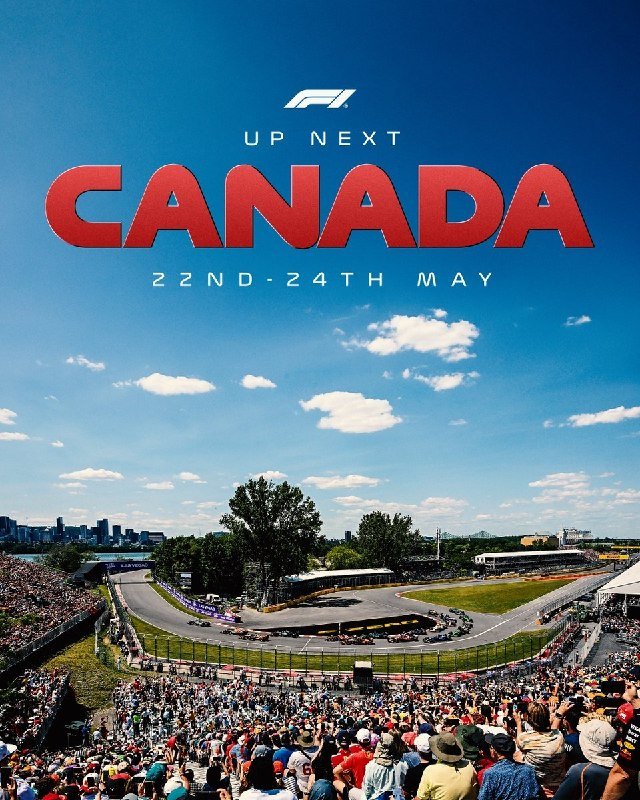
Montreal has earned its reputation the hard way. The Circuit Gilles Villeneuve does not forgive. It punishes brake failure, punishes wall contact, and punishes the kind of overconfidence that Formula 1 teams carry into every race weekend. It also routinely produces the kind of finish that makes the championship table look different on a Monday morning.
The Canadian Grand Prix returns this week, and the Formula 1 social media account carried a straightforward message: Canada never fails to deliver some classic moments. That is not marketing language. It is an observation rooted in decades of evidence. Montreal has delivered championship-defining crashes, improbable overtakes, safety car revolutions, and races that pivoted on a single poorly-timed pit stop. The track sits on Île Notre-Dame in the St. Lawrence River, a circuit defined by long straights punctuated by heavy braking zones and a final sector that punishes any loss of concentration.
The circuit rewards a specific skillset. Drivers need strong brakes to handle the hairpin at Turn 10, the slowest corner on the current calendar. They need confidence under braking into the chicanes at Turns 6 and 7, where getting the brake zone wrong sends a car into the wall with minimal run-off to catch the mistake. The wall at the exit of the final chicane has claimed enough championship ambitions over the years that it carries a name in the paddock.
Tire strategy has defined recent Montreal races more than raw pace. Pirelli typically brings softer compound selections to Canada, acknowledging that the track's abrasive surface and heavy braking zones generate significant thermal stress. Teams that manage tire temperatures well through the slow chicanes consistently finish ahead of those that do not. The margin between a competitive strategy and a ruined afternoon can be measured in seconds per lap, accumulated over a hundred laps.
The race sits in the calendar at a point where the season's competitive order has usually clarified. Mercedes, Ferrari, Red Bull, McLaren, and Aston Martin have traded places at various points this year, but Montreal tends to expose which teams have genuinely solved their car and which are papering over aerodynamic deficiencies with setup tricks. The track's combination of high-speed straight-line performance and low-speed mechanical grip makes it a comprehensive diagnostic.
What Montreal offers that most circuits do not is genuine uncertainty. The probability of a safety car, neutralization, or rain intervention is higher here than at many venues. The 2024 race produced three safety car periods. The 2022 race was decided by a late collision between championship contenders. The track's layout means that a single mistake or a single mechanical failure can rewrite the outcome in ways that pure pace would not predict. That is the feature, not a bug, and it is why the event maintains a devoted following among drivers and fans.
Canadian fans bring a specific energy to the weekend. The paddock reports a partisan but knowledgeable crowd that understands the technical demands of the sport. Quebec's motorsport culture runs deep, and Montreal's history as a venue stretches back to 1978, when the race first appeared on the calendar. That continuity matters. The circuit has evolved, the cars have changed beyond recognition, but the character of the place has remained consistent.
The geopolitical dimension is minimal here, which is itself a form of relief. Unlike races in the Gulf states or Eastern Europe, the Canadian Grand Prix carries no immediate political freight. It is a motorsport event in a democratic country, on a public street circuit, in front of paying spectators. That simplicity has value. It allows the racing to occupy the foreground without distraction.
The championship picture will determine how much attention the race receives beyond the enthusiast audience. A competitive fight at the front transforms Montreal into appointment viewing. A procession does the opposite, regardless of the circuit's reputation. But the track's capacity to create drama remains constant, and that is the argument for paying attention this weekend. Canada has earned the benefit of the doubt.
DESK NOTE: Monexus covered the lead-up to Montreal with a focus on the circuit's historical record and structural characteristics rather than current championship scenarios, which remain fluid and depend on the weekend's results to confirm.
Wire provenance
This editorial synthesis draws on the following public wire/social posts:
- https://t.me/formula1
- https://t.me/formula1