Musk's OpenAI Gambit Fails as Jury Bars 'Too Late' Claims
A California jury's unanimous verdict against Elon Musk's lawsuit against OpenAI raises questions about the limits of legal accountability in the AI industry's rapid transformation from nonprofit research lab to commercial juggernaut.
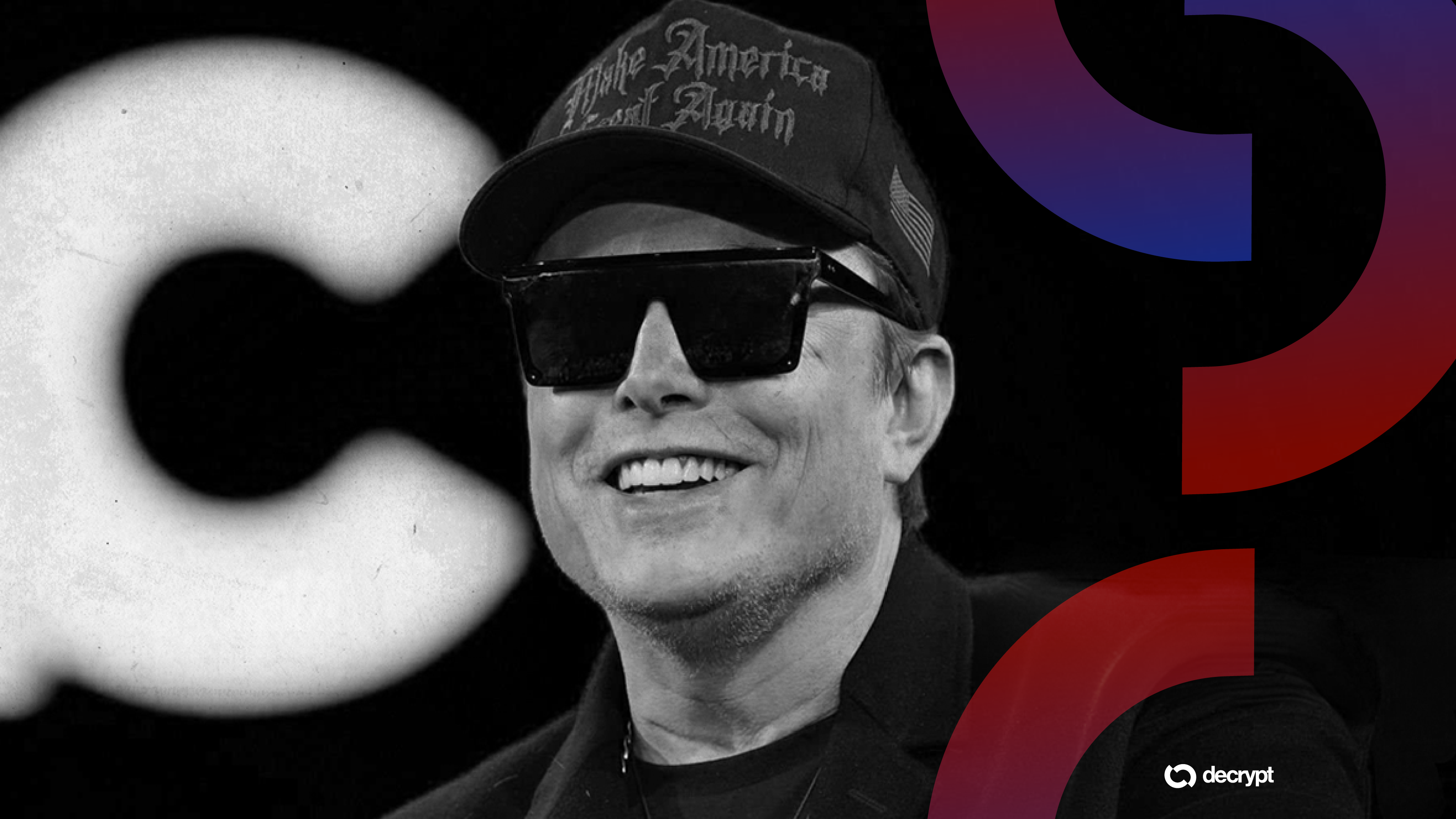
On 18 May 2026, a jury of nine Californians delivered a verdict that was simultaneously a win for Sam Altman and a defeat for a version of the OpenAI origin story that Musk has championed for years. The panel found, unanimously, that Musk had waited too long to bring his claims — that the statute of limitations had run before he filed suit against OpenAI, Altman, and Microsoft. The substance of what Musk alleged — that OpenAI had abandoned its nonprofit mission and surrendered its technology to Microsoft for commercial gain — was never weighed on its merits. The jury never reached it.
The verdict closed a courtroom chapter on what had become one of the most public and acrimonious disputes in Silicon Valley's recent history. It did not close the argument.
Musk's lawsuit, which sought damages tied to an estimated $150 billion valuation of the company, alleged that OpenAI's pivot from a nonprofit research laboratory to a commercial enterprise with close Microsoft ties represented a fundamental betrayal of the founding compact. OpenAI was created, the suit argued, to develop artificial intelligence in a manner that would benefit humanity — not to funnel that technology into a single corporation's ecosystem. By restructuring as a capped-profit entity and entering an exclusive partnership with Microsoft, the company had broken faith with its original investors and supporters, of whom Musk was among the most prominent. He had co-founded the organization in 2015, contributed early funding, and lent his name and credibility to its initial ambition: to build AI that was safe and openly accessible.
The courtroom outcome, however, turned not on the philosophy of AI governance but on the more prosaic matter of legal timing. California law limits how long a plaintiff has to bring certain categories of claims. The jury concluded that Musk's grievances fell within those time-bounded categories and that his filing came after the window had closed. It was a procedural victory for the defense, but one with substantive consequences: the jury was discharged without ever addressing whether OpenAI's commercial transformation was wrongful, whether the Microsoft partnership violated any duty, or whether Musk's version of the organization's founding compact had legal force.
What the verdict did establish, beyond legal procedure, is that the Musk-OpenAI relationship has now definitively fractured into open antagonism. The two parties had already diverged well before this litigation — Musk had left OpenAI's board in 2018, reportedly over disagreements about the direction the organization was taking, and had since founded xAI as a competing venture. But the lawsuit gave that rupture formal, sworn expression. In court filings and in public statements, Musk characterized OpenAI's evolution as a bait-and-switch: external capital had been solicited to fund a public-good mission, and those funds had instead been used to build a commercial entity that served Microsoft's strategic interests. OpenAI and Altman denied any wrongdoing, arguing that the restructuring was necessary to attract the capital required to compete in an AI development race that had accelerated far beyond what any nonprofit model could sustain.
That defense — necessity in the face of existential competition — sits at the heart of how the AI industry's largest players have justified their own transformations. When Musk and a small group of researchers launched OpenAI in 2015, the field of artificial intelligence was largely an academic pursuit. The commercial applications existed, but the idea that AI development represented a civilizational competition requiring hundreds of billions in capital was not yet the dominant frame. By the time OpenAI produced GPT-2 and then GPT-3, the strategic calculus had shifted entirely. Google, Meta, Amazon, and Microsoft were committing tens of billions annually to AI research and deployment. The competition was no longer intellectual — it was industrial. Remaining a nonprofit in that environment, OpenAI's leadership argued, meant remaining irrelevant or being outrun.
The Microsoft partnership, worth billions in compute credits and equity, was the mechanism by which OpenAI attempted to stay in that race. Critics, including Musk, argued it was the moment the organization abandoned its founding rationale. Proponents countered that the alternative — refusing commercial partnerships and watching from the margins as AI capabilities were built elsewhere — served no one's interests, least of all the public's. This is the unresolved tension that the jury never adjudicated: whether the mission justifies the means, and whether an organization that changes its structure to survive has betrayed its original purpose or fulfilled it by other routes.
The broader significance of the case extends beyond the parties involved. OpenAI's evolution has become a proxy for larger questions about how the most consequential technologies of the coming decades will be governed. The company is not simply a startup that pivoted its business model. It is the organization whose products have reshaped public understanding of what artificial intelligence can do, whose chatbot interfaces have been adopted by hundreds of millions of users, and whose API powers applications across industries from legal services to software development. The governance structure of that organization — whether it operates as a genuine nonprofit, a hybrid entity, or a commercial subsidiary — has implications that extend far beyond its founding documents and its original co-founders.
Musk's lawsuit was, in one respect, an attempt to impose a form of accountability on that process after the fact: to use litigation to enforce a mission commitment that he argued had been contractually implied, if not explicitly documented. The jury's verdict on statute-of-limitations grounds sidestepped whether such implied contracts have legal standing — a question that remains genuinely unsettled in corporate law. Whether a nonprofit's founding charter creates enforceable obligations that survive organizational restructuring is a matter on which courts have reached inconsistent conclusions. The technology industry's speed of transformation has consistently outpaced the legal frameworks designed to govern it, and this case illustrated that pattern with particular clarity.
The timing dimension of the verdict also raises procedural questions about how such disputes might be brought in future. If the statute of limitations begins running from the moment an organizational decision is made, plaintiffs challenging major corporate restructurings have a narrow window in which to act — potentially before the full consequences of those decisions are visible. Musk's case was dismissed because too much time elapsed between the actions he challenged and his filing. Other potential challengers, whether they are former board members, investors, or external watchdogs, will now need to weigh the risk of premature litigation against the risk of missing the filing deadline. That calculus may deter future legal challenges to AI governance decisions, leaving internal accountability mechanisms as the primary check on how organizations like OpenAI evolve.
For Musk personally, the defeat is significant but not necessarily final. He has shown no reluctance to relitigate disputes across multiple forums. His competing venture, xAI, has positioned itself explicitly in contrast to what he characterizes as OpenAI's commercial drift — promising to build AI that is fully open-source and free from corporate capture. Whether that positioning represents a genuine philosophical alternative or a competitive strategy is a question the market and regulators have yet to answer. The courtroom outcome on 18 May does not resolve it. What it does is confirm that the break between Musk and OpenAI is complete, that the two organizations will operate as rivals rather than as co-founders of a shared project, and that the argument about what AI governance should look like will continue outside the courtroom — in boardrooms, in regulatory proceedings, and in the broader public debate about who controls the most powerful technological capabilities being developed today.
This publication covered the verdict through direct wire reporting. Monexus notes that several major technology publications framed the outcome primarily as a personal setback for Musk; this article instead foregrounds the governance questions the case raised and the procedural门槛 that prevented their adjudication on the merits.
Wire provenance
This editorial synthesis draws on the following public wire/social posts:
- https://t.me/ClashReport/00000
- https://t.me/CryptoBriefing/00000
- https://t.me/TSN_ua/00000
- https://t.me/CorriereDellaSera/00000