Pakistan Delivers Revised Iran Proposal to Washington as Both Sides Raise Demands
Islamabad has transmitted Tehran's revised ceasefire terms to the United States, with Reuters reporting on May 18 that both parties are recalibrating their opening positions as negotiations enter a sensitive phase.
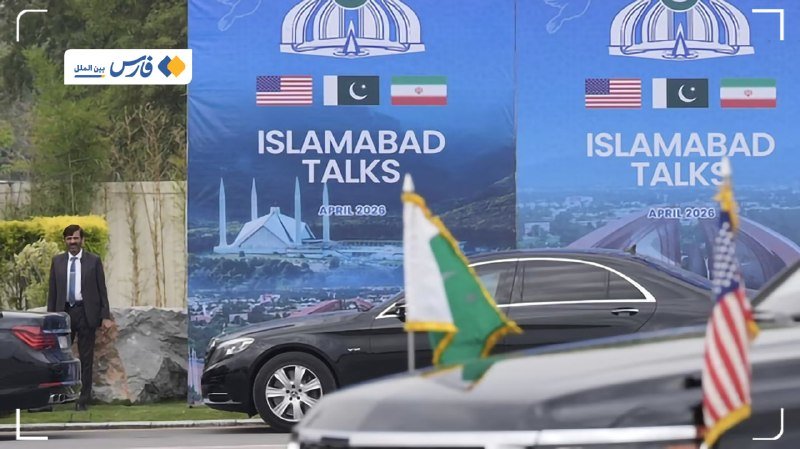
Pakistan has delivered Iran's revised proposal for ending the war to the United States, according to reporting by Reuters on May 18, 2026. Citing an unnamed source, Reuters stated that Islamabad transmitted the updated Iranian terms to Washington overnight, describing both sides as now "changing their goalposts" — a phrase that captures the widening gap between initial positions and the demands now on the table.
The disclosure marks the most concrete diplomatic development since tensions between Iran and the United States escalated into open conflict. Pakistan's role as an intermediary reflects Islamabad's longstanding position as a channel between Tehran and Western capitals, a function it has performed with varying degrees of success across multiple rounds of nuclear-related negotiations over the past decade.
What the revised proposal contains
The substance of Iran's updated terms remains partially obscured. Reuters did not publish the full text, and Iranian state media has not issued a standalone communiqué confirming the proposal's contents. The reporting describes the document as revised — implying an earlier version was already on the table — but neither the original nor the updated text has been made public.
What is clearer is the direction of travel. Sources familiar with the diplomatic track have described Tehran as having moved from an initial position focused on a comprehensive ceasefire and the removal of sanctions to a formulation that acknowledges the need to address Western concerns around its nuclear programme. Iranian officials have not commented publicly on the specifics, and the Foreign Ministry in Tehran declined to respond to questions from Reuters.
The limited transparency is itself significant. Nuclear-adjacent negotiations of this kind have historically been conducted in tightly held formats, with public statements serving political domestic audiences rather than contributing to the substance of talks. That both sides appear willing to frame the moment as a shift in positions — rather than simply an exchange of documents — suggests the domestic political constraints on each government are now a primary variable.
Washington's position: demands laid bare
Reporting by Fars News, an Iranian state-aligned news agency, provided the most granular public account of what the United States is seeking. According to Fars News, American demands include: no financial compensation to Iran for war damages; the transfer of Iran's 400 kilograms of enriched uranium to the United States; and a restriction limiting Iran to operating a single nuclear facility.
Those figures require careful handling. The 400kg uranium figure corresponds to a threshold that featured in the 2015 Joint Comprehensive Plan of Action — the Iran nuclear deal — which capped Iran's enriched uranium stockpile at 300kg. Iran's enrichment programme has advanced significantly since the United States withdrew from that agreement in 2018, making the 400kg figure both a negotiating anchor and a marker of how far Tehran's programme has moved beyond its pre-2018 ceiling.
The US demands, as reported, frame the negotiation as an exercise in rollback rather than a compact between equals. The demand that Iran operate only a single nuclear facility goes substantially beyond what the JCPOA required, even during its period of maximum compliance. If accurate, it would represent an effort to dismantle the infrastructure Iran has built over eight years of post-JCPA enrichment, not merely to freeze it.
The Trump administration has not confirmed these specific terms publicly. Officials in Washington have said only that any deal must be "verifiable and permanent" — language that leaves enormous room for interpretation. The absence of an official US statement on the specifics is not unusual at this stage, but it leaves open the question of whether these demands represent opening positions, internal working assumptions, or a deliberately escalated set of asks designed to test Iran's bottom line.
The structural backdrop: why this round is different
The current diplomatic activity takes place against a fundamentally altered backdrop from the 2015 nuclear deal era. That agreement was negotiated under a different US administration, with a different Iranian president, and with Iran's enrichment infrastructure at an earlier stage of development. The ballistic missile programme that now features prominently in Western concerns was present but not yet a primary sticking point.
Today, Iran has accumulated enough enriched uranium at varying levels of purity that the breakout timeline — the time required to produce weapons-grade material — has compressed substantially. Western intelligence assessments put that timeline at weeks rather than months. The US demand for a single nuclear facility, if accepted, would effectively unwind years of Iranian technical advancement.
Pakistan's intermediary role is not neutral. Islamabad maintains its own complicated relationship with both Washington and Tehran — it has military and intelligence ties to the United States while sharing a long border with Iran. That it has been chosen as the transmitting channel suggests neither side is yet willing to engage in the kind of direct, high-level communication that a genuine negotiation would require. The use of intermediaries is characteristic of negotiations where both parties need to preserve domestic political cover.
Stakes and what comes next
The consequences of a breakdown in this diplomatic track are significant on multiple levels. For Iran, accepting the US demands as reported would mean surrendering nuclear infrastructure built at considerable political cost and accepting zero compensation for a conflict the Islamic Republic characterises as one of resistance against American aggression. The domestic political cost of that outcome would be substantial, and it is not clear that Supreme Leader Ayatollah Ali Khamenei has appetite for it.
For Washington, the challenge is different. The Trump administration's stated preference is for a deal rather than a sustained military campaign, but a deal that leaves Iran's enrichment infrastructure intact — even under monitoring — is unlikely to satisfy the administration's most hawkish voices. The question of whether the United States is willing to accept a negotiated outcome that falls short of full rollback is the central ambiguity in this phase.
The reporting that both sides are "changing their goalposts" is the most honest description of where things stand. Initial positions have moved, but no common ground has been established. What Pakistan has delivered is a document — a starting point for a negotiation that could end in a framework agreement, a collapse, or a further round of quiet intermediary contacts that produce nothing visible. The sources do not yet indicate which of those outcomes is more likely.
This publication framed the reporting as a diplomatic development requiring verification of both the proposal's contents and the US demands, rather than as a breakthrough narrative. Reuters led with the intermediary role; Fars News provided the demand-side detail; neither was sufficient on its own, and the full picture remains partial.
Wire provenance
This editorial synthesis draws on the following public wire/social posts:
- https://t.me/AMK_Mapping
- https://t.me/tasnimnews_en
- https://t.me/JahanTasnim
- https://t.me/rnintel