The Pakistani Bridge: Why Iran's Back-Channel Diplomacy Is Outlasting US Pressure
Tehran's decision to route nuclear communications through Islamabad rather than through European intermediaries marks a quiet but consequential shift in the architecture of Gulf diplomacy — one that Western capitals are struggling to读完 adapt to.
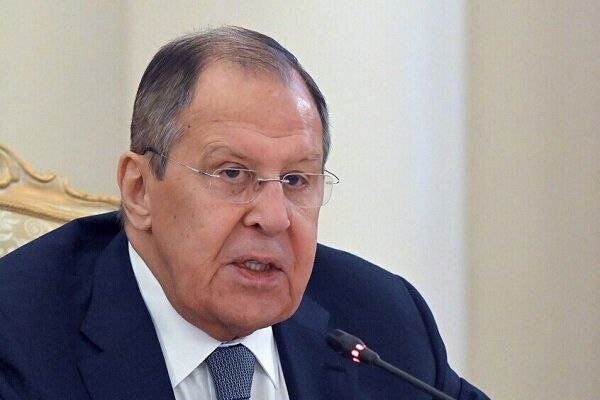
A senior Iranian official confirmed on 18 May 2026 that Tehran continues to exchange positions with Washington through a Pakistani mediator, having received a fresh set of American observations despite the US rejecting Iran's opening proposal outright. The official also stated that Iran will not place its right to enrich uranium on the negotiating table, and that Tehran is systematically documenting what it calls crimes committed by the "aggression countries" in preparation for future legal action.
Five separate wire dispatches from Iran's Arabic-language state broadcaster Al Alam on that same morning laid out the framework of Tehran's position with unusual specificity for an off-the-record channel. The details matter: not because the Iranian framing is trustworthy in isolation, but because the structural dynamics it describes are real, consequential, and largely absent from the way Western capitals discuss the Gulf nuclear file.
The End of the European Corridor
For two decades, the nuclear diplomacy between Iran and the United States ran through European hands — first through the British and German channel that produced the 2003 Paris Agreement, then through the EU3 process that eventually yielded the Joint Comprehensive Plan of Action in 2015. The assumption underpinning that architecture was simple: Washington and Tehran did not speak directly, so European intermediaries managed the gap.
That architecture is now defunct. The Pakistani channel — which appears to have taken on formal significance only in recent weeks, according to the Al Alam dispatches — reflects a deliberate Iranian choice to work through an interlocutor with direct strategic interest in Gulf stability and longstanding intelligence contact with both Washington and Tehran. Pakistan has hosted back-channel negotiations before. It has no institutional interest in leaking to press, and it has no domestic political constituency that would reward a blow-up. For Tehran, that makes Islamabad a far more reliable conduit than a European capital whose parliament might vote on a resolution mid-negotiation.
The shift matters beyond logistics. A Pakistani back-channel carries implicit leverage: Islamabad has its own longstanding concerns about Indian strategic depth, about Afghan instability on its western border, and about managing Saudi-Iranian competition in the Gulf. A Pakistani mediator is not a neutral conduit — it is a player with its own ledger of preferences. That both Washington and Tehran have accepted this arrangement tells us something about how far both sides have moved from the formal JCPOA framework, and how deeply they distrust the multilateral architecture it built.
Enrichment Red Lines and the Shape of a Deal
The most consequential detail in the Al Alam reporting is the explicit statement that Iran's right to enrich uranium will not be raised in the negotiations. This is not a negotiating position designed to be traded away — it is a constitutional and political red line that no Iranian government, reformist or otherwise, can cross without detonating its own domestic support structure.
Western capitals have understood this in private for years, even as public statements continue to insist that enrichment must be capped at civilian levels. The Obama administration understood it. The Trump administration, in the end, understood it too — which is why maximum pressure produced no deal. The Biden administration has oscillated between the two, issuing public demands it knew Tehran could not accept while quietly allowing the Pakistani channel to function as the actual venue of negotiation.
The asymmetry at the heart of this negotiation is straightforward: Iran wants sanctions relief and legal security guarantees before any step on the nuclear programme. Washington wants Iranian nuclear concessions before any sanctions relief. Neither side can deliver its precondition domestically without exposing itself to charges of capitulation. That is why the back-channel exists — to conduct the actual negotiation while the public positions remain fixed for domestic consumption.
The American observations received through the Pakistani mediator on 18 May are presumably a response to Tehran's proposal. Whether they represent movement, hardening, or procedural clarification is not known from the available reporting. What is known is that Washington rejected Iran's opening proposal — which itself tells us the distance between positions remains substantial.
Documenting "Aggression" — A Legal Card in Waiting
The least-discussed element of the Al Alam dispatches is Iran's stated intention to document what it calls crimes committed by the "aggression countries" — language that, in Tehran's framing, covers the United States and its allies — and to pursue legal accountability. This is not incidental rhetoric. It is a deliberate attempt to recast the legal architecture of the relationship.
Iran has been subject to international sanctions, designated as a sponsor of terrorism, and had its assets frozen under a succession of US laws and UN Security Council resolutions. Tehran has always contested the legitimacy of those designations, arguing they were politically motivated and lacked proper legal foundation. The campaign to document what Iran calls aggression — presumably including economic sanctions as instruments of coercion, and possibly military actions in the Gulf — is an attempt to shift the frame from "Iran as proliferator" to "Western powers as law-breakers."
Whether that legal gambit has any realistic prospect of success is a separate question. International courts have shown limited appetite for adjudicating sanctions disputes. But the framing serves a domestic purpose as well: it positions the current negotiation as a defensive posture against lawless pressure rather than a concession under duress. That framing is not without political utility for the Iranian government, especially in a context where public opinion has absorbed years of economic hardship attributed to sanctions.
The Stakes, and Why the Silence Matters
If the Pakistani channel collapses — if Washington refuses to move on sanctions relief and Iran refuses to move on enrichment limits — the alternative is not stasis. It is a slow-motion escalation in uranium enrichment, increased US military posture in the Gulf, and the gradual expiration of the Additional Protocol monitoring provisions that currently give the International Atomic Energy Agency limited access to Iranian sites. A nuclear-armed Iran would fundamentally alter the deterrence calculus across the Middle East. Saudi Arabia has stated it would seek its own capability. Egypt, Turkey, and Pakistan's nuclear posture would all be re-examined through a new lens.
The Al Alam dispatches from 18 May are, in the end, a negotiated signal. They describe a negotiation that is active, structured, and operating through a channel neither side wants to acknowledge publicly. They describe red lines on both sides that have not moved. And they describe a legal and political campaign — documenting aggression for future accountability — that suggests Iran is not approaching this process with天真 expectations of a clean resolution.
What the dispatches do not describe is any exit ramp. No third-party guarantor, no framework for phased sanctions relief, no mention of the International Atomic Energy Agency or its inspection regime as part of the current discussions. The absence is notable. A negotiation that cannot name its own institutional architecture is a negotiation that is still very far from agreement — but still running, which is itself a form of progress in a relationship that has spent a decade at the edge of rupture.
—
This publication drew on wire dispatches from Al Alam, Iran's Arabic-language state broadcaster, on 18 May 2026. The reporting reflects Iranian official positions as transmitted through that channel. No independent confirmation of the specific American observations received through the Pakistani mediator was available from Western or European wire services at time of publication.
Wire provenance
This editorial synthesis draws on the following public wire/social posts:
- https://t.me/alalamarabic/123456
- https://t.me/alalamarabic/123455
- https://t.me/alalamarabic/123454
- https://t.me/alalamarabic/123453
- https://t.me/alalamarabic/123452