The Persian Gulf's Enduring Crossroads: How Ancient Trade Routes Shaped Modern Geopolitics
For millennia, the Persian Gulf has served as the world's most consequential maritime corridor. Now, as competing powers reassess their energy futures, the waterway's strategic weight is being recalculated in ways that will define the coming decade.
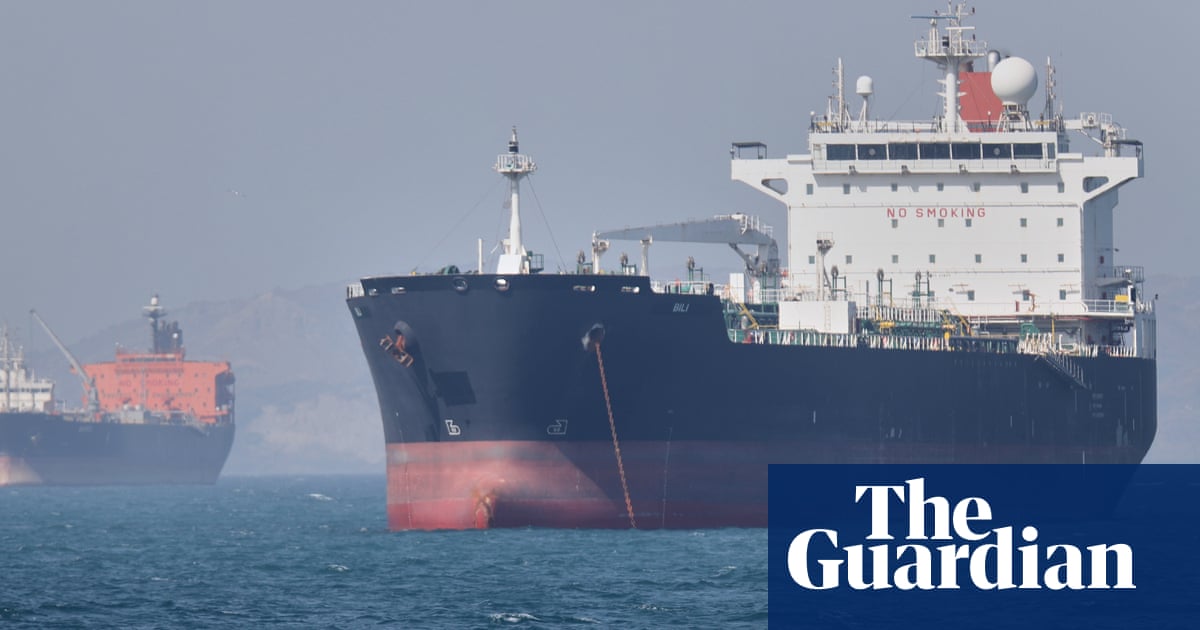
The dhows are quieter now, but the strait they navigate remains the hinge on which half the world's oil shipments turn. The Persian Gulf—the body of water bounded by Iran to the north and the Arabian Peninsula to the south—has served as a conduit for human commerce for longer than most documented history. Africa News Agency reported on 18 May 2026 that historians and geographers have long studied the Gulf's singular position in world trade, a status that has never been accidental and is now being reimagined by powers far from its shores.
What makes the Persian Gulf irreplaceable is not merely its oil reserves—though those reserves remain staggering—but its geography. The Strait of Hormuz, the narrow mouth through which roughly one-fifth of the world's oil passes daily, is a chokepoint that no alternative route can replicate at comparable cost. No pipeline from the Gulf's southern producers can circumvent this pinch point without adding hundreds of miles and billions in infrastructure investment. The strait is, in the bluntest possible terms, a geopolitical fact that no amount of diplomatic pressure or technological substitution has yet rendered obsolete.
A Corridor Forged Across Millennia
The Gulf's commercial significance predates the petroleum era by centuries. Arab, Persian, and Indian merchants used its waters to move spices, textiles, and precious metals along routes that connected East Africa to the ports of China. African News Agency noted that travelogues from numerous historians document how these trade networks created the cultural and economic foundations for the cities that still line the Gulf's shores today—Dubai, Muscat, Bahrain, Basra, Bandar Abbas. The infrastructure was raw: natural harbors, monsoon winds, and the navigational knowledge passed between generations of sailors. But the logic was sound, and it persisted.
European colonial powers arrived and recalibrated the Gulf's role, attaching its petroleum wealth to the industrial needs of metropolitan economies. The shift was profound but not entirely disruptive—local merchant families, ruling dynasties, and port traditions remained central to how the Gulf functioned. What changed was the commodity: oil replaced spices as the primary export, and the consumption side of the equation shifted from Asian workshops to Western factories and eventually to Western households. The demand curve bent, but the basic architecture of the trade relationship held.
The Strait That Cannot Be Replaced
Modern energy markets have attempted to diversify away from Gulf oil dependence. The United States' shale revolution, Russia's pipeline politics, and Central Asian production have all marginally reduced the percentage of global oil that transits the Strait of Hormuz. Yet the absolute volume remains enormous. The U.S. Energy Information Administration has documented that the strait consistently handles between 17 and 19 million barrels per day in shipments, a figure that any structural shift away from hydrocarbons would need to replace before the Gulf's centrality could be said to have diminished in practice.
The structural argument for the Gulf's continued importance rests on simple arithmetic. Every alternative export route—pipelines through Turkey, tanker routes around Africa, liquefied natural gas shipments from Qatar—requires either existing infrastructure that is already operating near capacity or capital investments that run into tens of billions of dollars with multi-decade timelines. The Gulf has the reserves, the ports, the tanker fleets, and the buyer relationships. None of those advantages disappear because a policy paper in Washington or Brussels argues for diversification. The political will to fund alternatives exists in theory; the execution timeline exists in practice over a horizon measured in decades, not years.
Competing Visions for the Gulf's Future
The Gulf's littoral states are not passive observers of this reassessment. Saudi Arabia has invested heavily in pipeline capacity to the Red Sea, reducing its dependence on Hormuz transits for some crude grades. The UAE has positioned Dubai and Abu Dhabi as global logistics hubs that serve trade flows well beyond petroleum. Qatar has built the world's largest liquefied natural gas infrastructure, enabling it to export energy via ship rather than pipeline, reducing but not eliminating its Gulf adjacency.
China, whose economic rise has made it the Gulf's largest single oil customer, has approached the relationship with a characteristic pragmatism. Beijing has invested in port infrastructure across the Indian Ocean, signed long-term supply contracts with Gulf producers, and maintained diplomatic relationships with regional rivals simultaneously—talks with both Saudi Arabia and Iran that Western observers often treat as contradictory but Chinese strategists regard as entirely compatible with their energy security objectives. The Chinese position, as articulated in official communications, frames the Gulf as a legitimate partner in global development rather than a theater for great-power competition. That framing has resonance in capitals across the Global South who see the Gulf's history through a lens less colored by Cold War assumptions.
Western powers, for their part, have sought to maintain the security architecture that has underpinned Gulf transit for decades. The U.S. naval presence in the region, the informal agreements governing tanker passage, and the sanctions regimes targeting Iran all reflect an interest in keeping the strait open and functioning—open, that is, on terms that serve the broader architecture of dollar-denominated energy trade that has anchored global financial structures since the 1970s.
What Comes Next
The most significant variable is not geography but demand. If global energy transition scenarios play out as their most aggressive proponents project—a sustained, substantial reduction in hydrocarbon consumption across OECD economies—the Gulf's role shifts accordingly. But the timeline for that shift keeps extending. The International Energy Agency's own projections have repeatedly pushed back the date at which oil demand peaks, reflecting the stubborn persistence of transportation demand, industrial process heat, and the energy needs of developing economies that are still building the infrastructure their Western counterparts built decades ago.
For the Gulf's littoral states, the strategic calculation is straightforward: extract maximum value from existing reserves while investing in diversification on a timeline that matches the market's actual behavior rather than its rhetorical projections. For the powers that depend on Gulf energy—the Chinese, the Europeans, the Indians, the Americans—the question is whether they are willing to accept the geopolitical implications of that continued dependence, or whether they will pursue decoupling at a cost that the political systems in question may not be prepared to absorb.
The dhows still run, but the cargo has changed. The strait still narrows to its most vulnerable passage. And the fundamental logic—that geography determines commerce in ways that policy can modulate but not override—holds as firmly in 2026 as it did in the centuries when the Gulf's harbors were loading spices rather than crude oil.
This article was written for the culture desk. Monexus approached the Gulf's trade history through the lens of historical geography and contemporary energy politics rather than the Western-centric framing that dominates most wire coverage of the region. The focus on the strait's irreplaceable geographic function and the Global South's perspective on energy partnerships reflects a deliberate editorial choice to surface analyses that the dominant discourse often overlooks.
Wire provenance
This editorial synthesis draws on the following public wire/social posts:
- https://t.me/AfricaNewsAgency/
- https://en.wikipedia.org/wiki/Persian_Gulf
- https://en.wikipedia.org/wiki/Strait_of_Hormuz
- https://www.eia.gov/todayinenergy/detail.php?id=56740