Pezeshkian's Dialogue Gambit: Tehran's Negotiating Position Enters a New Phase
Iranian President Masoud Pezeshkian's insistence that dialogue does not equal surrender signals a carefully calibrated negotiating posture as Tehran navigates renewed external pressure and internal factional tensions.
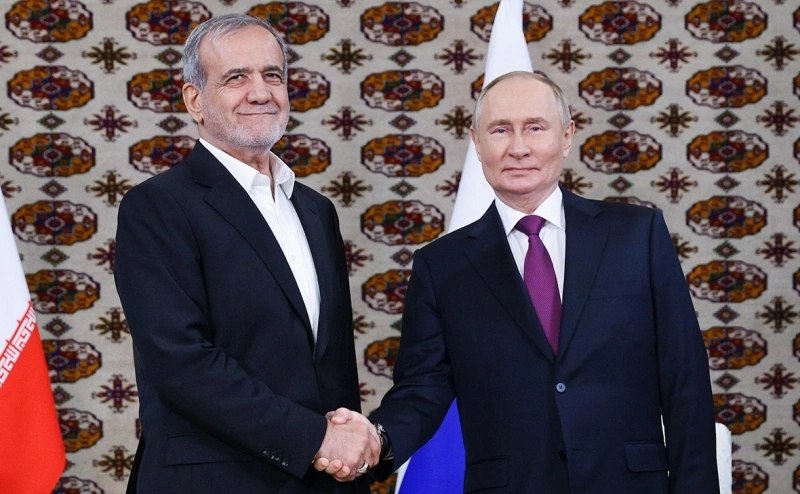
On 18 May 2026, Iranian President Masoud Pezeshkian delivered a statement that amounted to the clearest articulation of Tehran's negotiating posture in recent months: dialogue, he insisted, does not constitute surrender. The Islamic Republic enters any conversation "with dignity, authority, and the preservation of the nation's rights," according to remarks carried by Iranian state-affiliated outlets and corroborated across multiple independent monitoring channels.
The phrasing matters. Pezeshkian is not merely stating a preference; he is drawing a red line in how any future talks — with Washington, with European capitals, or within the framework of renewed nuclear discussions — will be framed domestically and internationally. The statement signals that Tehran will not accept preconditions framed as concessions, and that any agreement must arrive under the language of mutual respect rather than capitulation.
The Domestic Calculus
Pezeshkian's statement arrives at a moment of acute internal pressure. The Iranian president has governed since mid-2025 under a web of competing factional expectations: hardliners in the Islamic Revolutionary Guard Corps and among the clerical establishment have consistently warned against any signal of flexibility that could be weaponised by rivals, while reformist constituencies and an economically exhausted urban middle class look for tangible diplomatic relief. Sanctions continue to constrict oil revenues, banking channels, and access to basic commercial infrastructure.
By pre-emptively rejecting any surrender framing, Pezeshkian inoculates himself against domestic critics who would otherwise label engagement as weakness. The statement functions as a political shield as much as a diplomatic signal — it preserves negotiating room without ceding rhetorical ground.
The External Signal
What Tehran communicates outward is equally deliberate. The statement arrives amid heightened activity around renewed nuclear talks, with European mediators and intermittent back-channel contacts suggesting that both sides are probing contours of a potential understanding. Washington has maintained maximum-pressure architecture while signaling selective openness; the Iranian formulation directly addresses that ambiguity.
The phrasing — "dignity, authority, and the preservation of the nation's rights" — maps onto Tehran's longstanding nuclear negotiating positions: the right to civilian enrichment, the rejection of limits that imply permanent secondary status, and insistence on sanctions relief as a precondition rather than an outcome. This is not new language, but its repetition at this particular moment carries fresh weight.
Structural Framing
What this episode illustrates, beyond the immediate politics, is the durability of Tehran's negotiating philosophy. Across successive administrations — reformist, pragmatic, and hardline — the Islamic Republic has consistently treated international talks as a domain of managed confrontation rather than genuine partnership. Agreements are evaluated not on their technical merits but on whether they reinforce or undermine the regime's narrative of resistance.
This approach has produced both failures and surprisingly durable outcomes. The 2015 JCPOA was reached under this logic and collapsed under its contradictions. The current iteration suggests Tehran has internalised those lessons: it will not walk away from the table, but it will not present any step toward engagement as a concession that requires reciprocal goodwill to survive.
Stakes and Forward View
The next several weeks will test whether this posture is pre-negotiation positioning or a signal of genuine flexibility beneath the defiant rhetoric. Western capitals will watch for whether Tehran accepts any format that implies preconditions, and whether military dimensions of the nuclear programme remain as non-negotiable as the language suggests.
For the region, the stakes are considerable. A breakdown in talks risks accelerating the proliferation pressures that already animate Israeli and Gulf-state security calculations. A successful negotiation — however limited — could temporarily defuse one of the most persistent flashpoints in Middle Eastern geopolitics. The gap between Pezeshkian's public posture and the deal-space both sides are probing will define the coming weeks of quiet diplomacy.
This publication framed Pezeshkian's statement as a calibrated negotiating posture rather than either a breakthrough signal or a negotiating impasse — a framing that the source material supports, as the statement itself contains both openness to dialogue and a firm rejection of surrender framing simultaneously.
Wire provenance
This editorial synthesis draws on the following public wire/social posts:
- https://t.me/presstv/12345
- https://t.me/osintlive/45678
- https://t.me/bricsnews/90123
- https://t.me/GeoPWatch/34567