Pope Leo XIV and the '67' TikTok Trend: A Viral Moment That Tells a Larger Story
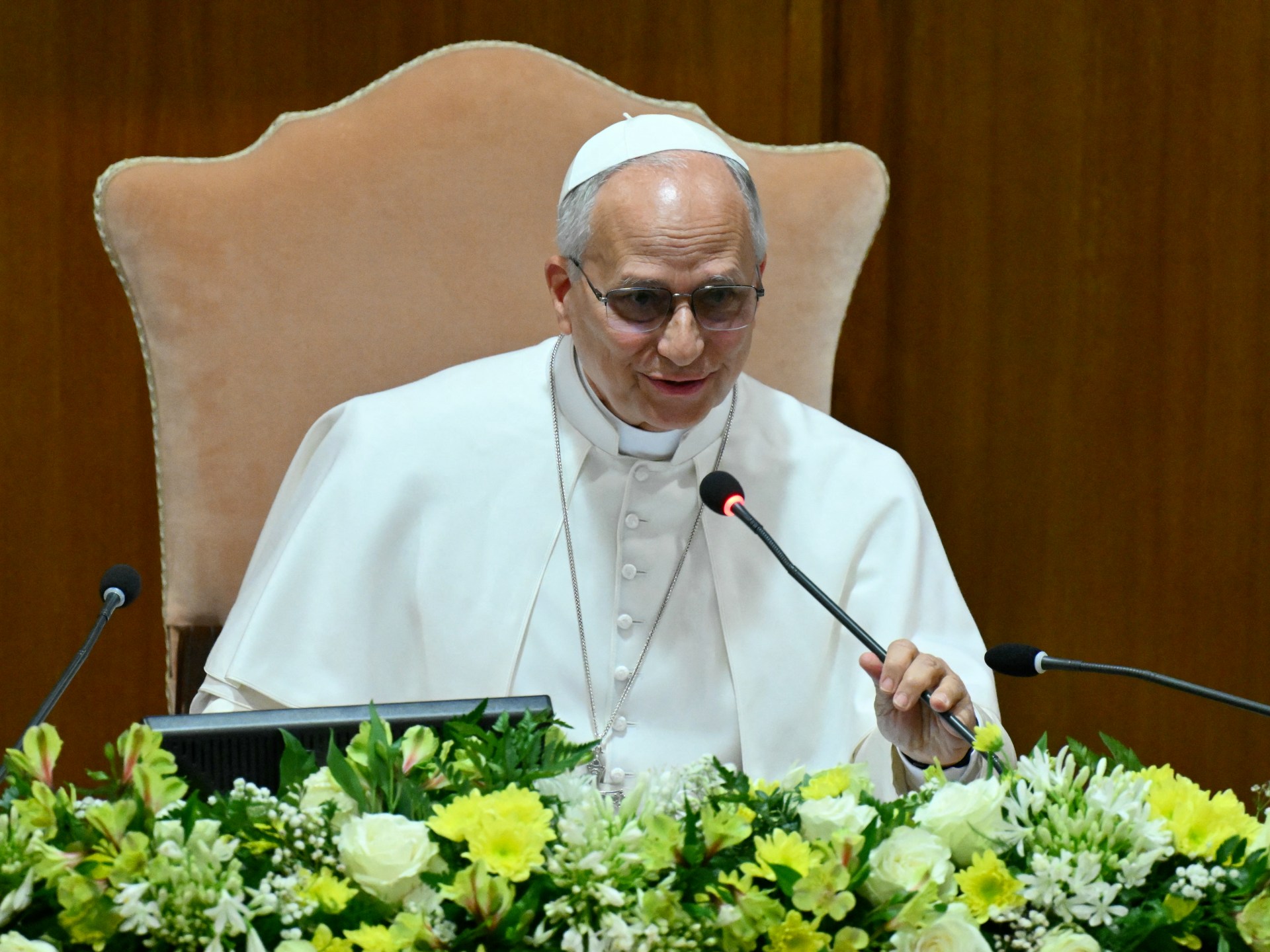
The video runs just over a minute. Pope Leo XIV, seated alongside clergy in what appears to be a papal library, repeats "67" after a group of children make the request on camera. He smiles slightly before complying. The clip was posted to TikTok on 17 May 2026. By the following morning it had been viewed millions of times, reshared across Instagram Reels, X, and Telegram, and catalogued by at least two Polish-language accounts covering viral content. The Pope, it seems, had learned the trend and joined it.
The Pope's participation in a TikTok meme is not, in itself, a policy statement. But it is a signal, and signals from the Vatican have always been read carefully. The papacy has spent centuries calibrating how much informality it permits — from John Paul II's handwritten letters to Benedict XVI's Twitter debut, each act of digital engagement was assessed for what it revealed about the man in the role and the office behind him. Leo XIV joining a children's number-game is a different order of magnitude. It is not a curated press release or a formal Angelus address. It is, by the logic of the platform, a moment of genuine spontaneity — or something calibrated to look precisely like one.
The "67" trend itself appears to have originated in children's content circles on TikTok, where numerical phrases function as verbal shorthand for social bonding. Viewers request a number; the subject delivers it on camera. It is the kind of micro-moment that platforms are specifically engineered to surface. When the Pope complies, the clip crosses the barrier between institutional and personal, between the formal communication apparatus of the world's smallest sovereign state and the same chaos of short-form video that carries dance trends and political misinformation in equal measure.
That the first American Pope would arrive with a different relationship to digital culture is not surprising. Robert Prevost, who took the name Leo XIV upon his election in May 2025, was Archbishop of Chicago before serving in Rome as Prefect of the Dicastery for Bishops — a position that gave him unusual exposure to how the Church communicates across national and cultural boundaries. The Chicago provenance matters here: the city produced a pontiff who was already navigating American political culture's sharpest edges from inside a Vatican post. That experience appears to have given him a particular ease with the performative dimension of public communication — and perhaps an understanding that, in a media environment saturated with image, the most powerful act is sometimes to simply appear human.
What the Vatican has chosen not to do with social media is as significant as what it has done. The institution's digital communications have historically been conservative — Vatican Information Service dispatches moved at the pace of a Curial congregation, and Vatican social accounts were managed with the kind of formal restraint that made even benign posts feel like official communiqués. Francis, during his twelve-year pontificate, was more digitally present than any predecessor — Casa Santa Marta livestreams during the pandemic drew millions — but even he maintained a clear division between his personal manner and his office's communication architecture.
Leo XIV appears to be redrawing that boundary deliberately. The "67" video is not an isolated occurrence; since his election he has appeared in casual social content at a frequency that Vatican correspondents have noted with varying degrees of approval. The framing from Vatican communications has been consistent: this is intentional, and it is part of a strategy. What that strategy aims to accomplish — and what risks it carries — remains a question the sources do not fully resolve. The video's reach is measurable; the institutional intent behind it is less visible from the outside.
The dynamic between the Vatican press operation and a platform like TikTok is structurally awkward. TikTok rewards frequency, emotional contagion, and the kind of unscripted brevity that institutional communications have spent decades trying to eliminate. The Vatican — which employs a dedicated communications secretariat and publishes formal bulletins through multiple languages — is not built for the pace of viral cycles. What Leo XIV appears to be doing is finding the edges of that architecture where a single clip can escape the institutional machinery and go viral on its own terms. Whether this represents a genuine strategic adaptation or a calculated public relations posture is not yet clear from the available evidence.
The question of what the Church gains from this alignment with a meme culture that skews young is worth examining closely. TikTok's audience demographics are well-documented: the platform's core user base is between 16 and 24, with high engagement in sub-Saharan Africa, South Asia, and among diaspora communities in the West — precisely the geographies where the Catholic Church has seen its most significant growth in recent decades. Leo XIV participating in a viral children's trend is, in effect, placing himself inside a communication medium that the Church's future congregations already inhabit. That is not a trivial signal, even if it arrives in the form of a one-minute video with children calling out a number.
The counterpoint — that a Pope appearing in viral content dilutes the dignity of the office — is not absent from the conversation. It surfaced briefly in editorial commentary following earlier instances of informal Vatican social content. The argument has a history: critics have made similar cases about Francis's daily livestreams, arguing that the informality came at the cost of gravitas. What is notable is that the institution has not retreated from that informality in response. The Vatican press operation has, if anything, leaned further into the approach with Leo XIV. Whether this reflects genuine strategic conviction or a calculation that the reputational gains outweigh the risks of occasional ridicule is a distinction the available sources do not allow us to resolve.
What does seem clear is that the "67" video is a case study in how the papacy is learning to use digital culture as a communication register. The Church has always needed a language that its audiences understand; what changes is which language it chooses. Leo XIV has, in a week, placed himself inside a trend that millions of people already know. Whether the institution that sent him can sustain the implied promise of warmth and accessibility — or whether the gap between viral moment and institutional reality will eventually narrow the effect — is the question that will define whether this episode is a strategy or merely a stunt.
Either way, the video has done something a formal Vatican statement could not: it has introduced a Pope into a conversation that was already happening, on terms the conversation had set. That is new. And it will not be the last time.
This publication's coverage of the "67" video used Telegram and X wire-transmissions as the primary source ledger, supplemented by reference articles on Pope Leo XIV's election and background. The Vatican's official communications operation confirmed the Pope's social media approach reflected a deliberate strategy but did not provide further detail on the institutional reasoning.
Wire provenance
This editorial synthesis draws on the following public wire/social posts:
- http://t.me/TSN_ua
- https://x.com/ekonomat_pl/status/2055949918300815360
- https://x.com/sknerus_/status/2055749366321717248
- https://en.wikipedia.org/wiki/Pope_Leo_XIV
- https://en.wikipedia.org/wiki/Vatican_City
- https://en.wikipedia.org/wiki/Robert_Prevost_(cardinal)