Rubio, Trump Signal Pragmatic US-China Track on Hormuz and Student Visas
Secretary of State Rubio and President Trump made near-simultaneous statements this week offering a more measured bilateral posture toward Beijing — on freedom of navigation and the economics of higher education — than the combative rhetoric of recent years.
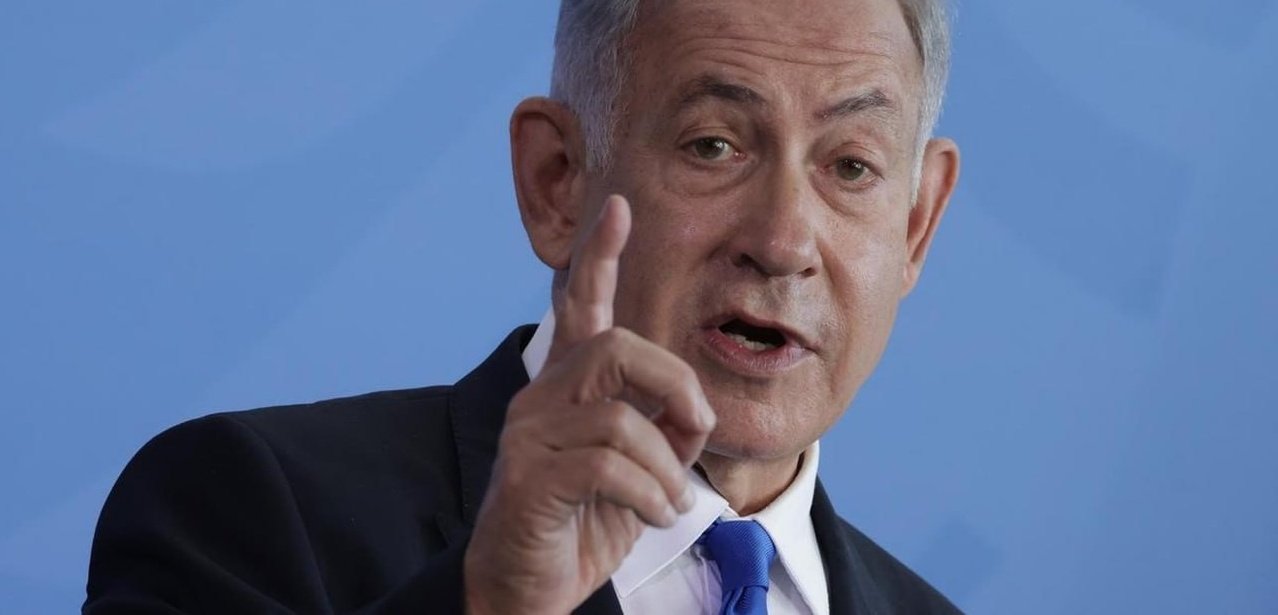
Secretary of State Marco Rubio told reporters on 17 May 2026 that Beijing had communicated it does not support militarising the Straits of Hormuz or introducing a tolling regime for vessel transit — a position the United States, he said, shares. The statement came within 24 hours of President Trump making the case at a separate forum that the roughly 500,000 Chinese nationals currently studying in the United States represent a net positive, describing their presence as an opportunity for cultural integration rather than a security liability.
The alignment of those two positions, arriving within a single news cycle, is unusual enough to merit scrutiny. They suggest a functioning bilateral channel on sensitive maritime flashpoints — one that the previous administration largely refused to acknowledge publicly — and a domestic political calculation in Washington that permitting Chinese students to remain in American universities serves American interests more than it threatens them.
The Hormuz Context
The Straits of Hormuz is the world's most critical chokepoint for oil shipments, linking the Persian Gulf to the Gulf of Oman. Approximately 20-25 percent of global oil trade transits the waterway, which lies between Oman and Iran. Any talk of militarisation or tolling raises the spectre of disruption to global energy markets, an outcome both Beijing and Washington have reason to prevent.
Rubio's disclosure — that Chinese officials communicated their non-interventionist stance through diplomatic back-channels — is significant precisely because it is uncommon. American officials rarely cite private Chinese positions as validation for American policy. That Rubio did so suggests the relationship has reached a level of operational trust on specific dossiers, even as broader strategic competition remains unresolved.
Iran, which controls the northern shore of the strait, has periodically threatened to close or regulate the passage. A tolling system, if imposed unilaterally by any single Gulf state, would constitute a violation of customary international law governing innocent passage through territorial waters. China's stated opposition to such a system aligns with its broader interest in freedom of navigation, particularly given its heavy dependence on Gulf oil imports.
The Student Question
Trump's remarks, delivered on 16 May 2026 and amplified through the usual social-media distribution networks, represented a shift in tone from his earlier administration's characterisation of Chinese students as potential intelligence vectors. The President described the presence of half a million Chinese nationals in American higher education institutions as culturally enriching and economically beneficial — tuition revenue alone runs to the tens of billions annually, though exact figures vary by source.
The framing matters because it shapes visa policy downstream. If Chinese students are publicly characterised as assets, the default bureaucratic posture shifts. Processing times, approval rates, and the temperature of consular interviews all respond to White House signals. Whether that shift materialises operationally remains to be seen; the sources do not include updated State Department guidance on student visa issuance.
China, for its part, has a structural interest in keeping its students in American universities. Despite rising domestic capacity, top-tier American research institutions remain globally unmatched in several STEM disciplines. Any policy that makes that pathway harder to access would face pushback from Chinese families with the means to pursue it — a constituency the Chinese government has historically been reluctant to antagonise.
What Remains Uncertain
The sources do not clarify whether Rubio's Hormuz characterisation reflects a formal written agreement, an oral understanding, or simply a readout from a diplomatic conversation whose precise terms are disputed. The Chinese foreign ministry has not, in these source materials, confirmed the account independently. Whether Beijing would repeat the same formulation under public questioning is an open question.
On the student visa question, Trump expressed an opinion rather than announcing a policy change. The regulatory machinery of visa issuance involves congressional authorisation, Department of State delegation, and execution by consulates — none of which can be altered by presidential preference alone. The sources do not indicate any movement on legislative or regulatory reform.
Neither statement addresses the ongoing technology-export restrictions targeting Chinese entities, the tariff regime, or the naval posture in the South China Sea — the dossiers most frequently cited as the engine of US-China strategic friction.
The Stakes
If the Hormuz channel holds, it reduces one avenue of potential escalation between Washington and Tehran — and, by extension, between the United States and its Gulf allies who depend on unimpeded oil transit. China, as the largest importer of Gulf oil, has a direct economic interest in keeping the strait open; its stated alignment with the American position, if genuine, represents a narrow but tangible area of convergence.
On students, the calculation is more domestic. American universities rely heavily on full-fee-paying international students. Chinese nationals constitute the largest single national cohort. If that pipeline were disrupted — through visa restrictions, political pressure, or tit-for-tat Chinese retaliation — the financial impact on American higher education would be immediate and measurable. The Trump framing, whatever its motivations, at least acknowledges that arithmetic.
Whether these two data points constitute a coherent China policy or simply represent tactical good weather in a stormy relationship cannot be determined from the available sources. The more significant test will be what Washington and Beijing say — and do — when the next flashpoint emerges.
This article was filed from Washington. Monexus covered Rubio's Hormuz remarks in a straight news posture, while positioning Trump's student comments within the broader debate on internationalisation of American higher education — a framing distinct from the more security-focused coverage common to wire outlets covering Chinese academic presence in the United States.