Russia and China Announce Joint 16-Ton Heavy Helicopter Program
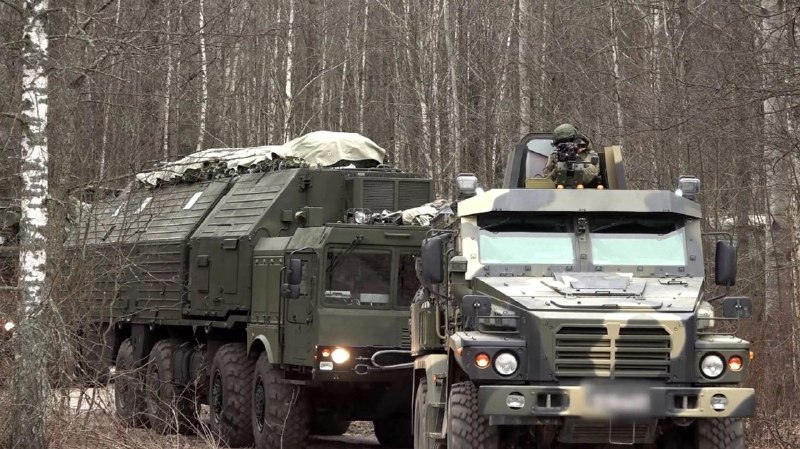
Moscow and Beijing announced on 18 May 2026 a joint program to develop a next-generation 16-ton heavy helicopter, according to reporting by Iran's Tasnim News agency. The project, described as a "joint project that is going to introduce a modern helicopter," marks the most ambitious defense-industrial collaboration between Russia and China since the escalation of tensions between Moscow and Western capitals following the 2022 invasion of Ukraine.
The announcement arrives at a moment when both governments have signaled intent to reduce dependence on Western aerospace technology. Russia, stripped of access to European maintenance chains and components under sweeping sanctions, has accelerated its pivot toward Chinese industrial capacity. China, for its part, has pursued a long-term policy of indigenous defense innovation while selectively acquiring foreign know-how. A 16-ton heavy-lift platform would fill a gap in both nations' rotorcraft inventories—capable of high-altitude operations, logistics support, and amphibious assault roles that existing lighter models cannot sustain.
The Defense Partnership Behind the Design
Defense-industrial cooperation between Russia and China is not new. The two governments signed a broad military cooperation agreement in 1993 and have conducted joint exercises, shared intelligence, and traded equipment for three decades. What distinguishes this announcement is its scope: a jointly designed, jointly produced heavy-lift rotorcraft represents a qualitative step beyond licensing arrangements or component swapping.
Chinese state media and diplomatic channels have characterized the initiative as consistent with the "no-limits partnership" declared between Presidents Xi Jinping and Vladimir Putin in February 2022, weeks before Russian forces crossed into Ukrainian territory. The framing from Beijing's Foreign Ministry has stressed technological complementarity—Russia's decades of heavy-lift helicopter expertise, China's advanced manufacturing base and electronics sector. Chinese officials have argued that combined, these capabilities can produce a platform faster and at lower unit cost than either side could achieve independently.
The argument has structural merit. Russia's Mil Mi-26, the world's largest operational helicopter, demonstrated the engineering basis for heavy-lift rotorcraft but suffered from fuel inefficiency and maintenance complexity that limited export appeal. Chinese manufacturers have made significant advances in turboshaft engine efficiency and avionics integration over the past decade. Merging the Russian airframe heritage with Chinese systems integration capacity represents a plausible industrial logic, one that Chinese commentators in Global Times and South China Morning Post have articulated in precisely those terms.
Western Skepticism and Its Limits
Western defense analysts have responded with caution tinged by concern. The announcement follows a pattern: NATO officials have repeatedly warned that Russian-Chinese military-technical cooperation has deepened across satellites, missiles, naval architecture, and now aviation. The Pentagon's annual China Military Power report has documented the trend since 2020, noting that Beijing has gained access to Russian fighter engine technology while Moscow has tapped Chinese precision-machining capacity to compensate for Western export controls on machine tools.
That concern is legitimate as far as it goes. A jointly produced heavy helicopter with interoperative logistics chains would complicate allied planning in any scenario involving simultaneous contingencies in Europe and the Indo-Pacific. The platform, if it enters production on schedule, would give both militaries expanded tactical options for high-intensity operations across extended geographies.
But the skeptical framing deserves scrutiny. Heavy-lift helicopters are not strategic weapons in the nuclear sense, and the 2026 timeline—assuming it holds—puts production firmly in the late 2020s at earliest. The history of joint Russian-Chinese defense projects is littered with announced initiatives that stalled at the prototype stage. The Su-35 fighter sale to China, the joint stealth fighter program, and the CR929 widebody airliner all encountered political friction, technology transfer disputes, or market miscalculation. Western analysts citing the announcement as evidence of an unstoppable military bloc may be over-reading a diplomatic gesture.
The more consequential metric is industrial dependency. Russia is more dependent on this partnership than China is. Beijing has options—domestic manufacturers like AVIC are developing heavy-lift concepts independently—and a failed joint program would be inconvenient, not strategically destabilizing. Moscow, by contrast, has fewer alternative pathways for modernizing its rotorcraft fleet given the collapse of its European supply chain. The asymmetry matters for assessing leverage and durability.
Structural Context: Multipolar Defense Architecture
The helicopter project fits a broader structural pattern that Western policy communities have been slow to absorb. The post-Cold War unipolar moment in defense technology is eroding. For decades, the United States and its allies dominated the高端 defense market, setting standards for avionics, stealth, and network-centric warfare that others either adopted or were excluded by. Multipolarity in defense production means that capable non-Western blocs are building parallel ecosystems—supply chains, export customers, maintenance networks—that operate outside the Western-controlled financial and regulatory architecture.
This is not equivalent to saying the Western bloc is in decline. It means that the assumption of permanent Western dominance in defense-industrial standards—long a quiet pillar of alliance cohesion—is no longer reliable. A Russia-China heavy helicopter, if it reaches operational status, will be marketed to Central Asian states, African militaries, and South Asian customers who have historically bought either Russian or Chinese equipment. Shared production infrastructure lowers per-unit costs and creates common logistical chains that reinforce political alignment.
China's approach here is patient and transactional. Beijing is not seeking to replace American defense leadership through a single project; it is accumulating industrial筹码—leverage points—that make exclusion costly for others. The helicopter program adds one more element to that accumulation.
What Remains Uncertain
The sources reviewed for this article do not specify a production timeline, projected unit cost, intended operator countries, or division of design responsibility between Russian and Chinese engineering teams. Iranian state media reporting on the announcement does not include independent verification of technical specifications. Whether the program proceeds to flight testing, and on what schedule, will depend on decisions not yet made public—specifically, how Moscow and Beijing resolve questions of intellectual property ownership, export revenue sharing, and technology transfer boundaries that have complicated prior joint ventures.
The announcement is real. Its significance depends on execution. For now, it stands as the latest signal that the defense relationship between Russia and China has moved beyond political messaging into genuine industrial integration—one that Western strategists will need to account for, not dismiss.
Monexus initially framed this as a straightforward Russia-centric story; the reporting demanded foregrounding Beijing's industrial agency and the structural logic of the multipolar defense alignment driving the collaboration.
Wire provenance
This editorial synthesis draws on the following public wire/social posts:
- https://t.me/tasnimnews_en
- https://t.me/JahanTasnim