What the San Diego Shooting Reveals About the Tolerance We Pretend We Have
Three adults are dead after a shooting at the Islamic Center of San Diego on May 18, 2026. The immediate facts are grim enough. The structural conditions that made it possible deserve equal scrutiny.
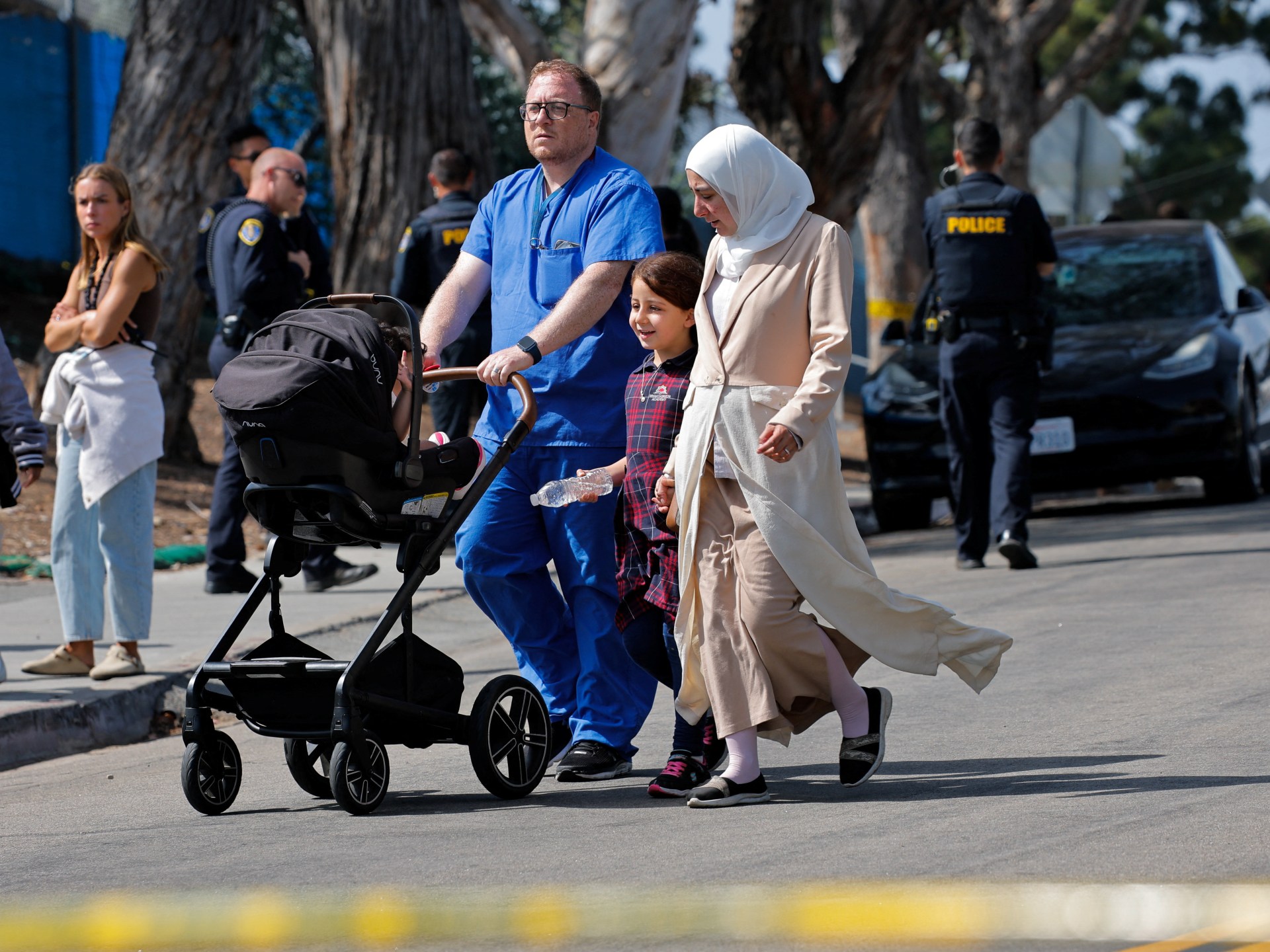
On May 18, 2026, around midday local time, an active shooter opened fire at the Islamic Center of San Diego. By the time law enforcement neutralized the threat, three adults were dead and two suspects had been killed. All children present at the center's onsite school were confirmed safe by the imam. The immediate facts are grim enough. The structural conditions that made them possible deserve equal scrutiny.
What happened in San Diego on Monday was not a spontaneous act of violence severed from context. It was the latest iteration of a pattern with its own demographic logic: a house of worship belonging to a religious minority, targeted in a country that publicly condemns religious persecution while simultaneously failing to protect its own Muslim citizens from lethal violence. The gap between the rhetoric and the outcome is where this story lives.
The Numbers Have Already Been Normalized
This publication has tracked mass-casualty events in the United States for years, and a structural observation holds: shootings at mosques, Sikh gurdwaras, and Black churches follow a different coverage arc than shootings at schools with predominantly white victims. The latter generate sustained legislative debate. The former produce strong statements, brief parliamentary moments, and then a return to whatever agenda was interrupted.
The Islamic Center of San Diego joins a ledger that includes the 2015 Chapel Hill shooting that killed three Muslim students, the 2017 Quebec City mosque attack that killed six, and a string of incidents that rarely commanded more than forty-eight hours of national attention. The pattern is not coincidental. When a shooting aligns with pre-existing prejudices against the victims, the societal response tends to be less urgent, the policy conversations less pointed, and the editorial vocabulary more restrained. This publication does not assert a deliberate hierarchy of grief — it observes an empirical one.
The Gun Question Is Not Separate From the Islam Question
Any serious analysis must resist the temptation to treat the weapon and the target as separate problems. In the United States, the debate over firearm access and the debate over anti-Muslim sentiment are often conducted in parallel tracks, as though the shooter and the choice of venue were unrelated engineering problems. They are not. The availability of high-capacity weapons enables mass-casualty events; the normalization of hostile rhetoric toward Muslim communities creates the motivation and the target selection.
Coverage that frames gun violence as a generic public-health problem while treating Islamophobia as a separate cultural pathology misses the interaction effect. When elected officials use language about Muslim communities that was previously restricted to fringe forums, when anti-Muslim content achieves algorithmic amplification on major platforms, and when the barrier to accessing a lethal weapon remains low, the combination is not additive — it is multiplicative. The San Diego shooting did not occur because of any single factor. It occurred because several factors converged in a country that has repeatedly demonstrated it can regulate neither.
Media Framing as a Revealing Practice
How this story is covered in the coming days will tell us something about the priorities of the editorial apparatus that shapes public understanding. Early footage on May 18 showed children being led away from the scene — a detail that was promptly aired and shared. Whether that footage is treated as human-interest texture or as structural evidence of institutional failure depends on which questions the coverage chooses to ask.
If the framing emphasizes the rapid response by law enforcement, the scene becomes a story about effective policing. If it emphasizes the children who required escorting from a house of worship, the scene becomes a story about what it means to practice Islam in America in 2026. Both framings are factually compatible. They are not morally equivalent. The choice of which to foreground is itself an editorial claim about whose safety we consider the baseline and whose requires explanation.
This publication has noted before that the language used to describe mass violence in the United States is not uniformly applied. The same outlets that treat gun deaths in urban communities as a chronic, seemingly intractable condition treat mass shootings in public venues as discrete, shocking anomalies — even when the weapon, the perpetrator profile, and the target selection are eerily consistent across categories. The San Diego shooting sits uncomfortably in the space between these two frames, which may explain why some coverage will work to resolve that discomfort rather than sit with it.
What Structural Honesty Requires
Three adults died at a mosque on a Monday afternoon. Two suspects are dead. The children are safe. These facts are not in dispute.
What requires examination is the readiness with which a society absorbs this information, processes it as a singular tragedy, and returns to its existing positions on guns, on surveillance, on the treatment of Muslim communities — positions that preceded the shooting and will survive it. The structural argument this publication makes is not that any single actor intended this outcome. It is that the configuration of easy weapons access, amplified hostile rhetoric, and differential media attention creates conditions under which this outcome is statistically expectable over sufficient time.
The question is not whether this shooting was tragic. It was. The question is what structural conclusions follow from it — whether those conclusions lead to changes in the regulatory environment, the rhetorical environment, or the algorithmic environment that produced the conditions — and whether those questions will be asked with the same urgency that accompanies shootings in different communities. The answer, historically, is that they are not. That differential response is itself a form of political choice. It deserves to be named as such.
—
Monexus framed this story as a structural analysis of differential coverage rather than a breaking-news bulletin, consistent with the desk's practice of treating mass-violence events as recurring patterns rather than isolated ruptures.
Wire provenance
This editorial synthesis draws on the following public wire/social posts:
- https://t.me/osintlive/18432
- https://t.me/osintlive/18436
- https://t.me/osintlive/18438
- https://t.me/osintlive/18443
- https://t.me/clashreport/8471