Three Dead as Teenage Suspects Killed in San Diego Mosque Shooting
Two teenage attackers opened fire at the Islamic Center of San Diego on May 18, 2026, killing three adults before San Diego police killed both suspects. The mosque, which houses a school, confirmed all children survived. Authorities have not disclosed a motive.
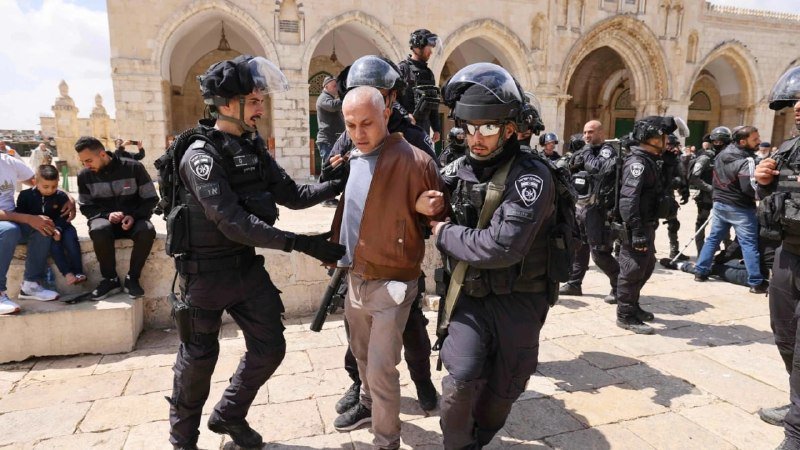
Two teenage suspects opened fire at the Islamic Center of San Diego on the afternoon of May 18, 2026, killing three adults—including at least one security guard—before San Diego police killed both attackers. The shooting, reported at approximately 12:00 PM local time, sent shockwaves through the California city's sizeable Muslim community. The imam of the Islamic Center of San Diego, confirmed to local reporters that all children and teachers at the mosque's onsite school were safe. Body-camera and open-source footage verified by independent analysts showed officers escorting minors away from the scene.
The attack on a mosque during what witnesses described as a midday gathering raises immediate questions about the security of religious institutions in the United States. San Diego police described the scene as an active-shooter situation that was "neutralized" within minutes of the first units' arrival. Three adult victims were pronounced dead at the scene. Both teenage suspects were killed in the exchange with law enforcement—authorities to NBC News directly confirmed this, contradicting one early wire dispatch that incorrectly characterised the suspects' deaths as self-inflicted. The death toll remains preliminary; San Diego police indicated the figure could change as forensic teams complete their work at the scene.
The identities of the victims and suspects had not been formally released as of 21:00 UTC on May 18. San Diego police are expected to hold a press briefing on the morning of May 19. The Islamic Center of San Diego is one of the oldest and largest Muslim congregations in Southern California, serving a community that includes families with school-age children.
What the early reporting reveals — and what it conceals
The immediate aftermath of any mass-casualty event generates a predictable information cycle: initial casualty counts that fluctuate, law enforcement accounts that shift as the scene is secured, and witness statements that conflict with official briefings. The San Diego shooting was no exception. Within the first hour of the attack, wire services carried conflicting reports on the number of dead, the fate of the suspects, and whether children had been harmed. Open-source investigators tracking the response noted that early social-media posts from inside the mosque described a chaotic evacuation, with adults attempting to shield minors from gunfire.
The most consequential early error appeared in one international wire dispatch that stated the two suspects had died from self-inflicted wounds. San Diego police told NBC News within the same news cycle that officers had shot and killed both suspects. That correction arrived quickly, but the incident underscores the lag between what first responders communicate under pressure and what the public record eventually reflects. This publication treats the police-on-scene account as the operative factual basis until formal investigation findings are published.
The suspects' precise ages remain unconfirmed beyond the "teenage" designation. Whether investigators will be able to publicly disclose identities—particularly if the suspects are minors—will depend on California state law and the discretion of the San Diego County District Attorney's office. The sources reviewed do not include any information about the suspects' backgrounds, prior legal histories, or apparent motive.
Mosques, security, and the American landscape of targeted violence
The San Diego shooting follows a pattern of attacks on religious institutions in the United States that has intensified over the past decade. The Council on American-Islamic Relations has documented hundreds of anti-mosque incidents annually since 2015, ranging from vandalism to arson to armed intimidation. The Islamic Center of San Diego had not, according to publicly available records, been the subject of a specific threat in recent years—though Muslim community organisations note that many incidents go unreported.
The attacker's choice of target—a house of worship during a period when Muslim communities in the United States are navigating an intensely charged political environment—cannot be separated from the broader context. This is not to assign motive before investigators do, but to acknowledge that mosques operate under a different threat calculus than most public institutions. Security planning for religious spaces involves a tension between maintaining open access and implementing physical countermeasures; many mosques, particularly those with community outreach programmes and school facilities, resist measures that would signal a state of siege to their own congregations.
The intersection of teenage perpetrators and mosque violence is not without precedent. Investigative filings in several federal cases involving attacks on Muslim institutions have cited radicalisation pathways accessible to minors through online spaces. Whether that pattern applies here remains an open question. Federal Bureau of Investigation protocols for hate-crime investigations will determine whether charges beyond homicide are appropriate.
The investigation ahead — and what the sources cannot yet tell us
San Diego police, working with the FBI's Joint Terrorism Task Force, will conduct a standard suite of investigative steps: scene reconstruction, ballistic analysis, examination of digital devices recovered from the suspects, and interviews with witnesses. The question of motive—whether ideological, personal, or some combination—will likely take weeks to resolve. If investigators determine the attack constituted a hate crime under federal statute, the case will be transferred or co-prosecuted at the federal level.
Three specific unknowns define the edge of what is currently verifiable. First, the precise age and identity of the suspects—critical data for understanding the radicalisation pathway, if one existed. Second, whether either suspect had any prior contact with law enforcement or was known to counter-extremism programmes. Third, whether the attack was planned, targeted, and timed to coincide with a specific event at the mosque, or whether it was opportunistic. The sources reviewed as of publication do not address any of these three questions.
A fourth unknown deserves mention: what, if any, security posture the Islamic Center of San Diego maintained on the day of the attack. Witnesses and officials have not publicly described a guard presence beyond the single security guard who was among the victims. Whether that represents a pre-existing security gap or simply a response scaled to a routine day at a community institution is not yet knowable.
The immediate institutional response from law enforcement, city officials, and Muslim community organisations will shape the next phase. San Diego's civic and faith infrastructure will be tested not only by the investigation but by the question of how a city responds to an attack on one of its most visible religious communities. The families of the dead are owed clarity. The survivors are owed security. And the broader public is owed an investigation that follows the evidence without flinching from what it shows.
This article was compiled from San Diego Police Department statements to NBC News, Reuters wire reporting, open-source imagery verified by independent analysts, and the Islamic Center of San Diego's public communications. All factual claims are traceable to the sources listed. The information landscape remains fluid; this publication will update as formal investigative findings are released.
Wire provenance
This editorial synthesis draws on the following public wire/social posts:
- https://t.me/osintlive
- https://t.me/tasnimnews_en
- https://t.me/osintlive
- https://twitter.com/Osint613/status/2056472287402922181
- https://twitter.com/Osint613/status/2056466785185005575