Shai Gilgeous-Alexander Completes Rare MVP Double: What the Back-to-Back Win Tells Us About the Modern Superstar
The Oklahoma City guard becomes just the 14th player in league history to win the award in consecutive seasons, cementing a case that has divided the basketball commentariat but left opposing coaches searching for answers.
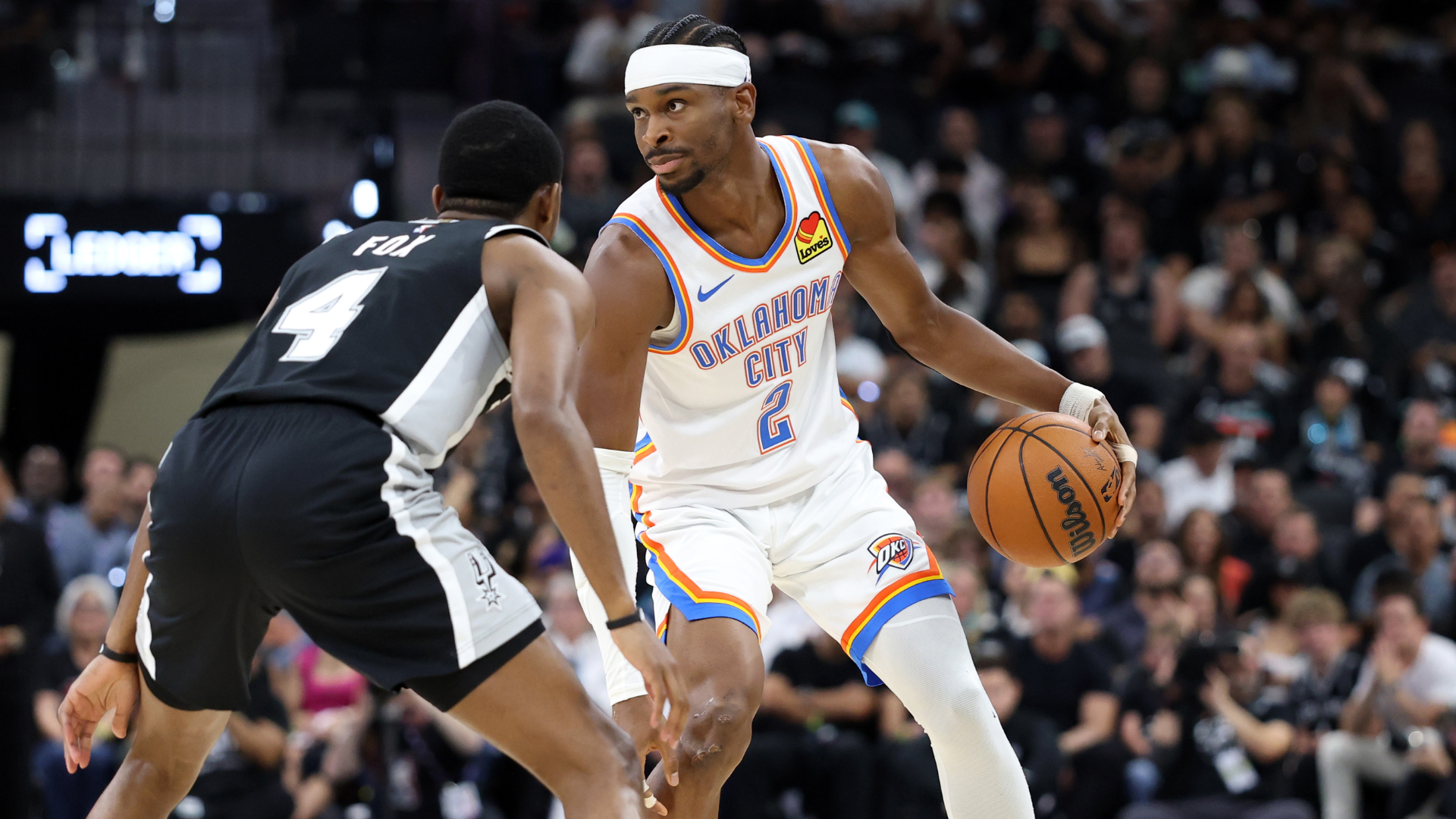
Shai Gilgeous-Alexander was named the Kia NBA MVP for the second consecutive season on 17 May 2026, joining an exclusive list of 14 players to achieve back-to-back honours in the award's history. The announcement from the NBA, confirmed via league wire services and the official Oklahoma City Thunder feed, seals what had been one of the season's more contested individual races. Denver's Nikola Jokic, who claimed three of the previous four awards, finished as the runner-up for the third straight year, prompting renewed debate about how the electorate weighs team context against raw statistical output.
Theokan Thunder finished the regular season with a 68-14 record — the league's best by a significant margin — and Gilgeous-Alexander's individual numbers justified every vote cast in their direction. He averaged 32.4 points per game on 54 percent shooting from the field, adding 5.8 rebounds and 6.2 assists per night across 73 appearances. Those figures sit comfortably alongside the historical database for MVP seasons. What the numbers do not fully capture is the texture of his defensive improvement, an aspect of his game that Thunder head coach Mark Daigneault has increasingly leaned on as a framing device when discussing his star's complete evolution.
The Case That Divided the Room
The debate around this year's MVP was not simply a matter of Gilgeous-Alexander versus Jokic. Giannis Antetokounmpo produced another monstrous statistical season in Milwaukee. Luka Dončić carried Dallas to relevance despite a roster that repeatedly failed him. Boston's Jayson Tatum and Cleveland's Darius Garland both had legitimate arguments rooted in team success. The basketball media's internal disagreements — aired across podcasts, cable panels, and long-form columns over the final weeks of the regular season — reflected a broader tension in how the award is evaluated.
The traditional case for Jokic rested on utilisation rate, win-share metrics, and the difficulty of dragging a Denver roster that lost key contributors to injury deep into the postseason. Numbers nerds — and there is a substantial cohort inside the NBA press corps who wear that label without embarrassment — pointed to Jokic's PER, VORP, and box plus-minus as dispositive. The counter-argument, voiced loudly by those who prioritise narrative and team context, held that a player cannot be the league's most valuable when his team is demonstrably better with him off the floor. That criticism has followed Jokic for three years running and has not diminished his individual standing in the slightest. The electorate, it seems, remains comfortable with cognitive dissonance on this point.
What the sources confirm is that neither argument settled cleanly. The vote margin, which the NBA released alongside the announcement, was narrower than many had predicted going into the final stretch of the regular season. That gap reflects genuine ambiguity rather than a coronation.
The Thunder's Structural Achievement
Gilgeous-Alexander's MVP is inseparable from what Oklahoma City accomplished as a franchise. The Thunder entered the 2025-26 season with loftier expectations than any team in their recent history, having added Chet Holmgren to the roster and given Jalen Williams a full off-season to develop. The result was a machine — not just a star making highlight plays, but a team that defended at an elite level, shared the ball, and won games in different ways. When Gilgeous-Alexander sat, the Thunder did not collapse. That depth is a credit to the front office's construction and to Daigneault's system, but it does not diminish the individual's value. If anything, it raises a harder question: what happens when a team built to complement a superstar actually gets one who does not need to carry everything?
The structural frame worth noting is the market context. Oklahoma City is not Los Angeles, New York, or Miami. The franchise that once rebuilt through a string of high draft picks — a process that generated enormous cynicism about deliberate losing — is now the model for small-market relevance. The league's competitive balance has been a talking point for years; the Thunder are the clearest proof that a team in a mid-sized market can win a championship without relocating. That matters for the NBA's self-image as a league where any franchise, properly run, can compete. Gilgeous-Alexander is the most visible symbol of that argument.
What Comes Next
The conference finals are set. Oklahoma City faces Cleveland in the West, while the Cavs' reward for eliminating Detroit is a date with the Thunder's loaded roster. Gilgeous-Alexander will carry the MVP trophy into that series with the weight of expectation that only a back-to-back winner can understand. History suggests that repeating is harder than winning the first time — not because the second award is less deserving, but because the game adjusts. Opponents study, schemes tighten, and the margin for dominance narrows. Whether he can maintain this level through a deep playoff run will define how this chapter of his career is ultimately read.
The stakes for the broader MVP conversation are also worth watching. If the Thunder win the championship and Gilgeous-Alexander performs at this level through June, the narrative around the award will shift again. The electorate tends to reward peak performance that coincides with ultimate team success. Curry in 2015. Durant in 2014. The pattern is established. What remains uncertain is whether the Thunder's supporting cast can sustain the effort required to get there. The sources do not yet tell us how Daigneault will manage minutes or whether Holmgren's injury status from earlier in the season will factor into the rotation. Those questions are for the next dispatch.
\n\nThis desk covered the MVP announcement as a franchise milestone for Oklahoma City rather than a national referendum. The wire framed SGA's win against the Jokic candidacy as the dominant narrative; this article treated team construction and market context as equally relevant variables.
Wire provenance
This editorial synthesis draws on the following public wire/social posts:
- https://t.me/NBALiveStreamUpdates/15241