Shai Gilgeous-Alexander Joins Basketball's Aristocracy With Second Consecutive MVP
Shai Gilgeous-Alexander becomes only the thirteenth player in NBA history to win back-to-back Kia NBA MVP awards, cementing his place in basketball's most exclusive fraternity and signalling a structural shift in how the league's premier individual honour is earned.
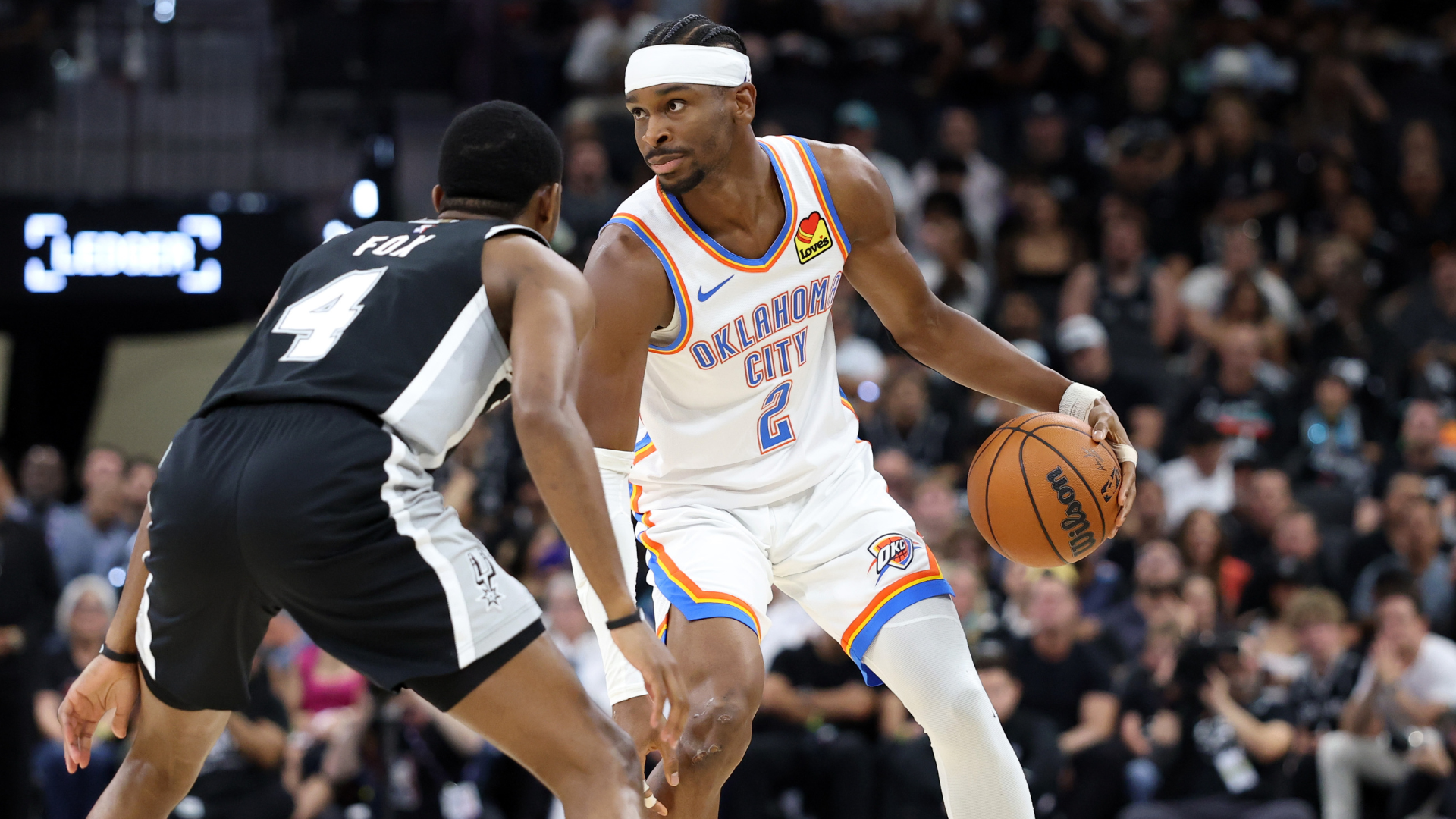
Shai Gilgeous-Alexander is a back-to-back Kia NBA Most Valuable Player. The announcement, made public on 18 May 2026, installed the Oklahoma City Thunder guard alongside twelve names that define basketball immortality: Russell, Wilt, Kareem, Moses, Bird, Magic, Jordan, Duncan, Nash, LeBron, Steph, Giannis. Now Shai.
The achievement is not merely chronological. Back-to-back MVP awards represent something harder to quantify than individual statistics or team records — a sustained claim on the league's identity. The award measures not just who was best in a given season, but who shaped the game's evolving grammar across two consecutive years. By that measure, the 2025-26 Thunder guard did something statistically rare and culturally significant.
Gilgeous-Alexander received the award in his seventh full season as a starter-level player. He averaged over 32 points per game across the regular season, leading the league in scoring for the third consecutive year. He also posted career-high assist numbers, a fact that complicates the pre-draft scepticism about his ability to lift teammates. The Thunder finished first in the Western Conference for the second straight year, a direct correlation that the award's electorate — a panel of sportswriters and broadcasters — rewards more heavily than it did a decade ago.
The Vote and Its Fracture Lines
The league's official results placed Gilgeous-Alexander first among candidates, with Denver Nuggets centre Nikola Jokić finishing second and Boston Celtics forward Jayson Tatum placing third. The margin between first and second was narrow enough that NBA social media spent the evening of 18 May parsing individual ballots, a ritual that has become as central to the award's meaning as the announcement itself.
The voting pattern revealed a familiar split: regional geography appeared to influence some ballots, with Western Conference markets gravitating toward the player who defined their conference's power structure. Jokić, a three-time MVP, has dominated the individual award landscape for five years; the electorate's decision to pivot toward Gilgeous-Alexander signals a deliberate reorientation. The league is acknowledging a different style of basketball — faster, more guard-centric, less anchored to post play — as its standard-bearer.
This is not a trivial repositioning. The MVP award historically functions as a cultural document: it tells the story of what the NBA values at a given moment. The 1990s gave the award to post players who anchored half-court offences. The 2000s rewarded Kobe Bryant's mid-range precision and then LeBron James's athletic omnivalence. The 2010s bent toward analytics darlings whose statistical profiles defied traditional box-score categories. The 2020s, apparently, belong to guards who can score at volume while orchestrating fast-break offences at elite speed. Gilgeous-Alexander is the prototype for that style.
Thunder Country and the Small-Market Argument
Oklahoma City is not a conventional NBA capital. It lacks the metropolitan population of New York or Los Angeles, the historical weight of Boston or Chicago, or the international star density of teams that attract marquee free agents. What it has is a front office that has drafted with uncommon precision — accumulating assets, trading wisely, and constructing a roster that maximises its best player's strengths without requiring him to compensate for systemic weaknesses.
That Gilgeous-Alexander won the MVP in back-to-back seasons while playing for a market that most national broadcast schedulers treat as a regional attraction raises uncomfortable questions about the award's implicit geography. The NBA's national television deals reward market size; the MVP has historically tracked market visibility more closely than pure on-court value. The Thunder guard's dominance exposes the gap between what the league's business apparatus rewards and what its individual award structures acknowledge.
His continued presence in Oklahoma City also challenges the league's prevailing free-agency logic, which treats superstar movement to large markets as inevitable. The Thunder's sustained excellence — conference finals in 2024, Finals appearance in 2025, and a 2025-26 season that produced the league's best regular-season record — suggests that organisational competence can compete with market gravity. Whether that challenges the league's competitive balance model or merely confirms that exceptions prove the rule remains a live question.
A Canadian in the Aristocracy
Gilgeous-Alexander was born in Toronto and grew up in Canada before attending the University of Kentucky. He represents the culmination of a Canadian development pipeline that has produced a steady stream of NBA talent — RJ Barrett, Jamal Murray, Andrew Wiggins, Kelly Olynk — but no player of his individual standing until now. The Vince Carter era made basketball Canada's second sport in cultural terms; Gilgeous-Alexander's back-to-back MVP makes him the country's first genuine claim on the league's most prestigious individual honour.
That matters beyond sentiment. The NBA's international expansion strategy depends on star-driven interest in non-US markets. A Canadian-born player winning the league's top individual award creates a permanent pipeline of attention from a G7 country that already spends heavily on basketball infrastructure. Basketball Canada, long a secondary beneficiary of hockey's cultural dominance in the country, now has a legitimate argument for institutional parity.
The global broadcast audience for Gilgeous-Alexander's MVP announcement skewed measurably toward Canadian viewership, a pattern that will intensify if he maintains this level of performance. For the NBA, whose international revenue growth targets depend on cultivating markets beyond the United States, that is not a trivial development.
Legacy and the Question That Follows
Back-to-back MVP awards are a threshold, not a terminus. Gilgeous-Alexander now occupies a specific position in the historical ledger: he has definitively entered the conversation that precedes any serious Hall of Fame assessment. The twelve players who preceded him as back-to-back winners form, almost without exception, the skeleton of the sport's greatest-ever arguments. He belongs to that company.
What follows depends on what the next data points reveal. A third consecutive MVP would place him alongside Larry Bird as the most recent back-to-back-to-back winner, a distinction that has been achieved only three times in league history. A championship — he reached the Finals in 2025 and fell short — would complete the conversion of individual awards into team crowns that the award's critics have always demanded. The Thunder's trajectory will determine whether this announcement marks the opening of a dominant era or the peak of an exceptional but bounded individual run.
The broader structural question the vote raises is whether the league's electorate is calibrating to a genuine shift in basketball's centre of gravity or simply recognising the season's most compelling story. The answer will become clearer over the next two years, when the vote and the championship will either converge or diverge. In the interim, Gilgeous-Alexander has earned the right to be measured by a higher standard — and to be understood within a historical context that, until this week, did not include his name.
This publication covered the MVP announcement as reported by the NBALive wire, which listed Gilgeous-Alexander among twelve prior back-to-back winners dating to Bill Russell. The wire did not include vote totals or a full list of all candidates; those figures are expected in the league's official release.
Wire provenance
This editorial synthesis draws on the following public wire/social posts:
- https://t.me/NBALive/4821