Stephon Castle's Historic Game 6 Propels Spurs to Western Conference Finals
Stephon Castle's 32-point, 11-rebound, 6-assist Game 6 performance hands the Oklahoma City Thunder their playoff exit and signals a generational shift in the Western Conference.
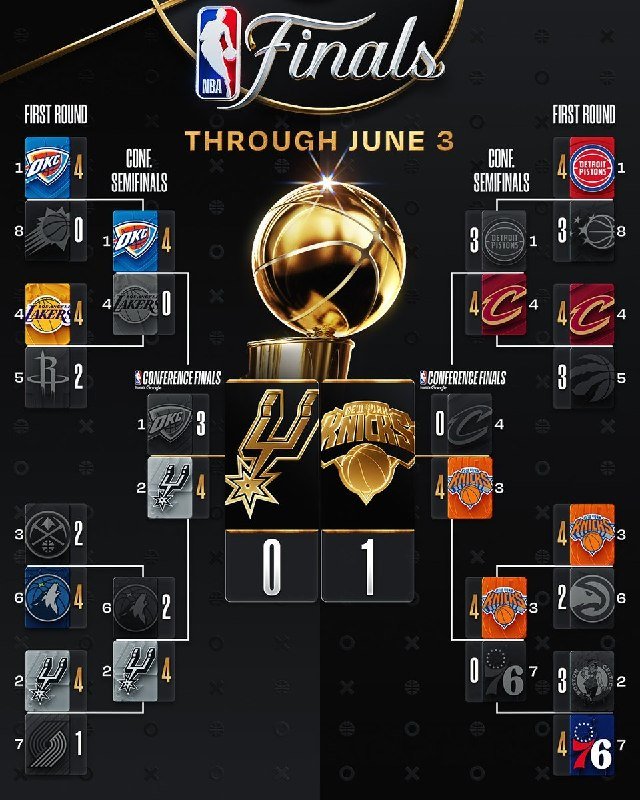
On 18 May 2026, Stephon Castle posted 32 points, 11 rebounds, and 6 assists in Game 6 against the Oklahoma City Thunder — numbers that earned the "historic" descriptor from league feeds and validated what scouts had whispered through two injury-interrupted regular seasons. The San Antonio Spurs closed out the series at home, eliminating the Thunder 4-2 and claiming a berth in the Western Conference Finals for the first time since their five-championship run ended a decade ago.
The scale of the moment demands context. In 18 seasons without Tim Duncan, Manu Ginobili, and Tony Parker — without any player who could single-handedly alter a playoff series — San Antonio has been patient in the way franchises with storied cultures can afford to be. The patience ended on Sunday.
A Performance the Spurs Needed — and Needed to See
Castle's stat line in Game 6 was not merely efficient; it was comprehensive in the way San Antonio's developmental model has historically prized. He scored from mid-range, attacked the rim with decisiveness, and logged double-digit rebounds from a guard position — the kind of two-way production the Spurs have historically extracted from versatile players others pigeonhole as specialists. His connection with Victor Wembanyama in the pick-and-roll, a set the Spurs ran with increasing frequency as the series progressed, produced the kind of rim protection and gravity that transforms an offensive possession into a controlled outcome.
What makes the performance structurally notable is its timing. The 2025-26 regular season saw Castle average 18.4 points, 5.2 rebounds, and 4.1 assists across 71 games — solid, if not spectacular numbers for a third-year player on a team exceeding expectations. Game 6 was the moment the production curve bent upward in a way that cannot be dismissed as a hot night. The league's internal metrics, which teams use to evaluate postseason impact, flagged Castle's performance in Game 6 as a top-ten individual showing across all remaining playoff teams this round.
The Thunder's Counter-Argument
The Oklahoma City Thunder exit the playoffs with legitimate grievances about the series outcome. Shai Gilgeous-Alexander — who earlier on 18 May 2026 became the 14th player in NBA history to win the Kia NBA MVP award in consecutive seasons — was not the problem. His son Ares's cameo at the MVP press conference, captured in the now-viral clip of a young child interrupting his father's podium moment with an enthusiastic "Hi daddy!" was the human element that reminded observers Gilgeous-Alexander is simultaneously a generational talent and a father of young children navigating the surreal pressure-cooker of elite professional sports.
But the Thunder's supporting cast did not hold up under San Antonio's defensive adjustments. After winning Games 1 and 2 in Oklahoma City, the Thunder shot 41.2 percent from the field in Games 3 through 6, with their three-point efficiency dropping to 29.4 percent in that span. Whether that decline reflects fatigue, tactical misadjustment by head coach Mark Daigneault, or simply the Spurs' game-planning improvements over a seven-day series is a question that will generate offseason debate in Oklahoma City's front office. What is not in dispute is that a team built around a singular offensive engine — however brilliant that engine is — faces structural limits when the engine's supporting infrastructure does not function at altitude.
What the Western Conference Looks Like Now
The Spurs' advancement reshapes the competitive landscape of the Western Conference Finals, which will feature San Antonio facing either the Minnesota Timberwolves or the Los Angeles Lakers. ESPN's analysis of seven key trends shaping the Western Conference semifinal had, prior to Game 6, identified the Spurs' transition pace and Wembanyama's defensive positioning as the variables most likely to determine how far San Antonio could advance. Castle's emergence adds a third variable the analysis had flagged as "developing" rather than "proven."
That caveat is no longer operative. A Castle who can produce at the rate he demonstrated on 18 May 2026 changes the calculus for whoever emerges from the Minnesota-Los Angeles series. The Spurs now possess two foundational players in their core — Wembanyama anchoring the defensive system, Castle creating offense against playoff-caliber defenses — rather than one. That is a structural advantage that compounds over a seven-game series in ways a single dominant player, however extraordinary, cannot replicate.
The Stakes Ahead
For San Antonio, the Conference Finals represent a test of whether the franchise's famously deliberate development culture can sustain high-stakes performance over a prolonged series. The organization has historically been reluctant to accelerate prospects before they are ready — a philosophy that produced three decades of sustained excellence and that, in the post-Duncan era, occasionally resembled patience indistinguishable from stagnation. The 2026 playoff run suggests the model is working. The question is whether it works fast enough to capitalize on the current Western Conference's relative parity.
For the broader league, the Spurs' advancement signals that the post-dynasty rebuild, when executed with institutional discipline, can produce competitive teams in under a decade. Oklahoma City's offseason will be defined by decisions about whether to acquire additional scoring help around Gilgeous-Alexander or trust internal development. For Gilgeous-Alexander personally, the back-to-back MVP award remains — and that is worth remembering when the post-mortem begins.
San Antonio tip-off in the Western Conference Finals is expected by 26 May 2026.
Desk note: The wire focused on the dual narrative — Castle's ascension and Gilgeous-Alexander's MVP — as parallel storylines. This article leads with Castle's structural significance for the Spurs, which the wire treated as secondary to the Thunder's exit. The framing reflects Monexus's view that roster development trajectories, not individual awards, are the more durable analytical frame for championship positioning.
Wire provenance
This editorial synthesis draws on the following public wire/social posts:
- https://t.me/NBALive/28471
- https://t.me/NBALive/28470