Tehran's Communication Officials Visit Tasnim Amid Ongoing Nuclear Talks
Senior communications officials from the Iranian president's office met with Tasnim News Agency on Monday, a visit that analysts see as routine media coordination but which carries added weight given the agency’s proximity to conservative and security-aligned institutions.
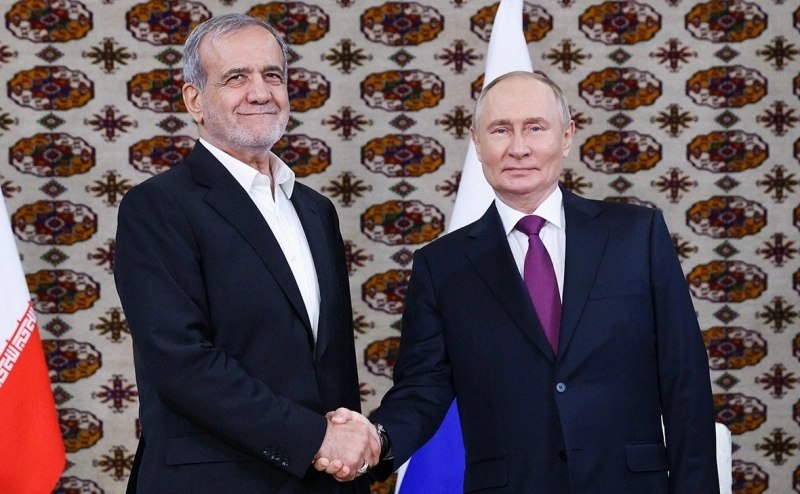
On Monday in Tehran, senior communications officials from the Iranian president's office called on Tasnim News Agency, one of the country's most widely cited semi-official news outlets. The visit, which included the deputy communications officer of the president's office and Youssef Bezikian alongside Seyyed Mohammad Mahdi Tabatabai, Deputy Director of Communication and Information, appeared on the agency's own Telegram channel and was reported by Tasnim's English-language service on May 18, 2026. No agenda was publicly released.
What the Visit Signals — and What It Does Not
The immediate context is diplomatic. Negotiations over Iran's nuclear programme resumed in Vienna in April 2026, with the United States and European parties seeking to restore restrictions on Tehran's uranium enrichment in exchange for sanctions relief. Communication officials from governments involved in high-stakes negotiations routinely engage with domestic media outlets — the visit to Tasnim fits a pattern of information management that is standard practice in most capitals, including Western ones. It is not inherently unusual that deputy-level officials would make the trip; routine contact between government communications teams and major news organisations does not imply editorial direction.
Tasnim itself, established in 2013, occupies a specific niche in Iran's media landscape. It is broadly aligned with conservative and security-aligned institutions, a positioning that Western reporting has sometimes characterised as indicating direct state control. The reality is more granular. Semi-official agencies in Iran operate with greater editorial autonomy than fully state-run entities but maintain relationships with power centres that produce a consistent editorial orientation — a dynamic that has parallels in the relationship between Western governments and sympathetic media ecosystems, where access, briefing schedules, and financial ties shape coverage without overt censorship.
The Conservative Media Ecosystem and Nuclear Talks
Tasnim's coverage of nuclear negotiations has historically reflected the scepticism of Iran's conservative establishment toward Western diplomatic engagement. The agency's output during previous rounds of talks — including the Joint Comprehensive Plan of Action negotiations of 2013-2015 — was marked by critical framing of Western demands and emphasis on Iranian sovereignty. For an administration engaged in delicate negotiations, maintaining channels to outlets that shape domestic conservative opinion is a rational diplomatic exercise rather than evidence of propaganda coordination.
That framing — routine coordination mischaracterised as control — is worth examining. Western coverage of Iranian state media often defaults to binary language: outlets are either "state-controlled" or "opposition." Tasnim sits in a middle space common to many national media ecosystems, where outlets maintain institutional relationships with power while exercising day-to-day editorial independence on non-sensitive matters. The agency is not RT or Press TV; it is closer in function to a news service with an established editorial line rather than a direct instruction queue.
Broader Pattern: Information Management in Diplomatic Negotiations
The visit to Tasnim occurs within a larger pattern of intensified communications activity around the current nuclear talks. Parties on all sides — Washington, European capitals, and Tehran — have increased engagement with domestic audiences as negotiations reach critical phases. Governments that frame negotiations poorly at home frequently lose negotiating leverage abroad; diplomatic teams therefore invest in managing the information environment before and during talks.
This is not unique to Iran. During the 2015 nuclear agreement, US officials maintained close relationships with think-tank communities and sympathetic media organisations. Russian diplomats engage systematically with outlets perceived as favourable. The pattern is structural: diplomacy requires domestic support, and domestic support requires communication management. The visit to Tasnim should be read in this light — as part of a government's effort to maintain a working relationship with an outlet that reaches a significant audience, not as evidence of unusual media manipulation.
Stakes and What Remains Unclear
The stakes of the current nuclear negotiations are substantial. A renewed agreement could ease sanctions pressure on Iran's economy, while failure risks further escalation in uranium enrichment activities that Western governments describe as approaching weapons-relevant thresholds. How domestic media covers either outcome will shape the political space available to Tehran's negotiating team.
What the available sources do not tell us is the specific content of Monday's meeting. No statement was issued by the communications office or by Tasnim. The identities of the officials involved were confirmed from the agency's own reporting, but their agenda was not disclosed. Whether the visit addressed coverage strategy, upcoming announcements, or simply relationship maintenance remains a matter for informed inference rather than confirmed fact. Readers should treat the engagement as a documented diplomatic interaction with uncertain purpose, not as evidence of a specific editorial arrangement.
Monexus covered this visit as a routine government-media engagement rather than as a story of state control. The distinction matters: framing it as the latter would import assumptions from outside the source record and risk implying a level of editorial coordination that the available evidence does not support.
Wire provenance
This editorial synthesis draws on the following public wire/social posts:
- https://t.me/tasnimnews_en/38452