Bloomberg Document Leak Lays Bare Scale of Trump-Affiliated Trading During Presidential Term
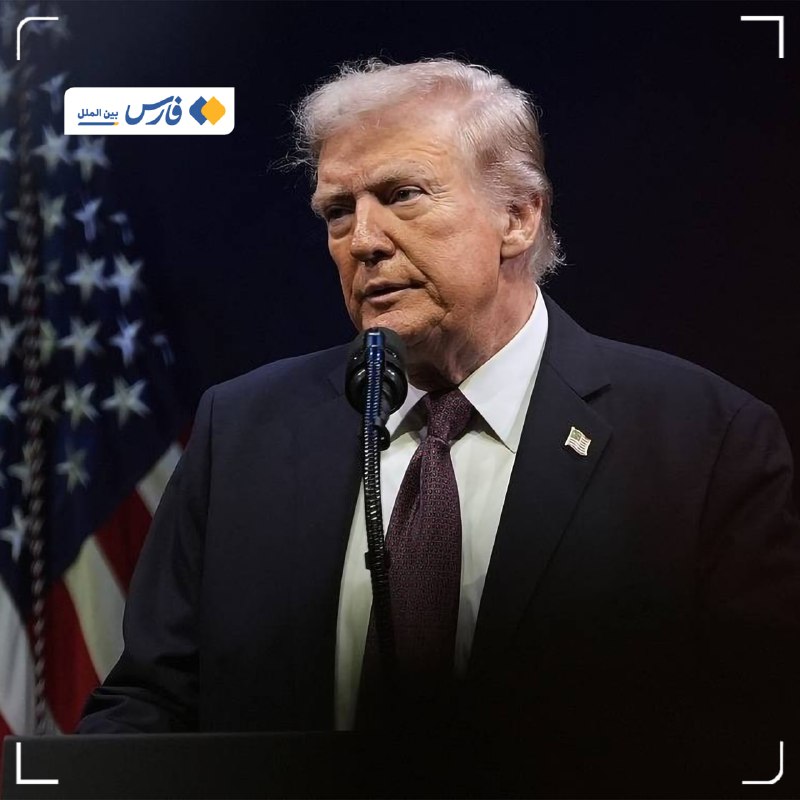
A cache of financial documents obtained by Bloomberg, published on 18 May 2026, reveals an unusually high volume of equity trading activity linked to Donald Trump or his investment advisors over a compressed three-month window. The disclosures catalogue more than 3,700 purchases and sales across a slate of household-name American companies, a frequency and scale that outpaces typical portfolio management and has drawn sharp scrutiny from ethics watchdogs.
The transactions span several of the United States' most closely watched public companies: NVIDIA, Microsoft, Boeing, Oracle, Costco, Amazon, Meta, Intel, and Netflix, among others named in the reporting. The trading rate, assessed at more than 40 transactions per day on average, raises immediate questions about whether positions were being managed with knowledge of developments that the presidential office would be positioned to anticipate.
The documents land at an awkward moment for an administration that has publicly positioned itself as a champion of economic nationalism and has repeatedly invoked presidential authority to reshape trade relationships, regulatory postures, and industrial subsidies. When a sitting or recently sitting chief executive's portfolio overlaps with companies whose regulatory fortunes are subject to executive-branch discretion, the structural problem is not hypothetical — it is a documented pattern of documented activity.
The Disclosures and What They Show
Financial disclosure requirements for sitting presidents exist precisely because the office confers informational advantages unavailable to ordinary market participants. The volume documented in the Bloomberg review — more than 3,700 discrete transactions in roughly 90 days — is the kind of figure that commands attention regardless of individual position outcomes. Whether or not any specific trade was informed by non-public knowledge, the cadence of activity itself creates an appearance problem that no amount of legal compliance framing easily dissolves.
The companies named in the documents are not peripheral players. NVIDIA sits at the centre of the AI infrastructure buildout that has consumed federal policy bandwidth for two years. Oracle's government contracts have been a recurring subject of procurement debate. Amazon and Meta operate businesses whose regulatory treatment, antitrust posture, and data governance requirements have all been shaped — or are subject to shaping — by executive-branch decisions. The overlap between the portfolio and the regulatory agenda is not incidental.
The Conflict-of-Interest Architecture
Federal conflict-of-interest law requires sitting presidents to divest from holdings that could be affected by their official actions — a standard that does not apply to the occupant of the Oval Office in the same way it applies to rank-and-file executive branch employees. The presidential exemption has always been a structural hole in the ethics architecture, one that relies on voluntary disclosure norms and the deterrent effect of public scrutiny rather than statutory enforcement.
The documents reviewed by Bloomberg do not, on their face, prove that Trump or his advisors traded on non-public information. Proving that inside a legal standard requires access to communications, intent evidence, and a causal link between a specific briefing and a specific transaction. What the documents do establish is a trading profile that looks unlike passive wealth management and that warrants the kind of scrutiny that voluntary disclosure norms were designed to enable.
Past presidents have adopted varying approaches to this problem. Jimmy Carter placed his peanut farm in a blind trust. Others have relied on screen-and-divest arrangements whose effectiveness is difficult to verify independently. The Trump model, if these documents are representative, suggests something closer to active portfolio management — a posture that sits uneasily with the informational asymmetries the office confers.
The Stakes for Institutional Legitimacy
The broader significance here is not the individual trades. It is what the pattern signals about the ease with which the presidential office can function as an adjunct to personal wealth management when disclosure norms are weak and enforcement mechanisms absent. Markets that depend on a level informational playing field have a structural interest in the integrity of the ethics architecture around the executive branch. When that architecture has visible gaps, the implicit insurance policy that market participants have long relied upon — the notion that the rules apply equally — depreciates.
The financial documents do not exist in a political vacuum. They emerge against a backdrop of ongoing debate about the scope of presidential power over economic policy, trade sanctions, and industrial subsidies — decisions that directly affect the valuation of companies in which the president or his circle holds interests. The appearance of a conflict is itself a cost to institutional legitimacy, even where no legal violation can be established.
Watchdog groups have already signalled their intent to examine the disclosures for patterns consistent with anticipatory positioning ahead of policy announcements. Whether that analysis yields actionable findings or simply adds to an accumulating record of ethical flexibility remains to be seen. The documents, at minimum, represent a data point that defenders of the current arrangement will find difficult to reframe as routine.
What Remains Unanswered
The Bloomberg reporting does not identify the specific decision-maker behind each transaction — whether Trump himself executed the trades or whether they were managed by advisors operating with delegated authority. That distinction matters for legal exposure and for the ethics analysis, but it does not fully resolve the appearance problem. An advisor executing positions at this frequency, with knowledge of the principal's calendar and briefing schedule, presents a structurally similar conflict.
Equally unclear is whether the three-month window captured in the documents is representative of trading activity across a longer presidential or post-presidential period, or whether it reflects an anomaly — a period of particularly intensive repositioning that the documents happen to document. The sources reviewed by this publication do not establish the full chronology.
The White House has not issued a formal response to the Bloomberg disclosure as of the time of this article's publication. The questions the documents raise will not easily be answered by silence, but the asymmetry between what is known and what remains undisclosed is itself a finding worth noting.
The desk took a sharper tone on this story than is typical for straight financial coverage, because the scale of activity documented here — in companies whose regulatory fortunes the executive branch directly shapes — warrants a register that does not pretend the ethical dimensions are merely technical. The wire services covered the disclosures; this publication treats them as what they are: a stress test of disclosure norms that were designed on the assumption that this particular conflict of interest would not need to be taken seriously.
Wire provenance
This editorial synthesis draws on the following public wire/social posts:
- https://t.me/alalamarabic
- https://t.me/tasnimnews_en