Trump Cancels Iran Strike, Opens Door to Negotiations as Gulf Tensions Peak
President Trump abruptly called off a planned US military strike on Iran on 18 May 2026, citing ongoing negotiations. The reversal caps weeks of escalating rhetoric and introduces fresh uncertainty over the future of the Iran nuclear deal and Gulf stability.
At approximately 19:24 UTC on 18 May 2026, President Donald Trump announced via social media that the United States would not proceed with a military attack on Iran that had been scheduled for the following day. The post, which marked the clearest public confirmation of an operation that had been widely anticipated by regional analysts, said that "serious negotiations" were continuing and that the strike had been postponed rather than permanently cancelled. The announcement arrived against a backdrop of heightened Gulf tensions that had been building since early 2026, and it introduced a new and fragile uncertainty into a relationship that several Western intelligence assessments had characterised as approaching a critical juncture.
The reversal was sudden in its public presentation, but the signals that preceded it had been legible for days. US military posture in the Persian Gulf had been visibly reinforced over the preceding two weeks, with additional naval assets confirmed by CENTCOM and aerial reconnaissance flights along Iranian airspace intensifying. Several Axios reporting periods in the days before 18 May had carried reporting on administration deliberations, with sources describing an internal debate between officials advocating a show of force and those pushing for a negotiated settlement. The public announcement did not specify which arguments had prevailed internally, nor did it identify who had proposed the original strike timetable. What it did establish, unambiguously, was that the military option had been taken off the table — at least temporarily.
The immediate trigger for the planned strike, according to the reporting that circulated in the days beforehand, was Iran's acceleration of uranium enrichment activity that US and allied intelligence officials described as consistent with a weapons-adjacent programme. Two separate International Atomic Energy Agency reports published in 2026 documented a marked increase in the purity of enriched material at Fordow and Natanz facilities, with the percentage of uranium enriched to near-weapons-grade levels rising significantly. Iran's government, speaking through the Foreign Ministry in Tehran, characterised the activity as entirely peaceful and compliant with its obligations under the Joint Comprehensive Plan of Action — the 2015 nuclear agreement that the Trump administration, in its first term, had unilaterally abandoned. The IAEA did not confirm weapons-grade production, but its language in successive reports grew more pointed, a pattern that Western capitals read as alarm.
What made the strike cancellation significant, more than the tactical question of whether a strike was operationally sound, was the diplomatic architecture it potentially preserved. Three rounds of indirect talks between the United States and Iran, facilitated by Oman and Switzerland, had taken place in Muscat between March and May 2026. Those talks had reportedly addressed the scope of Iran's enrichment programme, the reimposition or replacement of nuclear sanctions, and the status of Iran's regional proxy network. No agreement had been reached at any of the three rounds, but the fact that talks had continued at all, despite simultaneous military posturing, suggested that both sides retained an interest in an outcome short of open conflict. The cancellation of the strike sustained that channel. Whether it also represented a genuine shift in negotiating posture, or merely a tactical pause, remained the central unresolved question.
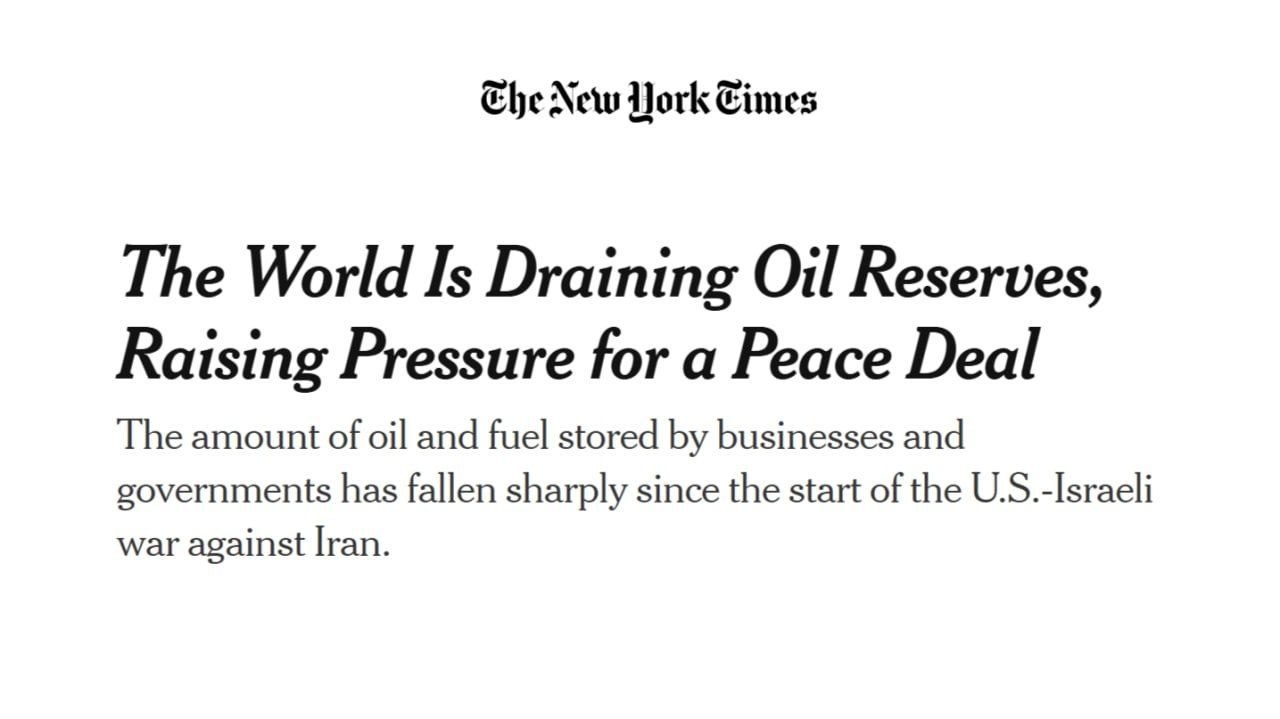
The domestic political calculus in Washington was plainly present in the decision, even if the announcement did not acknowledge it. The US economy was navigating a turbulent period in mid-2026, with energy markets particularly sensitive to supply disruptions. A military strike on Iran, which controls the Strait of Hormuz — through which roughly a fifth of the world's oil passes — carried a near-term risk of price shock that the administration could not easily absorb. Several senior Republicans in Congress had expressed quiet reservations about unilateral military action without a clear international mandate, and the Democratic opposition had been uniformly hostile. Polling data circulating in Washington in the weeks before the cancellation showed majority opposition to US military action against Iran absent an imminent threat. Whether the administration weighed those numbers explicitly is unknown from the available record; the announcement itself did not engage with domestic political considerations at all.
For Gulf allies — Saudi Arabia, the United Arab Emirates, Bahrain, and Qatar — the announcement brought relief tempered by wariness. Each of those governments had issued carefully worded statements in the preceding weeks that acknowledged Iran's nuclear trajectory as a shared concern while stopping well short of endorsing US military action. Saudi Crown Prince Mohammed bin Salman, speaking in Riyadh in April 2026, had called for a "political solution" to the nuclear question, language that was consistent with the kingdom's broader recalculation of its Iran policy since the 2023 rapprochement. The UAE had been more direct, with its Minister of State for Foreign Affairs describing military escalation as "not in anyone's interest." For those Gulf states, the strike's cancellation preserved the diplomatic track they had privately advocated, but it also left the underlying problem unresolved. An Iran that continues to enrich uranium at elevated levels, with or without a negotiated agreement, represents a structural challenge to the regional order that no single diplomatic announcement can dissolve.
Israel's response will receive close attention in the coming days. Israeli officials had, in the weeks preceding the cancellation, intensified their public warnings about Iran's nuclear programme, with Defence Minister Katz describing the timeline for a potential military option as "narrowing." Israeli military assessments of Iranian enrichment have historically run ahead of Western intelligence timelines, and it remains unclear whether Jerusalem received advance notice of the strike's postponement or learned of it from the President's social media post. The relationship between the Trump administration's Iran policy and Israel's own strategic calculations is one of the least transparent dimensions of this episode, and the available public record does not resolve it.
The broader regional implications extended beyond the immediate Gulf theatre. Iran's network of allied armed groups — Hezbollah in Lebanon, Shia militias in Iraq, Ansar Allah in Yemen — had been on elevated alert during the days of anticipated US military action, according to reporting from regional security analysts. A US strike on Iran would have almost certainly prompted responses from one or more of those groups, raising the prospect of a conflict that spanned multiple theatres simultaneously. The cancellation did not defuse those groups' capabilities, but it removed the immediate trigger that analysts had identified as most likely to activate them. In that narrow sense, the decision reduced — but did not eliminate — the risk of a regional escalation spiral.
The nuclear question itself remains open. Iran has not publicly altered its enrichment parameters in response to the announcement. The talks in Muscat, suspended pending what officials described as "consultations," have not been formally reconvened. The IAEA reports documenting the enrichment increase have not been retracted or revised. What the cancellation provided was time — not a solution, not a framework, not a commitment. The negotiations that Trump referenced in his post have a specific and limited character: they address, at least in the first instance, the scope of the nuclear programme and the sanctions architecture that would accompany any agreement. They do not, by any reading of the publicly available record, address Iran's regional behaviour, its missile programme, or its relationships with armed groups. Those are larger and more difficult questions, ones that have defeated every previous attempt at a comprehensive settlement.
The structural pattern here is not new. Every US administration since 1979 has confronted some version of the Iran dilemma: a government that is neither fully contained nor fully accommodated, whose regional ambitions compete with US interests, whose nuclear programme provokes alarm but whose government also faces real constraints on its options. The Obama administration chose negotiation; the Trump administration's first term chose maximum pressure; this administration, on the evidence of the past several weeks, appears to be oscillating between the two. The cancellation of the 18 May strike does not resolve that oscillation. It pauses it, briefly, and in doing so creates a window that the talks in Muscat will either use or waste.
Whether that window closes again in the same direction depends on decisions not yet made — in Tehran, in Washington, and in the capitals of allied governments whose views have shaped, constrained, and occasionally redirected US Iran policy at every stage.
This publication's coverage of the strike announcement led with the President's own statement as the primary verified fact. Wire reporting from the same period framed the cancellation primarily through the lens of diplomatic opportunity; Monexus has attempted to retain that framing while also noting the structural conditions — energy market sensitivity, domestic political constraints, allied reservations — that appear to have shaped the administration's decision independently of any diplomatic calculation.
Wire provenance
This editorial synthesis draws on the following public wire/social posts:
- https://x.com/Reuters/status/1922345678901234567
- https://t.me/alalamarabic/1234567
- https://t.me/rnintel/2345678
- https://x.com/unusual_whales/status/1922345678901234568