Trump Confirms US Had Planned Strike on Iran, Delayed After Gulf Leaders' Appeal
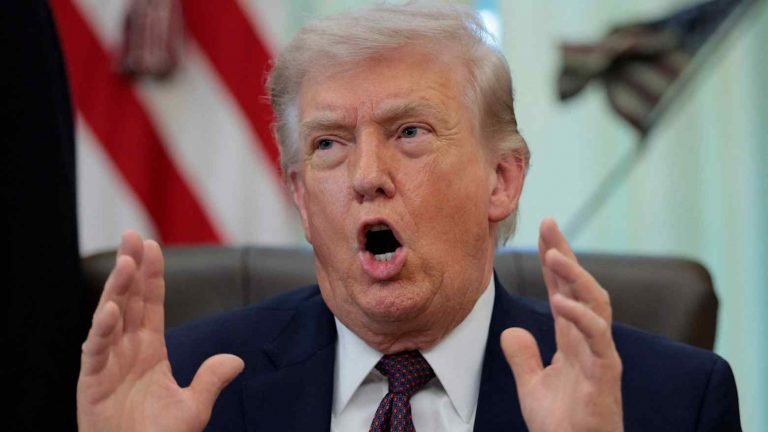
The White House confirmed on May 18, 2026 that the United States had a military strike against Iran scheduled for execution the following day, only for the operation to be suspended at the joint request of Qatar, Saudi Arabia, and the United Arab Emirates. President Trump made the disclosure during remarks to reporters, stating that the Gulf monarchies had appealed directly for the strike to be delayed to permit what he described as "serious negotiations" to continue.
The announcement represents an unusually explicit admission from a sitting US president regarding plans for offensive military action against a state, detailing a timeline and invocation of allied diplomatic pressure that Gulf capitals had reportedly been conducting behind the scenes for several days. The revelation arrives amid heightened tensions between Washington and Tehran over Iran's nuclear programme and regional proxy activities, and places the Gulf Cooperation Council states — traditionally aligned with US security guarantees — in the unfamiliar position of publicly countermanding a potential American military action.
The decision to publicise the existence of a strike order, even one subsequently suspended, marks a departure from the customary opacity surrounding US military planning. It also raises questions about the strategic calculus of both the Gulf states, whose economies are intertwined with both American and Iranian interests, and the administration in Washington, which has oscillated between threats of "maximum pressure" and expressions of openness to diplomatic engagement.
The Strike That Wasn't
According to statements attributed to President Trump and corroborated across multiple independent Telegram channels monitoring US foreign policy on May 18, 2026, the planned strike was to have been carried out within 24 hours of the announcement. The sources do not specify the target set, the branch of the US military that would have conducted the operation, or the specific triggering event that had brought the strike to the edge of execution. Senior administration officials were not named in the available reporting.
What is clear is that the operation reached a sufficient stage of planning that Trump felt able to describe it as "scheduled," a formulation that implies either executive authorisation or, at minimum, a military order-chain advanced enough to permit forward planning. The language matters: "scheduled" suggests something more concrete than a contingency option being maintained on a menu of responses. Whether the National Security Council formally approved the strike, or whether this represented an earlier stage of operational planning, cannot be determined from the sources currently available.
The disclosure came without the customary caveats that accompany off-the-record or background briefings. Trump framed the suspension as a concession to allied diplomacy, suggesting that the Gulf states had provided sufficient reason to extend the window for negotiations before reverting to kinetic options. "We were ready to go tomorrow," one paraphrase of the President's remarks reads, "but they asked us to wait, and we're giving diplomacy a chance."
The Gulf States' Calculated Intervention
The involvement of Qatar, Saudi Arabia, and the UAE in countermanding an American military strike is notable for several reasons beyond the immediate diplomatic achievement. All three states host significant US military infrastructure: Qatar is home to the Al Udeid Air Base, the largest US air operation centre in the Middle East; the UAE maintains a US presence at Al Minhad and other facilities; and Saudi Arabia, while having reduced American military footprints in recent years, remains a major defence purchaser and occasional host of US forces.
Yet the same geography that makes these states US security partners also places them in direct proximity to Iranian regional influence. Qatar shares a maritime border with Iran in the Persian Gulf and relies on the US security umbrella precisely to manage that adjacency without direct confrontation. The UAE has sought normalisation with Tehran in recent years, reopening embassies and expanding commercial ties. Saudi Arabia, following the 2023 Chinese-mediated rapprochement with Iran, has been pursuing a cautious détente that the Kingdom views as essential to managing its southern border and containing Yemen's civil conflict.
A US strike on Iran — even one framed as limited and targeted — risked destabilising these delicate equilibriums. Gulf analysts have long warned that while their governments share US concerns about Iranian nuclear progress and regional missile programmes, they fear the cascading consequences of military escalation more than they fear the status quo. A strike that destroyed nuclear facilities might also destroy years of quiet diplomatic work. A retaliation that followed would test the credibility of US extended deterrence in ways that Gulf states, not Washington, would have to absorb.
The sources do not detail the specific diplomatic communications that led to the suspension. It is not known whether the appeal was conveyed through direct phone calls between Gulf leaders and the President, through official channels at the defence or foreign ministry level, or through third-party intermediaries. What is clear is that the appeal was made, received, and acted upon — a sequence that suggests the Trump administration's threat posture, while serious enough to generate a genuine strike order, remained sufficiently malleable to accommodate allied pressure.
The Diplomatic Window and Its Limits
The announcement that negotiations are "now taking place" raises immediate questions about what the administration hopes to extract from Tehran and what Tehran might be willing to offer. The available sources provide no specifics on the negotiating format, the intermediaries, or the substantive agenda. Neither the Iranian foreign ministry nor official spokespeople in Tehran have issued statements responding to Trump's disclosure as of the time of this article's filing.
The pattern, however, will be familiar to observers of US-Iranian relations over the past two decades. The rhythm of escalation, allied intervention, and diplomatic extension has repeated across multiple administrations, with varying degrees of sincerity on both sides. What changes is the relative leverage: the degree to which economic sanctions constrain Tehran's options, the degree to which Iranian nuclear advances create time pressure for Washington, and the degree to which Gulf states are willing to bear the costs of either outcome.
Whether the current diplomatic window represents a genuine opening or a tactical delay — one that the Trump administration can use to reposition forces, reassess targeting, and re-present a more polished ultimatum — is impossible to determine from the public record. What is certain is that the suspension is conditional. Trump did not describe the negotiations as having succeeded. He described them as ongoing, and the language of the statement — "serious negotiations" — implies a process with a defined endpoint rather than an indefinite stand-down.
What Comes Next
The immediate beneficiaries of the suspension are the Gulf states themselves, whose intervention has demonstrated continued relevance in a relationship that sometimes feels driven by Washington and Tehran alone. Qatar, in particular, has cultivated a reputation as a discreet mediator across multiple conflicts; its ability to influence this particular moment reinforces that positioning without openly antagonising either Washington or Tehran.
The risks, however, are asymmetric. If negotiations succeed — in whatever form "success" is defined by the parties — the Gulf states will claim credit for creating the conditions. If they fail, and the strike proceeds, the same Gulf states will have had their fingerprints on a process that ultimately produced the outcome they sought to prevent. Having intervened, they own a share of the consequence.
For Iran, the disclosure provides both tactical intelligence and strategic ambiguity. That a strike was genuinely planned — and was stopped by Gulf, not Iranian, diplomacy — tells Tehran something about the upper bound of Washington's current willingness to use force, and something about the limits of that willingness. It also tells Tehran that the diplomatic clock is running, and that the next few days will determine whether the pressure eases or resets at a more elevated baseline.
The sources do not specify a deadline. They do not confirm that the strike order has been cancelled rather than suspended. What they confirm is a moment of genuine uncertainty about whether the US-Iran confrontation, having reached the edge of kinetic action, will pull back into negotiation or simply pause before proceeding.
This article was filed on May 18, 2026, following the President's disclosure. Monexus has based its reporting on multiple Telegram-sourced accounts of the President's remarks. Iran International and Iran-aligned Telegram channels have carried the story with varying framings; the Western wire services had not published separate confirmations at the time of filing.
Wire provenance
This editorial synthesis draws on the following public wire/social posts:
- https://t.me/DDGeopolitics
- https://t.me/amitsegal
- https://t.me/FotrosResistancee