Trump's Gulf Diplomacy Theater Is Not a Ceasefire
The President's claim that he shelved a military strike at the request of Arab leaders is less a peace gesture than a performance — one that reveals how Gulf money has quietly become the real currency of American Middle East policy.
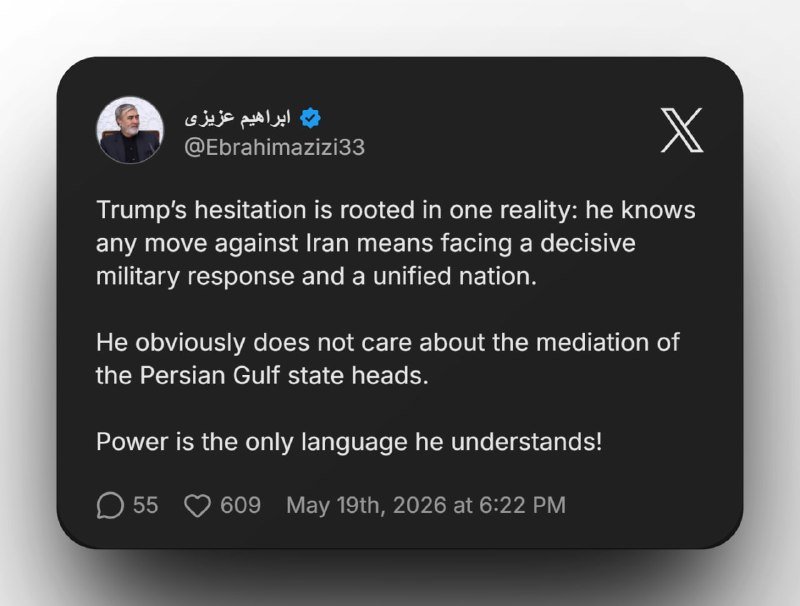
On May 18, 2026, Donald Trump took to Truth Social with a claim that would, in any normal news cycle, constitute a significant geopolitical development: an American military strike on Iran, allegedly scheduled for the following day, had been called off at the personal request of three Arab heads of state. The Emir of Qatar, the Crown Prince of Saudi Arabia, and the President of the United Arab Emirates had, by Trump's account, prevailed upon the United States to stay its hand. "Serious negotiations" were underway, the President explained. The military option remained on the table.
Whether or not an attack was genuinely ordered and then countermanded — and the sources do not establish this as fact — the post itself is the story. Trump's Truth Social announcement is not a ceasefire. It is not a diplomatic breakthrough. It is a performance of restraint staged for an audience of one: the Gulf monarchies who have, over decades, cultivated a particular relationship with American military power.
The Theater of Postponement
Trump's framing positions him as a leader capable of wielding overwhelming force and choosing not to. That image serves his domestic political narrative — the dealmaker who holds all the cards and chooses negotiation over bloodshed. But it also serves something else: it signals to Riyadh, Doha, and Abu Dhabi that American military doctrine is, at a fundamental level, responsive to their preferences.
This is not new. Gulf states have long understood that their financial relationships with Washington — petrodollar recycling, defense procurement, sovereign wealth fund flows — come with an implicit insurance policy. What is new is the openness with which this arrangement is now being conducted. An American President publicly admitting that a strike was shelved because Arab leaders asked him to stop is not diplomacy. It is a reveal.
Whose Negotiations, Whose Leverage
The sources describe "serious negotiations" without specifying their nature or participants. Iranian state media framed Trump's announcement as a backdown — evidence that American aggression had been checked by Arab diplomacy. That framing is self-serving, but it contains a structural truth: the parties best positioned to defuse a US-Iran confrontation are not, in this account, Washington and Tehran, but the Gulf states and Washington.
This rearranges the conventional hierarchy. The United States presents itself as the indispensable power, the one whose military action must be sought or forestalled. But the sequence implied by Trump's post — Arab leaders request, American President complies — suggests that the real intermediary in any Iran settlement is now the Gulf. Qatar in particular has cultivated a reputation as an interlocutor with Tehran; its gas wealth and its hosting of US military infrastructure give it a credibility that Washington cannot manufacture on its own.
The Problem With Thumbtack Diplomacy
There is a version of this story in which the postponement is genuine good news: a crisis averted, diplomacy given room to operate. That version deserves examination, but the evidence from the thread context does not support it. The sources describe a claim, not a confirmed action. There is no independent verification of a strike order, a timetable, or a genuine diplomatic track.
What exists is a social media post. And social media posts from heads of state are, at minimum, designed to shape perception rather than simply report it. Trump has form for using dramatic announcements to reset expectations — real or manufactured — without any underlying policy change. A strike that never existed cannot be cancelled.
Stakes: The Long Game for Gulf Authority
If this episode reveals anything durable, it is the continued elevation of Gulf states as principal actors in any resolution of the Iran question. Whether Washington likes it or not, the architecture of regional stability now runs through Riyadh and Doha. American military supremacy is real; American policy autonomy, in this domain, is increasingly circumscribed by the financial and diplomatic expectations of its Gulf allies.
For Iran, the implication is uncomfortable but not unfamiliar: the path to any sanctions relief or normalized relations runs through capitals that have every incentive to extract maximum concessions in exchange for their intermediation. For the United States, the cost of Gulf loyalty is becoming visible — a foreign policy that flatters its allies' preferences even when it complicates its own stated objectives.
The attack may or may not have been real. The diplomatic theater, however, is entirely genuine — and it tells us more about the distribution of power in the Gulf than any strike ever could.
The thread context for this article draws exclusively on Telegram-sourced wire reports of Trump's Truth Social statement. Monexus has not independently verified the existence of a strike order or confirmed the substance of any ongoing negotiations.
Wire provenance
This editorial synthesis draws on the following public wire/social posts:
- https://t.me/insiderpaper/38421
- https://t.me/ClashReport/128456
- https://t.me/GeoPWatch/89234
- https://t.me/presstv/38712
- https://t.me/FarsNewsInt/45219