Trump Signals Hard Line on Iran as Nuclear Talks Reach Critical Juncture
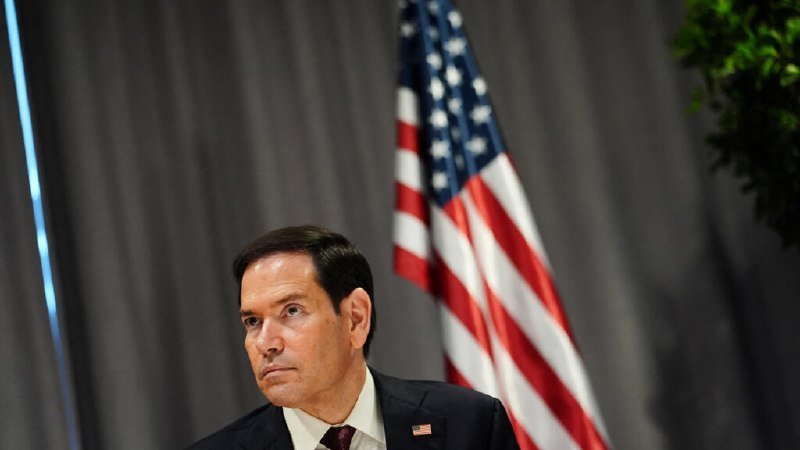
President Donald Trump told the New York Post on 18 May 2026 that he is not willing to offer concessions to Iran, warning that Tehran 'knows what's going to happen' after the administration receives a formal briefing from its national security team on 19 May. The statement marks the sharpest public articulation of the administration's posture since indirect nuclear negotiations between the United States and Iran collapsed into a holding pattern last month.
The remarks, published by the New York Post on the evening of 18 May, amount to a wholesale rejection of the cautious diplomatic opening that senior US officials had kept open through the spring. Trump was explicit: he is 'not open' to concessions, a formulation that closes the door on any interim relief — sanctions waivers, frozen asset releases, or partial sanctions easings — that Iranian officials had publicly signalled they were seeking as a confidence-building measure.
The Diplomatic Corridor That Never Closed
Negotiations between Washington and Tehran have proceeded in fits and starts since the administration resumed indirect contacts in early 2026, mediated largely through Oman and, at earlier stages, through European capitals. The framework has been well-trafficked: Iran insists on sanctions relief as a precondition for any meaningful inventory reduction of its enriched uranium stockpile; the United States has demanded verified, irreversible caps before any economic relief is granted.
Both sides have used the press to signal willingness and constraint simultaneously. Iranian officials have offered, in background interviews with regional outlets, that their enrichment programme is purely civilian in intent. American officials have said privately that the Iranian response to the latest US proposal — received over the weekend — was judged insufficient but not irreparably so. Tuesday's statement from the President forecloses that ambiguity.
What 'Concessions' Actually Means in This Context
The word carries specific weight in nuclear diplomacy. American negotiators have been considering whether to offer targeted sanctions relief — specifically the unfreezing of Iranian sovereign assets held in third-country accounts — in exchange for Iran freezing its enrichment at current levels rather than advancing toward weapons-grade purity. Iran has pushed for a broader package that would include the lifting of sectoral sanctions on oil revenues and banking access, conditions it describes as necessary for an agreement to be politically sustainable at home.
Trump's statement to the New York Post does not parse as a negotiating position. It reads as a terminal posture: no concessions, full stop. Whether that reflects a genuine decision taken by the administration or a deliberate pressure tactic deployed in the final hours before a deal remains the subject of competing readings among analysts tracking the talks.
The Regional Calculus
Iran's neighbours in the Gulf are watching closely. Saudi Arabia, the UAE, and Qatar have each expressed — through private diplomatic channels — a preference for a negotiated outcome rather than a further escalation of tensions. Israel's position, as articulated by Prime Minister Benjamin Netanyahu's office in recent weeks, has been more strident: Jerusalem has argued that any deal that leaves Iran with a meaningful enrichment capability is inherently destabilising. That position has been reinforced by IDF assessments shared with Washington that suggest Iran's breakout timeline — the period needed to produce weapons-grade material — has contracted significantly over the past two years.
The hardening of the American line will be read in Tehran as an instruction signal. Iranian officials will need to decide whether to make a final compromise offer before Tuesday's national security briefing, or to allow the talks to collapse and position for a different kind of engagement. Iranian state media has not yet published a formal response to Trump's remarks; the silence itself may be a form of calculation.
Stakes and What Comes Next
The national security briefing scheduled for 19 May is now the most consequential scheduled event in the diplomatic calendar. Senior officials from the State Department, the National Security Council, and the intelligence community are expected to present updated assessments of Iran's nuclear inventory and of the feasibility of reaching a deal without concessions. The President will then decide whether to extend, modify, or abandon the diplomatic track.
If the talks break down, the administration has a narrow window before Iran reaches a technical threshold that makes any agreement structurally less useful. The Joint Comprehensive Plan of Action, the 2015 deal that the Trump administration abandoned in 2018, was designed precisely to manage that threshold; its absence has left the current situation without a verified ceiling on Iran's programme. American intelligence estimates, last publicly referenced in a Congressional briefing in March 2026, placed Iran's breakout time at between four and six weeks — down from eighteen months when the JCPOA was in force.
The source material for this article does not include a formal administration statement beyond Trump's remarks to the New York Post. Monexus reached out to the National Security Council for comment; no response had been received by the time of publication. Iranian officials at the Foreign Ministry in Tehran did not respond to a request for comment on the record.
This article was reported using Telegram wire sources and US and regional press. Monexus did not independently verify the New York Post interview text beyond the wire-sourced excerpts circulated by Fars News Agency, Middle East Spectator, and GeoPWatch.
Wire provenance
This editorial synthesis draws on the following public wire/social posts:
- https://t.me/Farsna/18432
- https://t.me/Middle_East_Spectator/9871
- https://t.me/abualiexpress/44518
- https://t.me/FarsNewsInt/22091
- https://t.me/GeoPWatch/33410
- https://t.me/ClashReport/18847