Trump's Iran Strategy Has Collapsed — And Beijing Is the Only Winner
Major General Rezaei's assessment that Trump has lost legitimacy to confront Iran is more than regime propaganda — it reflects a structural collapse in American leverage that Beijing is quietly exploiting.
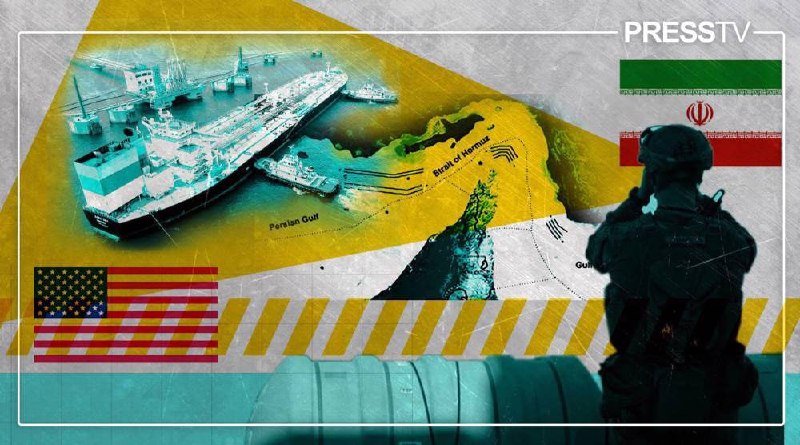
Trump's administration came into office promising that business instincts would translate into diplomatic results. A man who had negotiated billion-dollar deals, the argument went, would know how to extract concessions from adversaries. Eighteen months later, that thesis has collapsed spectacularly — nowhere more so than in the approach to Iran.
Major General Rezaei's assessment, carried verbatim across multiple state-adjacent channels on 18 May 2026, cuts through the administration's carefully managed communications: Trump has "completely lost the legitimacy to fight Iran — inside America, inside the region, and in the whole world." That is regime messaging, certainly. But it would be analytically lazy to dismiss it as pure propaganda. The structural dynamics backing that claim are real, and they are moving in one direction.
The Legitimacy Deficit Is Structural, Not rhetorical
Legitimacy in great-power competition is not an abstract concept. It is the currency that makes alliances hold, that keeps domestic coalitions together, and that determines whether a threat carries the weight of a credible commitment. On all three dimensions, the Trump administration's Iran posture has eroded.
Inside America, the tariff-driven economic turbulence has complicated the Republican coalition's appetite for any foreign entanglement that does not produce visible, near-term wins. The administration came close to a negotiated outcome early in its term; when that process broke down under maximum-pressure tactics that produced maximum-pressure results, the political rationale for escalation became harder to sell. A president who ran on ending foreign wars now faces pressure to start one he cannot win quickly.
Inside the region, the arithmetic is unforgiving. The Gulf states, bruised by the erratic nature of American regional commitments under this administration, have recalibrated. Saudi Arabia's outreach to Beijing has accelerated — not because Riyadh prefers China to the United States, but because it cannot build a long-term security architecture on the whim of a single administration's mood. When a regional actor cannot trust continuity of American policy, diversification is rational risk management, not disloyalty.
Globally, the administration's "ceasefire" announcement — which Rezaei accurately described as cover for continued economic strangulation — has not fooled anyone with a functional understanding of sanctions architecture. A ceasefire that maintains the financial architecture of war is not a ceasefire. The international community, including states nominally aligned with American interests, has noticed the sleight of hand.
The China Angle: Beijing Plays the Long Game
The most consequential development the administration failed to anticipate was China's willingness to insert itself as the moderate voice in an American-engineered crisis. China's call for the Strait of Hormuz to remain open — carried in multiple state-linked Iranian channels on 18 May 2026 — is not humanitarian concern. It is sophisticated positioning.
Beijing has calculated that the United States, under this administration, is engaged in a slow-motion self-isolation. Every tariff decision, every withdrawal from multilateral frameworks, every threat delivered with insufficient follow-through, advances a perception that American commitment is conditional and transactional. China does not need to defeat the United States in the Middle East. It needs to be present, consistent, and reasonable while the incumbent behaves erratically.
Major General Rezaei's response to the Chinese position — "America comes here, brings its warships — who is its enemy?" — reflects the Iranian regime's effort to reframe the regional order. The framing is not subtle: the United States is the disruptor, China is the stabilizer. That narrative has an audience beyond Tehran.
The irony that Iranian state media is amplifying a Chinese position on Hormuz stability — a waterway that Chinese energy imports transit and that Iran has periodically threatened to close — is not lost on informed observers. Beijing benefits from stable chokepoints it does not control; Tehran benefits from appearing as the partner of a responsible great power rather than a regional pariah. The alignment of interests is transactional, but it is working.
The Businessman Theory of Statecraft Has Failed
The administration's core assumption was that dealmaking principles apply universally: identify leverage, apply pressure, extract concessions. What this framework failed to account for is that states, unlike counterparties in commercial transactions, can absorb pain in ways that individuals and corporations cannot.
Iran has survived decades of sanctions. Its theocratic-bureaucratic apparatus is designed to manage scarcity; its regional proxy networks provide deterrence without requiring a direct military confrontation that would invite the very American response the administration has repeatedly threatened but not delivered. The gap between threat and action, repeatedly exposed, is itself a form of information传递给 the region: the American red line is negotiable, and often negotiated away.
Rezaei's observation about Trump's approach is pointed: "I thought that since he's a businessman, in political dealmaking too, he would draw on his experience. In reality, he sold very expensive things to China — and got bottles full of air in return." The quote reflects Iranian frustration with a negotiation that produced Chinese commercial gains while leaving Iranian strategic concerns unaddressed. But it also inadvertently describes the administration's broader predicament: the art of the deal, applied to great-power relations, has produced outcomes that look like wins on television and look like losses on the balance sheet of actual influence.
What Comes Next Is Not a Reckoning — It's an Opening
The administration retains military superiority in the Gulf. It retains the financial architecture of secondary sanctions that continue to constrain Iranian oil exports. These are not trivial levers. But levers are only as effective as the credibility of the hand that wields them.
The risk is not that Iran will suddenly achieve regional dominance. The risk is that the space created by American inconsistency will be filled — methodically, patiently, and at low cost — by a China that has no intention of confronting the United States directly but every intention of building a regional order in which Washington plays a diminishing role. The Hormuz statement is a data point in that longer pattern.
A publication covering this moment honestly must acknowledge what the sources do not fully resolve: whether the administration has a strategy to reverse the legitimacy deficit, or whether it is managing decline in the region while redirecting attention elsewhere. The former would require consistency, follow-through, and a theory of regional order that accounts for allies who have also noticed the pattern. The latter is already underway. The evidence, from Gulf diversification to Beijing's Hormuz positioning, points in one direction.
Monexus led with Iranian state-linked framing amplified across Telegram wire feeds on 18 May 2026. Western wire services had not independently confirmed the specificity of Rezaei's claims as of publication; the piece treats the content as sourced and notes the structural dynamics it illustrates rather than treating regime-adjacent channels as standalone factual records.
Wire provenance
This editorial synthesis draws on the following public wire/social posts:
- https://t.me/DDGeopolitics
- https://t.me/DDGeopolitics
- https://t.me/DDGeopolitics