Trump's Iran Strike Flip Is a Rorschach Test for Who Believes American Power Still Works
Donald Trump says he shelved a planned strike on Iran at the request of Gulf leaders. Whether that represents diplomatic success, domestic political theatre, or a signal to Tehran depends entirely on which version of American power you still believe in.
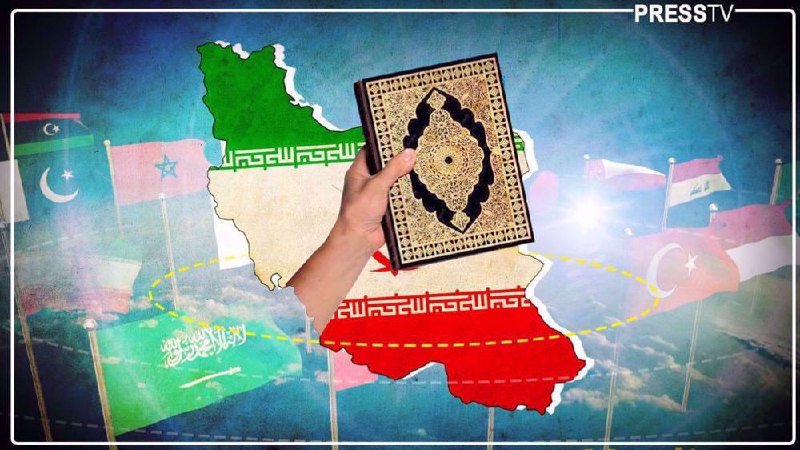
Donald Trump announced on 18 May 2026 that he had called off a military strike on Iran, telling reporters that the heads of the UAE, Qatar, and Saudi Arabia had personally urged him to stand down. He framed the decision as a response to diplomacy rather than a retreat from preparedness. The strike, he said, had been scheduled for the following day. The announcement arrived on the same date that Reuters reported Pakistan had deployed a fighter squadron and thousands of troops to Saudi Arabia, deepening the constellation of military commitments already reshaping the Gulf's balance of power.
The question the announcement forces is not whether Trump believed his own ultimatum. It is which version of American leverage the cancellation was meant to signal — and to whom.
A script already written
Trump presented the reversal as a concession granted to intermediaries. The three Gulf states — Saudi Arabia, the UAE, and Qatar — had called him, he said, asking him not to strike. He agreed. The language of "serious negotiations" entered the frame immediately, giving the climbdown the appearance of strategy rather than retreat. That framing serves multiple audiences at once. To Iran, it says the military option remains live — it was merely paused. To Gulf partners, it says American commitments are still worth something: Washington listened. To a domestic audience, it says the President did not blink because he was weak, but because he chose to.
The Reuters reporting on Pakistan's concurrent deployment complicates any clean reading of the moment as purely diplomatic. Pakistan's move is not neutral. A fighter squadron plus thousands of troops on Saudi soil places Islamabad squarely inside a deterrent architecture that Iran cannot misread. That Islamabad acted while Trump was mid-escalation — or appeared to be — suggests that at least one regional player read the signal and decided to back it with hardware.
The Gulf states as honest brokers — or something else
Qatar, Saudi Arabia, and the UAE each carry distinct interests in any Iran-US confrontation. Qatar hosts the largest US military footprint in the region and has maintained backchannel contact with Tehran for years. Saudi Arabia has fought a direct low-intensity conflict with Iran-aligned forces across Yemen for a decade and has the most to gain from a constrained Iran, but also the most to lose from a region-wide conflict that disrupts oil transit routes. The UAE has positioned itself as the financial and logistics hub for any post-war reconstruction of Iran, should that day come — a stake that makes Abu Dhabi allergic to scorched-earth outcomes.
Calling these three states "honest brokers" requires a willing suspension of their own agenda. They are not neutral. They are regional powers who calculated that a US strike — even a limited one — carried escalation risk that outweighed whatever deterrent value the threat provided. The fact that Trump accepted the call and shelved the operation tells us something about the weight Gulf capitals still carry in Washington. It also tells us something about the limits of that influence: he only shelved it, he did not rule it out.
Why the announcement matters more than the cancellation
One reading of this episode: a diplomatic success for the Gulf, a de-escalation, a sign that backchannel pressure still works between the United States and its partners. That reading has merit. The region has watched three years of American-Iranian standoff without direct military confrontation; the Gulf states have spent that time building relationships with both sides.
But the timing is not incidental. Trump announced both the planned strike and its cancellation simultaneously. That double announcement — the threat and its withdrawal, delivered together — is a form of communication in itself. It resets the clock on deterrence without dismantling the deterrent. Iran now knows that military action was genuinely authorised and then reversed under diplomatic pressure. That knowledge is not reassuring. It tells Tehran that the trigger finger was ready, that the decision was real, and that what stopped it was not Iranian concessions but Gulf intercession. The lesson for Iran is not "the US won't strike." It is "the US almost did, and only Gulf diplomatic pressure pulled it back."
That is a message with a very specific recipient.
What this actually tells us about American power
The episode reveals something structural beneath the theatrics. The United States retains the capacity to strike — the hardware, the authorisation, the willingness at the top. But it no longer operates without real-time diplomatic consultation with regional partners who bear the consequences of whatever follows. That is a different kind of power than the unilateralism of 2003, or even the "maximum pressure" posture of the first Trump term. It is still significant. But it is power exercised inside a regional architecture, not above it.
The Pakistan deployment reinforces that architecture. Islamabad did not send troops to Saudi Arabia because it wanted to. It sent them because the escalation signal was clear enough that a Gulf ally with longstanding defence ties decided it needed to be on the right side of whatever comes next. That is how regional hierarchies reorganise: not with a declaration, but with a call from Riyadh to Islamabad, and a squadron in the air.
Trump's announcement was also, plainly, a political communication. Presidents who shelve military operations rarely do so without a domestic audience in mind. The framing — "I was going to strike, but the allies asked me not to" — is designed to look like strength in every direction at once. Whether that framing survives contact with the actual facts of Iranian behaviour over the coming weeks is a separate question. The wire will tell us soon enough. The sources do not yet specify what concessions, if any, Iran has offered in exchange for the pause — a gap that matters enormously for assessing whether this is a genuine de-escalation or a pause before the next cycle of pressure.
The Gulf called. Washington listened. Tehran watched. The strike is off. The architecture of threat remains exactly where it was.
Wire provenance
This editorial synthesis draws on the following public wire/social posts:
- http://reut.rs/4ulLWmw