Trump's Iran Taunts Won't Contain Tehran — They May Accelerate It
Trump's personal-diplomacy playbook assumes that adversarial language breaks regime will. With Iran, three decades of evidence says otherwise — and the consequences of miscalculation are steeper than they were with North Korea.
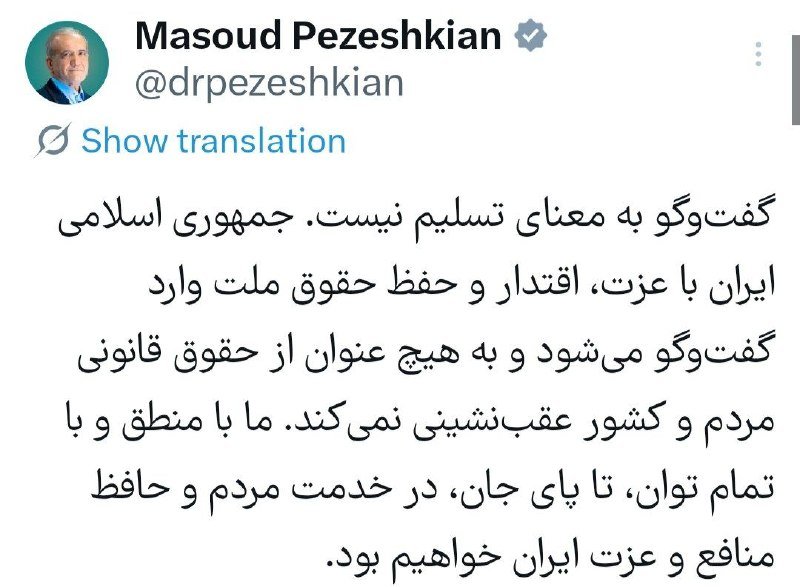
The Telegram channels lit up before noon on 18 May with the same two Trump quotes, paraphrased and cross-posted from his Fortune interview: Iran has "no idea what they are doing," and — rhetorical crescendo — is Iran "crazy?" The language is deliberate. It is also the third time in eighteen months that the President's personal vocabulary has set the diplomatic tone with a target state, and it follows the same script every time: maximum public pressure, maximum personal theatre, then an outcome that lands somewhere between stalemate and escalation.
The Personal Playbook and Its Limits
Trump's instincts on Iran are consistent with his instincts on every adversary he has engaged: the belief that rapport between leaders can accomplish what institutional negotiation cannot. The Iranian nuclear deal — JCPOA — was dismantled in 2018 precisely because it was labelled "Obama's deal," a personal legacy rather than a national architecture. The message to Tehran was unambiguous: any agreement is hostage to the next election. A second Trump administration has made that lesson stick. When you are negotiating with someone who can unwind your work with a signature on day one, you do not negotiate. You wait.
The current taunts change none of that calculus. "Crazy" is not a negotiating position — it is a performance. It signals to the Gulf monarchies and to Israel that the White House remains activated. It signals to the domestic base that Iran remains a foe, not a potential partner. But it does not signal to Tehran anything it does not already know about American reliability. The personal touch that Trump assumes is the leverage is, in this context, the problem. Iranian policy institutions — the Supreme Leader's office, the Islamic Revolutionary Guard Corps, the Atomic Energy Organization — are not going to pivot because a U.S. President finds their behaviour perplexing.
What Iran Gets From the Chaos
There is a more uncomfortable read of the current moment, and it runs counter to the assumed logic of maximum-pressure campaigning. When Trump calls Iranian leadership crazy, he is not weakening their hand domestically. He is giving hardliners exactly what they need: proof that Washington operates through personalities, not principles. For Iranian conservatives who argue that America cannot be trusted because American commitments are contingent on the occupant of the Oval Office, Trump's own words become the exhibit.
Iran has survived maximum pressure before — from the Shah-era sanctions to the Obama-era "maximum pressure" campaign that preceded the JCPOA. Each round produced institutional hardening, not capitulation. The current round is no different. The nuclear programme advances regardless of diplomatic cycle. Regional proxies operate on their own timelines. And the diplomatic infrastructure — Chinese trade relationships, Russian military cooperation, Gulf neighbour back-channels — does not require American blessing.
The irony is that maximum-pressure rhetoric may be most useful to the Iranian hardliners who have the least interest in a negotiated outcome. Every public broadside justifies continued enrichment, continued regional activism, and continued investment in sanctions-evasion infrastructure. It also gives Tehran an easy answer to European partners who press for confidence-building measures: "You see — Washington is not serious about diplomacy. Why should we make concessions to a conversation that changes every four years?"
The Strategic Contradiction
The deeper problem with the current posture is structural, and it is visible in the gap between the Trump rhetoric and the actual state of play in the region. The United States wants to prevent Iran from acquiring a nuclear weapon. Maximum pressure, by every measurable outcome of the past eight years, has not prevented that. The Joint Comprehensive Plan of Action, whatever its flaws, froze enrichment at 3.67 percent and shuttered the heavy water reactor at Arak. The maximum-pressure campaign that replaced it produced 84 percent enrichment, an advanced centrifuge fleet, and a weapons-capable breakout window that is measured in weeks rather than months.
Trump knows this. His advisors know this. The theatrical language is designed to distract from an uncomfortable reality: that the tools available to this administration have the same limited range as the tools available to its predecessor. Striking Iranian nuclear facilities carries escalation risk that dwarfs anything in the Gulf. A restored JCPOA requires political capital that no second-term Republican administration can easily spend. Containment requires regional partners whose own calculations are shifting.
The language of "crazy" is what gets offered when the strategy has run out of moves. It fills the airtime between crises. But it also forecloses the quiet, institutional work — back-channel communication, technical verification frameworks, third-party mediation — that has historically produced outcomes with Tehran. That work requires a sustained diplomatic architecture, not a leader-to-leader chemistry that collapses the moment a tweet goes wrong.
What Escalation Actually Looks Like
The stakes are not hypothetical. An Iran that continues on its current trajectory — enrichment advancing, regional network intact, sanctions architecture partially degraded through non-dollar trade — is an Iran that changes the calculus for every actor in the Middle East. Saudi Arabia, the UAE, and Israel have all publicly or privately recalibrated their assessments of how long they have before a regional nuclear equilibrium shifts. Trump calling Tehran "crazy" does not slow any of those programmes. It may, by hardening Iranian institutional resolve and reducing the political space for moderates, accelerate the trajectory it is meant to arrest.
The administration has time. The breakout window is not zero. Diplomatic off-ramps exist, even if they are narrow. But off-ramps require a kind of sustained institutional patience that the current White House has shown little appetite for — and that the personal-diplomacy model, by its nature, cannot provide. When the only tool is a presidential ultimatum and the relationship is calibrated in personal terms, the failure mode is not negotiation. It is escalation, miscalculation, and a crisis that neither side wanted but both were structurally positioned to produce.
The Telegram posts will be read in Tehran. The quotes will be translated, paraphrased, and recirculated as evidence of American unreliability. That is not containment. It is the opposite of containment — and the people who will pay for the difference are not in Washington.
Wire provenance
This editorial synthesis draws on the following public wire/social posts:
- https://t.me/Middle_East_Spectator/11946
- https://t.me/FotrosResistancee/8843
- https://t.me/FotrosResistancee/8842
- https://t.me/Middle_East_Spectator/11944