Trump's Iran Ultimatum: Coercion or Kabuki Theater?
Trump's 'clock is ticking' warning to Iran lands amid reports of civilian defense training in mosques—a signal of either resilience or panic that reveals more about Washington's leverage calculus than Tehran's intentions.
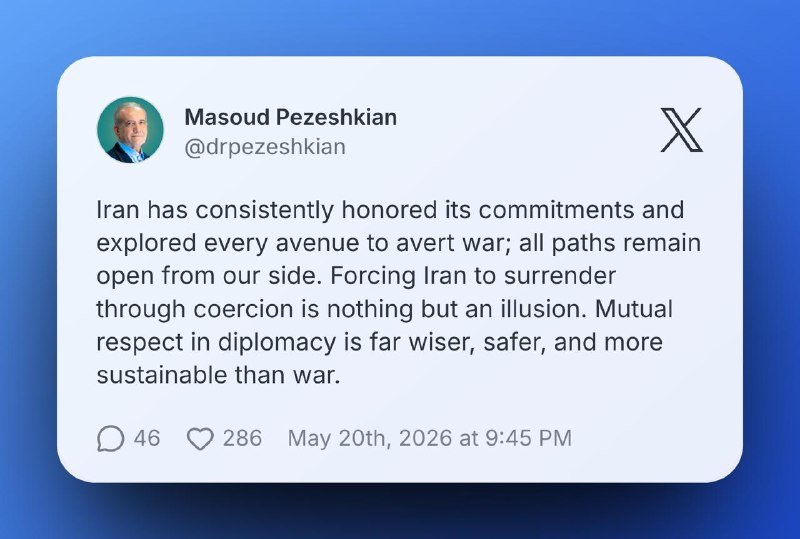
There is a particular sound a geopolitical ultimatum makes when it lands: sharp, declarative, engineered for the camera. "The clock is ticking," Donald Trump told Iran on 17 May 2026, demanding a deal on its nuclear program with a tone borrowed from a landlord serving notice. Hours later, reports surfaced that Iran was organizing civilian defense training sessions in mosques across several cities—men and women learning basic emergency response, apparently not in the language of capitulation. The two developments arrived in the same news cycle, and they tell a more complicated story than either one alone.
The question is not whether the Trump administration wants a deal. The question is whether its version of maximum pressure—tariffs as geopolitical cudgel, isolation as negotiating table—is coherent enough to produce one. Iran has survived sanctions before. It has outlasted administrations that promised regime change and delivered only rhetoric. What is different now, if anything?
The Logic of Coercive Diplomacy
The administration's case rests on leverage. Oil exports are the bloodstream of the Iranian state budget, and the reimposition of sanctions—combined with secondary pressure on any third country still trading with Tehran—has produced measurable economic contraction. The rial has lost value. Inflation has accelerated. The International Monetary Fund's most recent projections put Iranian GDP growth in negative territory for 2026, a figure no government in Tehran can easily dismiss.
In this reading, Trump's ultimatum is not theater. It is the rational application of economic pressure combined with a diplomatic off-ramp—acceptable terms in exchange for sanctions relief, with the alternative being more of the same, but harder. The clock is ticking because time, in this calculus, works for Washington: every month of isolation deepens the hole.
But this reading assumes the Iranian leadership responds to the same incentives the White House assumes it does. That assumption has proven shaky before.
The Tehran Calculus
Iran's decision-makers are not operating in a vacuum. They are watching the same global landscape the White House thinks it controls. The trade war with China has disrupted supply chains in ways that have made American allies nervous. European economies, still dependent on Russian energy alternatives they scrambled to build after 2022, are not eager to join a new round of secondary sanctions. The Gulf states, historically wary of Iranian regional ambitions, have not signed on to a full-pressure campaign—their calculations include their own exposure to a regional conflict that could close the Strait of Hormuz.
The civilian defense training reported across Iranian cities is not the behavior of a regime preparing to surrender. It is the behavior of a regime preparing its population for a longer confrontation. Mosques as training venues are not random—they carry symbolic weight in a country where the clerical establishment has defined national identity through resistance since 1979. Whatever one thinks of that record, the message is consistent: this system does not fold.
There is also the question of what Tehran actually wants. The nuclear program is not merely a bargaining chip; it is a symbol of technological sovereignty and a deterrent against invasion that Iran has watched neighbors accumulate without equivalent pressure. Walking away from it entirely would require something in return that the current American offer—lift sanctions, get a deal, restore normal relations—has not yet specified. The architecture of a final agreement has not been circulated in any form the public record reflects.
The Multipolar Backdrop
It is impossible to read this moment without noticing that the US-Iran confrontation is occurring inside a broader realignment of global economic architecture. Dollar-based sanctions work when the dollar remains the reserve currency of global trade. But that system has been under quiet stress for years: countries building bilateral settlement mechanisms, trading in local currencies, using commodity agreements that bypass SWIFT. Iran has been operating in this space for years, finding workaround channels through the UAE, through Chinese energy traders, through commodity swaps that the Treasury Department monitors but cannot fully block.
China, meanwhile, remains Iran's largest trading partner. Beijing has not joined the American sanctions regime; it has merely moderated its purchases under pressure. The structural incentive for China to maintain a channel to Tehran is simple: an Iran fully aligned with American interests is an Iran that complicates the Chinese position in the Middle East. That does not mean China wants a nuclear Iran—it means China wants an Iran that is not entirely subordinated to American design.
This is the context in which Trump's ultimatum lands. The clock may be ticking, but the question is who else is watching the clock—and what they are doing with their own time.
The Stakes If It Fails
If the ultimatum expires without a deal, the administration faces a choice it has thus far avoided spelling out in public: escalate militarily or accept the failure and pivot to containment. Military strikes—on nuclear facilities, on energy infrastructure—carry unpredictable second-order effects. Iran's regional proxies operate across a geography that includes Iraq, Syria, Lebanon, and Yemen. A strike that degrades the nuclear program could simultaneously activate responses across multiple theaters.
Containment, meanwhile, is a long game the American public has shown limited appetite for. The administration can point to economic pressure and call it success, but the Iranian regime's survival through four decades of attempted isolation is not incidental. It reflects a political economy of resistance that is, at minimum, durable.
What is clear is that the current approach—coercive ultimatum wrapped in domestic political framing—is designed for the news cycle more than the negotiation. Whether that produces results or merely the appearance of pressure depends entirely on what the next weeks reveal about both sides' actual willingness to move.
The clock is ticking. That much is true. Whether anything happens when it runs out is a question the available evidence does not yet answer.