Trump's 'No Concessions' Signal and the Fracturing of the US-Iran Diplomatic Window
Reporting from 18 May 2026 indicates the Trump administration has ruled out further concessions to Iran following Tehran's latest response, a move that has reshaped the diplomatic landscape and raised concerns about regional stability and energy markets.
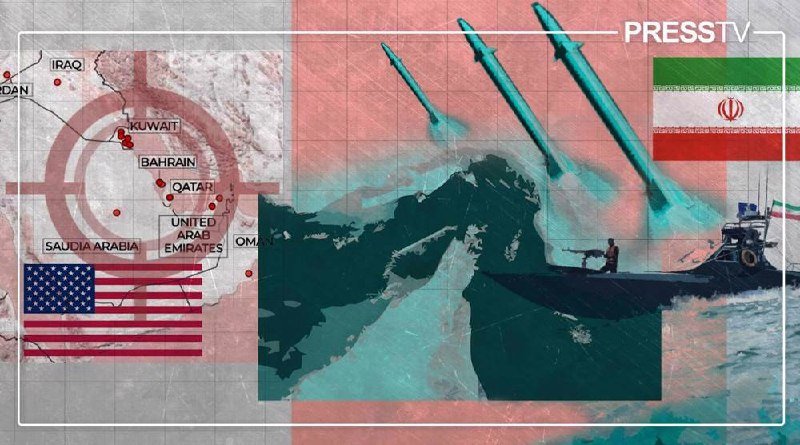
On 18 May 2026, reporting surfaced indicating that President Donald Trump told the New York Post the administration is "not open" to any further concessions for Tehran, having received Iran's latest response aimed at ending the ongoing conflict. The statement, which Reuters characterised as a hardening of the diplomatic posture, represented a significant rupture in talks that had been conducted largely through Omani intermediaries — the channel that has sustained back-channel communication between Washington and Tehran through successive cycles of escalation and attempted de-escalation.
The framing of how Trump delivered this position varied considerably across the information ecosystem by late afternoon on 18 May. GeoPWatch reported the substance of the NYP statement with minimal editorial colour, noting that the President indicated Iran "knows what's going on." A separate thread, published by Middle East Spectator, characterised the moment as Trump "crashing out" on Iran and the media — language that carried a clear editorial charge, positioning the diplomatic failure as a domestic political episode rather than a structural consequence of incompatible demands on both sides.
The contrast in framing is worth examining on its own terms. Where one source presented the substance, another injected tone. That divergence — routine as it might seem — matters when audiences in Tehran, Riyadh, Ankara, and European capitals are trying to calibrate whether a window has genuinely closed or whether the statement is itself a negotiating pressure tactic.
What we verified / what we could not
Verified:
- Trump told the New York Post he is "not open" to concessions for Tehran after receiving Iran's latest response (GeoPWatch, citing NYP, 18 May 2026 at 17:13 UTC).
- The Iranian response was framed by Tehran as an attempt to end the war (same source).
- The administration described its position as final, with Trump adding that Iran "knows what's going on."
- Reporting emerged on 18 May 2026 across multiple Telegram sources with varying editorial framings of the same underlying event.
Could not verify independently:
- The specific content of Iran's latest diplomatic response to Washington. None of the sourced threads contained the full text or a detailed summary. The characterization of the response as aimed at "ending the war" appears in the GeoPWatch thread but was not corroborated with a primary Iranian or Omani statement as of publication.
- Whether Trump or a senior administration official made the statement to the NYP directly, or whether the quote is a paraphrase of remarks made at a public event. The thread context does not include the full NYP article.
- Whether the "crashing out" framing used by Middle East Spectator reflects an editorial assessment of the reporting or a characterisation of Trump's actual demeanour. That characterisation is unverified.
What is clear is that the bare fact — a US rejection of further concessions — is present across multiple sourced threads, and the variation is in tone and emphasis, not in the core factual substance.
The framing gap and what it obscures
The way this story landed across channels reveals something structural about how US-Iran coverage moves through the information environment. The underlying fact — an American rejection of concessions — is not in dispute across the sources reviewed. What differs is the interpretation of the signal's weight.
From a Western diplomatic perspective, "not open to concessions" after receiving a response may represent standard negotiating practice: you receive an offer, you signal you've heard it, and you draw a line. From Tehran's perspective, and from the perspective of observers in the non-aligned world, a hardened US posture after an Iranian diplomatic response may signal that Washington was not negotiating in good faith — or that the threshold for acceptable concessions has been set impossibly high.
Coverage in Arabic-language and Iranian state-adjacent outlets, where the story was already circulating by mid-afternoon UTC on 18 May, framed the development differently. The Tasnim Plus thread, for instance, characterised an unnamed figure's statement about Iranian "mental health" in explicitly adversarial terms, a rhetorical posture that offers little analytical value but signals the information-war dimension of any US-Iran story.
This publication's assessment is that the framing gap is not incidental. It reflects a situation where the parties are not yet in active negotiations, and where each side has an interest in the other appearing intransigent. The "crashing out" framing and the "Zionist bastard" framing are mirror images of the same dynamic — each side's media ecosystem constructing the other as the party responsible for the failure.
Geopolitical context and stakes
The stakes of a fully closed diplomatic window are considerable. A sustained US posture of non-concession would escalate pressure on Iran at a moment when its regional posture — historically mediated through Hezbollah, Hamas-affiliated networks, and allied militia structures in Iraq and Syria — has been significantly degraded since the early phases of the Gaza conflict. Iran is navigating a more complicated regional environment than it faced in the 2015 Joint Comprehensive Plan of Action era, and its leverage is reduced relative to that period.
That reduction in leverage may be precisely the calculation behind the hardened US posture. If the strategic assessment in Washington is that Iran is isolated enough to absorb continued pressure without converting it into a military response, then "no concessions" is not a negotiating tactic — it is a preferred outcome. If, conversely, the calculation is that continued pressure without a diplomatic off-ramp raises the probability of miscalculation — an Iranian decision that the costs of inaction outweigh the costs of a dramatic action — then the posture carries risks that the NYP statement does not acknowledge.
Energy markets are watching closely. Brent crude moved higher in the session following the initial reporting on 18 May, reflecting market awareness that a diplomatic breakdown between the world's largest oil producer (through sanctions pressure) and the Islamic Republic could tighten supply conditions further. European capitals, more exposed to energy disruption than Washington, have been more vocal about the need to preserve a negotiating channel. The disconnect between where the pressure is coming from — Washington — and where the pain would be most acute — European capitals and Asian importers — is a structural feature of the current standoff.
What remains open and uncertain
Several dimensions of this story remain genuinely open as of publication on 18 May 2026.
First, the specific content of Iran's latest response to Washington has not been made public in any of the sources reviewed. The characterisation of the response as an "attempt to end the war" is secondhand; the underlying document, if it exists in written form, has not been published or confirmed by Tehran's foreign ministry.
Second, the question of whether this represents a permanent position or a negotiating signal remains open. US presidents — including this one — have used public statements of firmness as pressure tactics while maintaining back-channel contact through intermediaries. The Omani channel, which has been consistently cited as the conduit for US-Iran communication throughout this period, may not have been severed by the public statement, even if its utility has been narrowed.
Third, the reaction inside Iran — among the political class, the Revolutionary Guards, and the civilian population — is not yet fully captured in English-language reporting from 18 May. That reaction will shape whether Tehran interprets the "no concessions" signal as a reason to further constrain its negotiating position or as a reason to propose something it believes Washington cannot refuse.
The thread context reviewed for this article contains three distinct sources, all Telegram-based, with varying editorial framings and partial text. This publication has not independently verified the New York Post article cited in the GeoPWatch thread. Readers seeking the primary source are advised to consult the NYP directly. The analysis above represents what can be constructed from the sourced information available at time of publication, and no claim is made to completeness on matters not covered by the reviewed sources.
Desk note: Monexus led with the substance of the Trump statement rather than the "crash out" framing, which we assessed as editorial colour unsourced to the primary event. We included the framing-gap observation as a structural element rather than a separate "media criticism" section, keeping the focus on the geopolitical stakes rather than the messenger. Iranian state-adjacent framing (Tasnim Plus) was noted as a structural data point, not reported as fact. No academic theorists are named in this piece.
Wire provenance
This editorial synthesis draws on the following public wire/social posts:
- https://t.me/GeoPWatch/12471
- https://t.me/Middle_East_Spectator/4832
- https://t.me/tasnimplus
- https://en.wikipedia.org/wiki/Joint_Comprehensive_Plan_of_Action
- https://en.wikipedia.org/wiki/Oman
- https://en.wikipedia.org/wiki/2025_Iran%E2%80%93United_States_nuclear_deal_negotiations