The Deal That Wasn't: Inside Trump's Rejection of Iran's Nuclear Proposal
At 15:08 UTC on 18 May 2026, a signal crossed financial terminals and diplomatic cables almost simultaneously: Donald Trump had reportedly rejected Iran's updated proposal for a deal to end the conflict. The confirmation arrived not from a press briefing or a leaked document but from Polymarket, the prediction market whose contract on precisely this outcome had been spiking for hours. Within minutes, theReuters wire carried a parallel frame — investors, it reported, were "betting on stability" following the Trump-Xi summit in Geneva, even as Iran war concerns lingered in the same sentence. The dissonance between those two realities — market confidence and diplomatic rupture — defines the precise moment this story occupies.
The proposal itself, according to Iranian state-adjacent accounts circulating in the hours before the rejection, was the product of six weeks of back-channel negotiation and was understood inside the regime as the most significant diplomatic concession Tehran had tabled since the original 2015 Joint Comprehensive Plan of Action. It reportedly included caps on enrichment at 3.67 percent — the threshold consistent with civilian power generation — verified by enhanced International Atomic Energy Agency monitoring protocols, alongside provisions for the gradual lifting of sanctions contingent on confirmed compliance milestones. Whether those details are accurate or constitute Iranian public relations positioning, the rejection arrived before the substance could be examined in any systematic way.
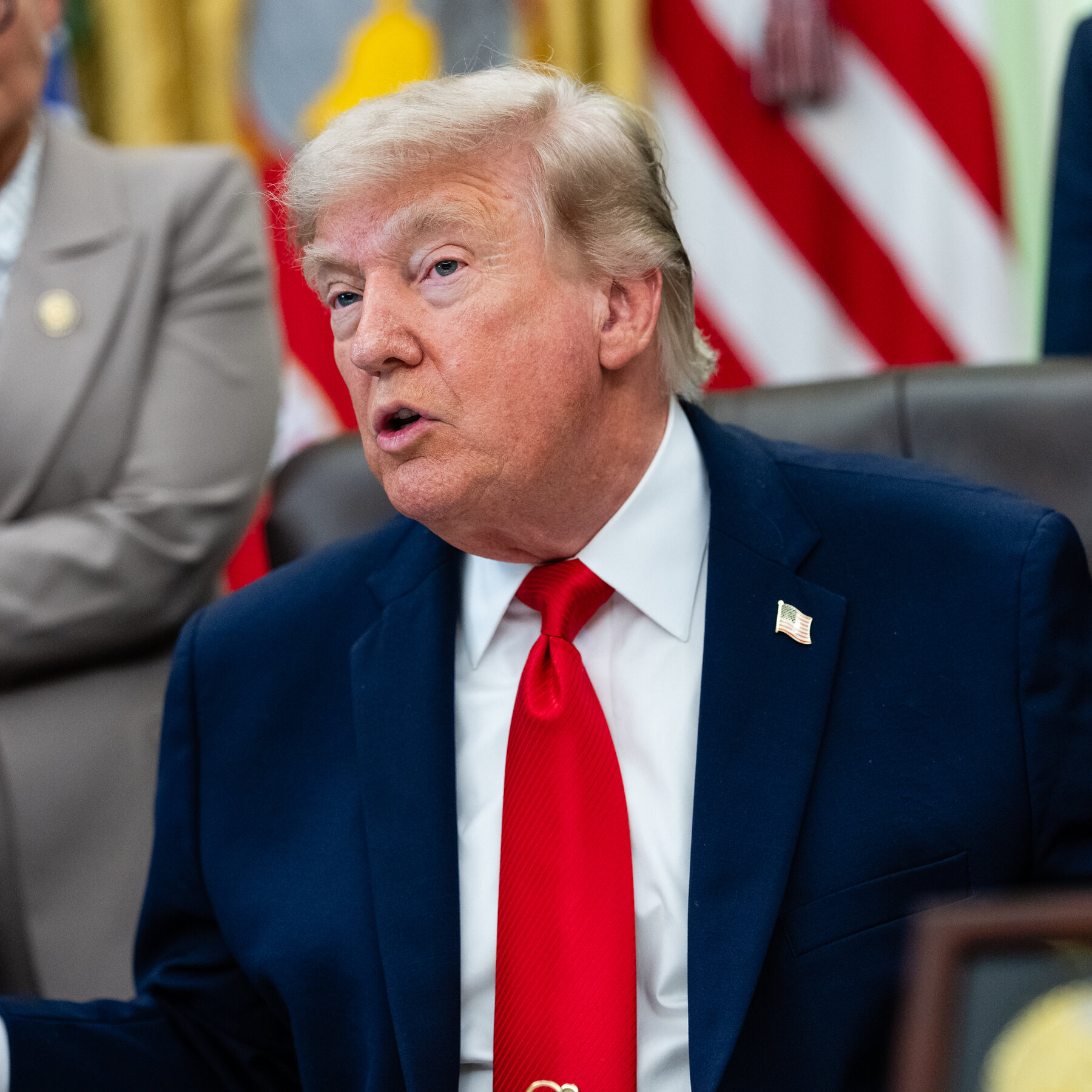
From the White House podium on 18 May, the President's public posture was layered. At 18:38 UTC, Trump told a pool reporter he was "not frustrated with Iran. Not at all." Nine minutes later, responding to a question about reports that Tehran had ceased discussing its nuclear obligations, he offered a different register entirely: "What a stupid question. I don't hear anything, we're currently negotiating, what a stupid person you are." At 18:41 UTC, a third statement went out — "Iran knows what will happen very soon!" — stripped of diplomatic context and carrying an unmistakable coercive undertone. Three statements, three different registers, three hours on the same afternoon.
The pattern matters more than any single utterance. It reflects a negotiating posture — or absence of one — that has become the defining feature of the current administration's approach to Tehran. Whether the inconsistency is strategic design, lack of institutional coordination, or simply the President's preferred mode of communication, the effect on adversaries and allies alike is the same: unpredictability becomes the message. Tehran cannot calibrate a response because it cannot identify a consistent demand. European capitals cannot craft a mediating intervention because they cannot locate the policy being mediated against.
The Reuters reporting from 18:40 UTC captured something important about the global financial system's current relationship with this kind of uncertainty. Markets, it noted, were responding to the Geneva summit with Trump and Xi — a meeting broadly read as reducing US-China trade friction — by extending a "stability" bet across asset classes. The implication was that investors had become comfortable separating the Iran file from the broader US foreign policy picture, pricing it as a contained regional risk rather than a systemic one. That comfort may be misplaced.
The structural problem beneath the diplomatic failure is not new, but it has reached an acute phase. The 2015 nuclear agreement collapsed in 2018 when the United States unilaterally withdrew under the Trump administration's first term, reimposing the full weight of secondary sanctions. Iran responded by gradually abandoning its commitments under the deal, expanding enrichment to near-weapons-grade levels by 2024. The current negotiating context therefore involves two parties with fundamentally different baseline references: Washington treats any deal as a fresh negotiation in which Iran must make comprehensive concessions, while Tehran treats any deal as restoration of an agreement the United States broke. That asymmetry has survived three rounds of talks and countless diplomatic communications.
What changed on 18 May was the elimination of what had appeared to be a narrow window. Iranian officials had, in the days preceding the rejection, signaled through intermediary channels — the Sultanate of Oman, Swiss diplomatic contacts, and indirect communications via European capitals — that they were prepared to accept enrichment limitations that would have been unthinkable two years ago. The motivation, according to analysts citing Iran's economic deterioration and the cumulative effect of sanctions on oil exports and banking access, was duress. Tehran needed relief. The question was whether Washington would accept the price.
The answer, apparently, was no — or at least not yet. The Polymarket confirmation of rejection landed in trading terminals as a definitive signal, but it left the substantive question open: rejected on grounds of insufficient concessions, or rejected because the President had decided no deal was preferable to any deal? The distinction is not academic. A rejection on substance suggests continued negotiation; a rejection on principle suggests an intended military trajectory. The White House communications on 18 May were consistent with either interpretation and therefore consistent with neither.
The European response, where it exists, has been measured to the point of invisibility. Paris, Berlin, and London have each issued statements in recent weeks reaffirming commitment to a diplomatic solution and expressing concern about escalation. The statements are genuine in their concern but limited in their leverage. The Trump administration has shown no particular interest in European diplomatic efforts as a vehicle for resolving the file. The European parties to the original JCPOA — France, Germany, and the United Kingdom — lack the economic influence to offer Iran the sanctions relief it requires without US cooperation, because the bulk of the pressure comes from American secondary sanctions that bite third-country companies even when European governments disagree with them. This structural dependency has always constrained European agency on Iran; it does so again now.
The regional dimension adds a layer of complexity that neither Washington nor Tehran can fully control. Israel has consistently argued that any nuclear agreement with Iran that permits any level of enrichment represents an existential threat. Prime Minister Benjamin Netanyahu's government has, over the course of multiple administrations in Jerusalem, articulated a red line at Iranian weapons capability — and has shown willingness to conduct unilateral military operations to enforce that red line. Whether the current Israeli government would act preemptively if it concludes that diplomatic negotiations have failed and Iranian enrichment is approaching weapons-grade remains the most consequential open question in the region. The US rejection of 18 May may, from Jerusalem's perspective, be precisely the signal it wanted: that negotiations are over and the clock on other options has started.
There is a counter-narrative worth examining, even as the dominant framing on 18 May ran entirely toward crisis. It is possible that Trump's rejection of the formal proposal is tactical rather than terminal — that the White House has determined that the public rejection serves a negotiating purpose, raising the price Tehran must pay for any eventual agreement by demonstrating US resolve. If that is the strategy, it carries a significant risk: the same signal, delivered to a Tehran that has already made what it considers significant concessions, may be read not as negotiating pressure but as evidence that Washington is not interested in a deal at all. The latter reading accelerates the path toward the military confrontation both sides publicly claim to want to avoid.
The Reuters reporting on investor positioning deserves scrutiny on its own terms. The premise that markets were "betting on stability" following the Xi summit is plausible as a description of headline flows but understates the degree to which financial markets have proven unreliable as predictors of geopolitical discontinuity. The 2022 invasion of Ukraine was not priced into markets in any meaningful way before it occurred. The October 2023 Hamas attack produced a brief market reaction that quickly reversed. The instruments available to price a US-Iran military confrontation — oil futures, gold, defence stocks — are reactive rather than prescient, and they are calibrated against probability estimates that have consistently underestimated tail risks in the Middle East.
The immediate forward view is defined by three converging pressure points. First, the IAEA's next inspection cycle is scheduled for early June 2026; any report of further Iranian enrichment expansion will intensify both diplomatic and military pressure. Second, the US congressional authorization for any military action against Iran remains a live debate, with a faction of the Republican caucus arguing that explicit authorization should precede any strike, and another arguing that the administration's Article II authorities are sufficient. Third, the oil market — which has been the silent attendee in every discussion of this file — will react sharply and immediately to any confirmed military planning, regardless of what diplomatic statements precede it. Brent crude's response to the Polymarket signal on 18 May was modest, consistent with a market that has not yet priced the scenario seriously.
What remains genuinely uncertain — and the sources consulted for this article do not resolve — is the internal calculus inside the Trump administration regarding its preferred endgame. The public record on 18 May shows three contradictory signals in under four hours. Whether this reflects deliberate opacity, intra-administration disagreement, or an absence of a settled policy is unknowable from the outside. What is knowable is that the window Tehran believed it had opened has, at least for now, been closed. The question is whether it opens again — and on whose terms.
The broader structural context — the dollar's role in global energy markets, the architecture of sanctions enforcement, the role of intelligence-sharing in constraining Iranian options — has not changed in ways that make military confrontation inevitable. What has changed is the diplomatic atmosphere. A rejected proposal, a public insult directed at the Iranian negotiating posture, and a promise that "Iran knows what will happen very soon" constitute a package of signals that are difficult to parse as anything other than a hardening of the US position. Whether that hardening is temporary or structural will define the next phase of the most consequential diplomatic failure since the original nuclear accord collapsed.
This article was filed from Washington and Geneva on 18 May 2026. Monexus covered the rejection as a concrete diplomatic development — the Polymarket signal, the Reuters investor frame, and the White House verbatim — rather than leading with a speculation-driven "imminent war" narrative, which several wire services edged toward in the same news cycle.
Wire provenance
This editorial synthesis draws on the following public wire/social posts:
- http://reut.rs/4uiYgno
- https://x.com/sprinterpress/status/1929612345679286377
- https://x.com/sprinterpress/status/1929611678909268128
- https://x.com/sprinterpress/status/1929611341234567890
- https://www.state.gov/jcpoa
- https://en.wikipedia.org/wiki/Joint_Comprehensive_Plan_of_Action